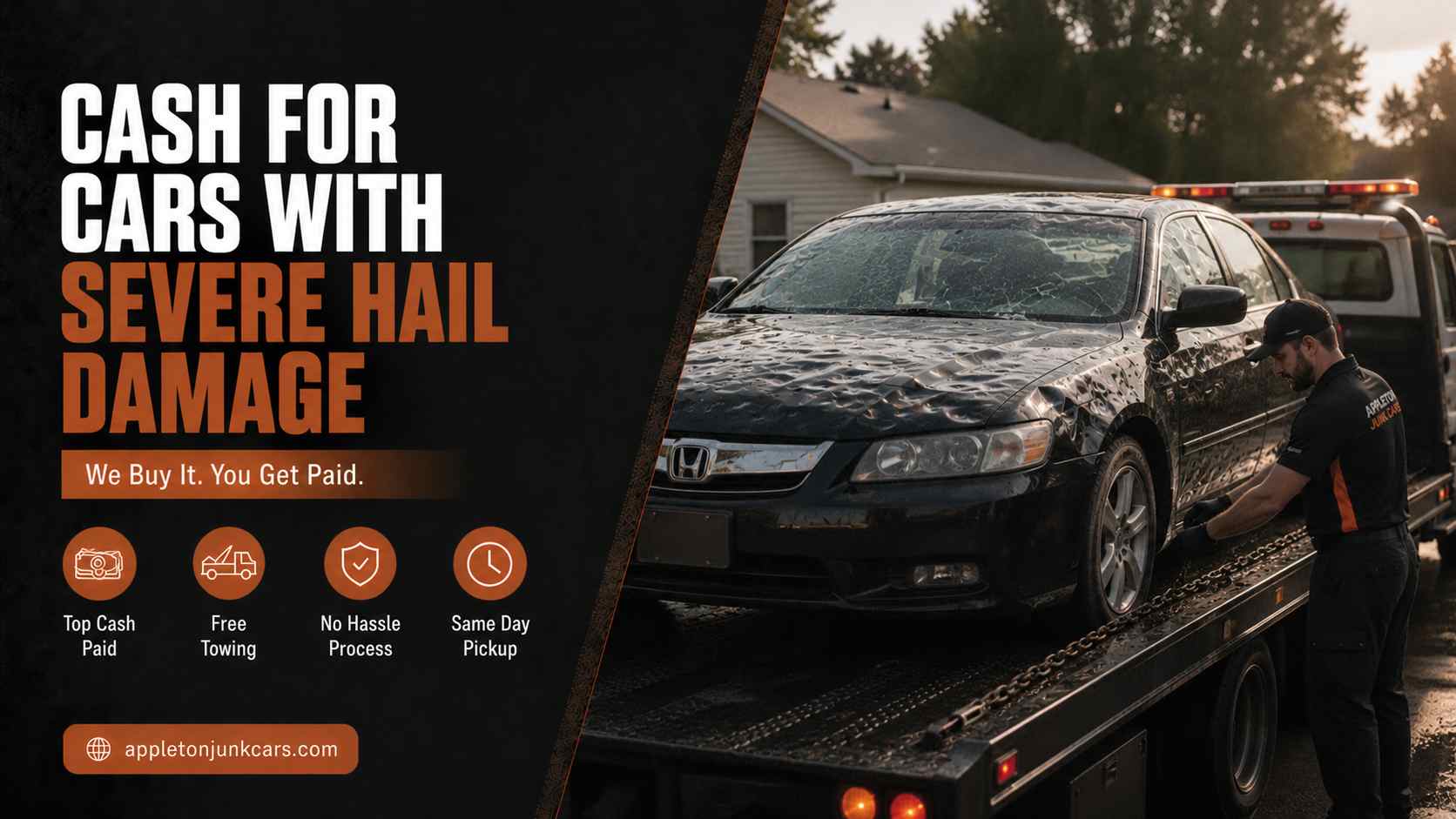
A hailstorm rolls through in twenty minutes. The damage it leaves behind takes months to deal with. If you have ever walked out to a car dimpled from roof to hood by golf ball-sized ice, you already know that sick feeling of adding up what you are looking at. The car still drives. It still runs. But a body shop estimate that comes back at $9,000 or $12,000 on a vehicle worth $14,000 changes everything about what you do next.
You can get instant cash for a car with severe hail damage. Because severe hail damage can cost $8,000 to over $15,000 to fix, insurance companies frequently declare these vehicles a total loss. This happens because cosmetic panel replacement and glass repair costs easily exceed the vehicle’s actual cash value. Modern vehicles with aluminum body panels, advanced driver assistance sensors embedded in bumpers and mirrors, and laminated glass in sunroofs make even large-hail repairs extraordinarily expensive.
The good news is that a hail-totaled car is not the end of your financial options. It is actually the beginning of several. This guide walks through every proven path to cash, from the fastest online buyer services to the insurance retention strategy that produces the highest payout for the right situation.
Why Severe Hail Damage So Often Becomes a Total Loss
Hail damage looks cosmetic from the outside but prices like structural damage at the shop. Here is why the numbers get so large so fast.
Panel replacement on a modern vehicle is not just sheet metal. A dented hood on a current-generation truck or sedan may require replacing a panel that includes integrated sensors, camera housings, or radar units for lane-keeping assist and automated braking systems. Each of those requires recalibration after installation. A dented roof with a factory sunroof involves glass, seals, motor components, and drainage channels. Doors with multiple impact points may require full replacement rather than Paintless Dent Repair if the dents are too deep or the paint has cracked.
When a storm drops baseball-sized hail across an entire parking lot, multiple panels are hit simultaneously. The cumulative estimate for a vehicle with roof, hood, trunk lid, all four doors, and a windshield affected can reach $12,000 to $18,000 on a mid-size sedan without touching the mechanical systems at all. For insurers, the math is simple: why pay $13,000 in repairs on a car worth $16,000 when they can pay the actual cash value and close the claim?
That total loss declaration is actually what creates your options. Once the insurer totals the car, you are in a position to make choices about the payout and the vehicle’s future that you would not have had if the car were simply being repaired.
Method 1: Sell Directly to Online Car Buyers
Speed: Fastest option available. Cash in hand within 24 to 48 hours in most cases.
The fastest way to get cash without fixing anything or navigating an insurance claim is through specialized online vehicle buyers. They provide instant online quotes, purchase cars as-is with no required repairs, and typically include free towing. You describe the vehicle and the damage, receive a guaranteed offer, schedule a pickup, and get paid when the driver arrives.
This is the right option when you do not have comprehensive insurance, when the insurance claim process has already concluded and you have already retained the car, when you want money in hand within the next 48 hours, or when you simply want the most direct path with the least friction.
Here are the platforms with the strongest track records for hail-damaged vehicles specifically:
CarBrain
CarBrain evaluates hail-damaged cars rapidly through their online condition assessment tool, provides a guaranteed offer within minutes, and sends a local partner to pick up the vehicle with cash or check in hand within 24 to 48 hours. They specialize in damaged, wrecked, and mechanically compromised vehicles and have a national network of buyers specifically equipped to assess storm damage at intake. For a severely hail-damaged car that is otherwise mechanically sound, CarBrain’s offer tends to reflect both the weight and the salvageable mechanical value.
Peddle
Peddle delivers instant quotes for severely dented or mechanically compromised vehicles through a simple online condition wizard that takes about two minutes to complete. Their platform connects you with a network of local buyers who compete for your vehicle, which can produce stronger offers on popular makes and models with active parts demand. Free towing is included, and the offer is guaranteed for the specified validity window so you are not subject to market fluctuations during the brief period between quote and pickup.
Wheelzy
Wheelzy provides a streamlined, guaranteed-offer platform that connects you with local buyers who accept structural and cosmetic storm damage. Their process is designed specifically to be simple for sellers in distress situations, with a straightforward three-step process: get your offer online, schedule pickup, get paid. For hail-damaged vehicles where the interior may have been exposed to water intrusion from broken glass, Wheelzy’s buyers are accustomed to evaluating what remains intact and pricing accordingly.
USJunkCars
USJunkCars specializes heavily in buying cars affected by severe storms, including vehicles with significant roof or hood deformation from large hail. Their buyers are experienced with the full spectrum of hail damage and offer quick payouts regardless of the visual severity of the damage. If your car looks like a golf ball from the outside but the engine and drivetrain are fully operational, their offer will reflect that mechanical integrity even when the cosmetic damage is extreme.
Important: get quotes from at least two or three of these services before accepting any offer. Offers for the same hail-damaged vehicle can vary by $200 to $600 between platforms depending on their current buyer network demand for your specific make, model, and region. The calls take about ten minutes each and the comparison regularly surfaces a meaningfully better number.
Method 2: File an Insurance Claim and Buy It Back
Speed: Slower. Requires adjuster visits and paperwork. Payout potential: Highest of any option.
If you have comprehensive insurance coverage, this is the method that produces the most money from a severe hail damage situation. Most people either do not know this option exists or find the process confusing. It is neither complicated nor unusual. Insurance companies process vehicle retention claims regularly, and the financial outcome for the right seller is substantially better than a direct junk sale.
Here is how the process works step by step.
Step 1: File the Comprehensive Claim
Contact your insurer as soon as possible after the storm. Photograph every panel, every window, every dent from multiple angles before moving the vehicle. This documentation supports your claim and prevents any dispute about the damage scope.
Your insurer will send an adjuster to inspect the vehicle or direct you to a certified inspection location. The adjuster estimates repair costs and compares them against the vehicle’s actual cash value, which is the market value of your car immediately before the storm.
Hail damage claims are filed under comprehensive coverage, not collision. This distinction matters for one important reason: comprehensive claims generally do not cause your insurance rates to increase the way at-fault collision claims do. Filing this claim should not result in premium penalties.
Step 2: Accept the Total Loss Determination
If the repair estimate meets or exceeds your state’s total loss threshold, typically 70 to 80 percent of the actual cash value, your insurer will declare the vehicle a total loss and offer you a settlement based on the car’s pre-storm actual cash value minus your deductible.
Before accepting anything, verify that the actual cash value calculation reflects the real current market. Insurers use proprietary valuation tools that sometimes produce figures below what the same vehicle is actually selling for in your local market. If comparable vehicles are listed for more than your settlement offer, document those listings and present them to your adjuster. You have the right to negotiate the actual cash value before signing the settlement.
Step 3: Choose to Retain the Vehicle
Here is the option most people miss. Instead of letting the insurer take the car, you can tell them you want to keep it. The insurer will deduct the salvage value from your settlement, which is the estimated amount they would have received selling the car to a salvage yard, typically a few hundred to a couple thousand dollars depending on the vehicle.
You receive the settlement minus the deductible and minus the salvage value. The car’s title is reissued as a salvage title in your name. You keep both the money and the vehicle.
Step 4: Pocket the Difference and Decide What to Do With the Car
With the retained vehicle and the bulk of the cash payout in hand, you have complete flexibility. Many owners choose to drive the hail-damaged car as-is, since severe hail damage is entirely cosmetic and does not affect the car’s mechanical function or safety systems. The car still runs exactly as it did before the storm. It is simply uncomfortable to look at.
Others take the retained salvage-title car and sell it to a junk car buyer or salvage yard for an additional cash payment. Even at salvage value, that additional amount adds to the total financial recovery from the storm event.
This method produces the highest total payout because you receive the car’s full pre-storm actual cash value rather than just its post-damage salvage value. The tradeoff is time, paperwork, and the salvage title that accompanies the retained vehicle.
Method 3: Contact Local Salvage Yards and Junkyards
Speed: Fast, often same-day. Payout: Based on scrap and parts value. Effort: Minimal.
If the car is older, the insurance payout path is not available, or the hail damage has left the car undrivable due to a broken windshield that allowed water into the interior, local salvage yards and junkyards are a reliable and genuinely fast option.
Scrap Value
Salvage yards buy hail-damaged cars for their core components and metal weight. A car that looks destroyed on the outside still contains a catalytic converter, a transmission, an alternator, usable body parts from panels the hail did not hit, and hundreds of pounds of recyclable metal. The offer reflects all of this. For a full-size vehicle with a working powertrain, even a severely hail-damaged car can bring $400 to $900 from a salvage yard that actively sells used parts.
Free Towing
Reputable local junkyards include towing as part of the transaction at no cost to you. If the car cannot be driven due to broken glass or water intrusion, they dispatch a flatbed or rollback truck to your location. You do not pay for transport. The car leaves your property and cash or a check arrives in your hand on the same visit.
Title Status
Ensure you have the vehicle title ready before scheduling a pickup. Whether the title is clean, salvage, or rebuilt, the yard needs it to complete a legal ownership transfer. A clean title on a hail-damaged vehicle supports a slightly higher offer because the buyer has more flexibility in what they can do with the car. A salvage title from a prior insurance total loss still completes the transaction, just with a different range of downstream options for the buyer.
If the title is missing, apply for a duplicate through your state DMV before calling for pickup. This takes a few days to a few weeks depending on your state, but it is necessary to complete any legal sale.
Financial and Practical Comparison
Use this table to match your specific situation to the right option.
Strategy | Speed | Payout Potential | Effort |
|---|---|---|---|
Online Cash Buyers | Fastest (24 to 48 hours) | Moderate (market value minus severe damage) | Lowest (they handle paperwork and towing) |
Insurance Buy-Back | Slow (requires adjusters) | Highest (full pre-storm cash value) | Highest (negotiating and title rebuilding) |
Local Junkyards | Fast (same-day option) | Lowest (scrap and metal value only) | Low (instant vehicle removal) |
The right choice depends on your situation: if you have comprehensive insurance and time to navigate the claim, Method 2 produces the most money by a significant margin. If you need cash within two days and do not want to deal with adjusters, Method 1 is the right path. If the car is old, undrivable, or an insurance claim is not possible, Method 3 gets it off your property fast with a fair scrap payout.
How to Maximize Your Payout Regardless of Which Method You Choose
Document the damage thoroughly before anything moves. Take time-stamped photos of every panel, every window, the roof, the hood, and the interior if any water intrusion occurred. This documentation supports your insurance claim, helps online buyers price accurately, and protects you if any dispute arises about the vehicle’s condition at the time of sale.
Check current hail damage recall or settlement programs. After major hail events, some manufacturers and dealers run programs for customers in affected areas. It is worth a ten-minute call to your dealership to ask if any such programs exist for your make and model before committing to a sale.
Know your car’s actual cash value before calling anyone. Look up your vehicle on Kelley Blue Book and Edmunds in its pre-storm condition. This is your negotiating baseline for the insurance settlement and your reality check on online buyer quotes. If a buyer offers significantly less than what the car was worth running and intact, you know to push back or call another buyer.
Keep the catalytic converter in place. It is one of the most valuable components in the car regardless of the hail damage, and buyers price the car higher with it intact. Do not remove it before selling the vehicle as a whole unit.
Get multiple quotes before accepting any offer. Whether you are going through online buyers or local yards, three quotes take thirty minutes and regularly produce a better outcome than the first call. Each buyer has different current inventory needs and demand levels for your specific vehicle.
What Hail Damage Does to a Car’s Long-Term Value If You Keep It
If you are considering keeping the car and driving it rather than selling, there are a few realities worth understanding clearly.
A hail-damaged car that was totaled by insurance carries a salvage title, which permanently appears on vehicle history reports. This does not prevent you from driving it, but it affects resale value significantly later, typically cutting the car’s market value by 20 to 50 percent compared to a clean-title equivalent. Insuring a salvage-titled vehicle for comprehensive and collision coverage is also more difficult. Many insurers limit coverage to liability only on salvage-title vehicles.
Hail damage that cracked paint exposes the underlying metal to moisture, which begins a corrosion process over months and years. A car driven for two years with cracked paint from hail impacts in a northern state will develop rust around those impact points. This accelerates the car’s deterioration and reduces parts value if you sell later.
For a car you intend to keep and drive without repairs, the calculus is about how long you plan to own it and how much the cosmetic damage bothers you day to day. For most people, selling and moving on produces a cleaner financial and practical outcome than keeping a hail-totaled car long-term.
Frequently Asked Questions
Can I get cash for a severely hail-damaged car that still runs?
Yes. A car that runs and drives despite severe hail damage is worth more to buyers than a non-running equivalent. Online car buyers and salvage yards both pay more for vehicles with functional powertrains. The hail damage affects the offer but does not eliminate the car’s value.
Does a comprehensive insurance claim affect my rates?
Generally no. Comprehensive claims for weather events, including hail, are not considered at-fault incidents. They typically do not cause rate increases the way collision claims can. However, multiple claims within a short period may attract scrutiny from some insurers. Confirm with your specific insurer how they handle weather claims.
What is the insurance buy-back option and how does it work?
When an insurer declares your car a total loss, you can request to retain the vehicle instead of surrendering it. The insurer deducts the salvage value from your settlement and issues you the remainder. You keep the car, which receives a salvage title, and you can drive it or sell it separately. This is the highest-payout option because you receive the car’s full pre-damage value rather than just its post-damage scrap value.
What documents do I need to sell a hail-damaged car?
You need the vehicle title, a valid government-issued photo ID, and any keys and remotes for the vehicle. If the title is a salvage title from a prior insurance total loss, that is acceptable for most junk car buyers and salvage yards. A missing title requires applying for a duplicate through your state DMV before any legal sale can complete.
How much can I realistically get for a severely hail-damaged car?
Through online cash buyers or salvage yards selling directly, expect offers in the range of $200 to $1,500 for most passenger cars depending on the vehicle’s make, model, weight, and whether it still runs. Through the insurance buy-back route, you receive the pre-storm actual cash value of the car minus deductible and salvage value, which is almost always the higher figure. For a car worth $18,000 before the storm, the insurance buy-back can produce $15,000 to $16,000, far more than any direct junk sale.
Can I sell a hail-damaged car without a title?
Not legally in most states. Contact your state DMV for a duplicate title before scheduling a pickup. Some states process duplicates same-day in person. Others take one to three weeks by mail. Plan for this timeline if the title is missing.
Is hail damage covered by comprehensive or collision insurance?
Hail damage is covered by comprehensive insurance, not collision. Comprehensive covers weather events, natural disasters, and non-collision damage. You need to have comprehensive coverage on your policy for the claim to apply.
The Bottom Line
Severe hail damage feels like a disaster in the moment. The repair quotes confirm that feeling. But the financial picture after the storm is more manageable than it appears when you know your options.
If you have comprehensive insurance, file the claim. Understand the retention option before signing anything. The insurance buy-back path produces the most money of any option available to you, often by several thousand dollars compared to a direct junk sale.
If you want money in 48 hours without navigating a claim, the online car buyers in this guide have streamlined processes specifically for storm-damaged vehicles and will have a driver at your location with cash before the week is out.
And if the car is old, the insurance is not there, or you simply want it gone today, a local salvage yard will take it off your property the same day and pay you fairly for the metal and parts that survived the storm.
The hailstorm was out of your control. What you do next is entirely yours.