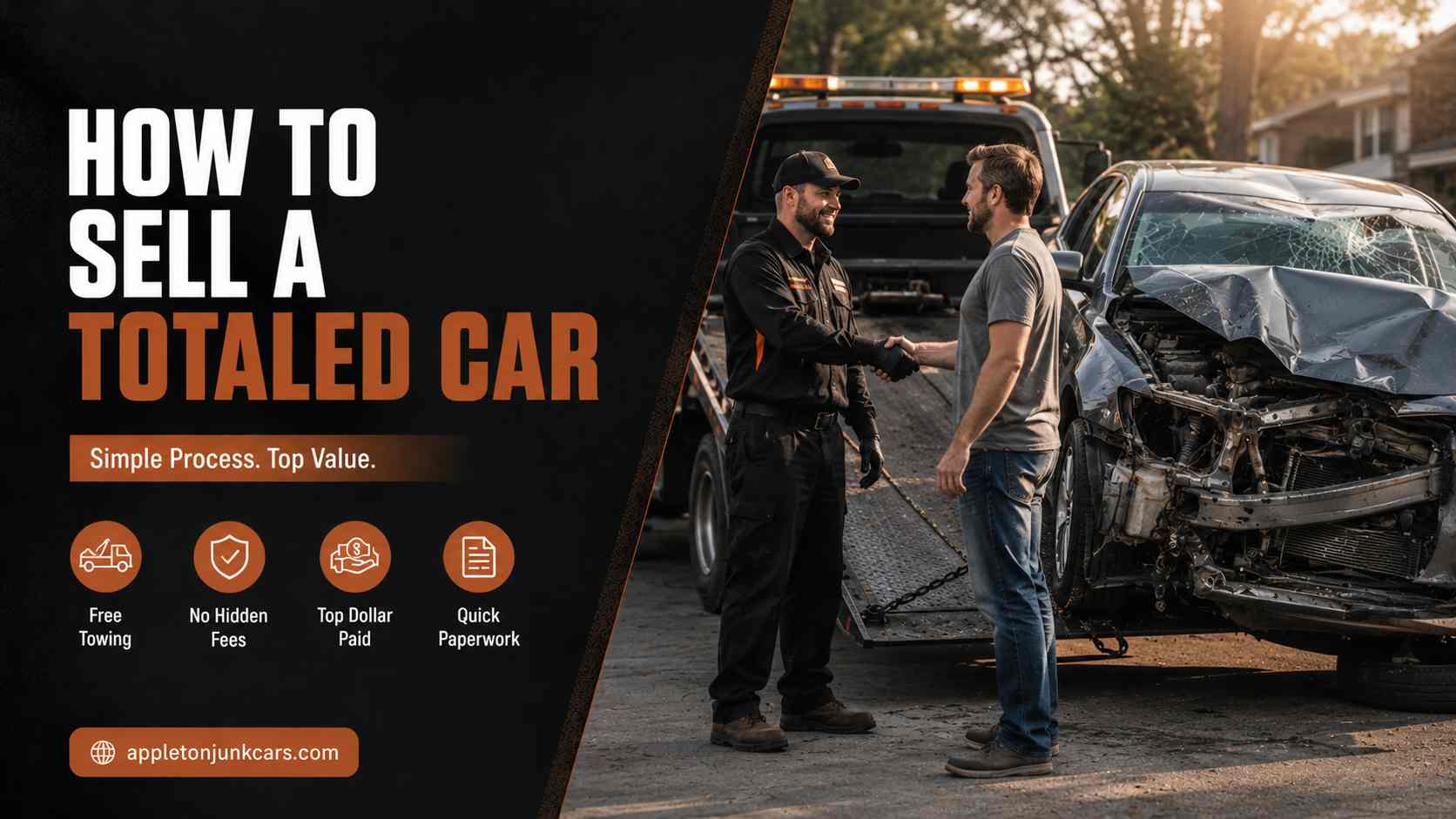
Yes, you can sell a totaled car, and in many cases you can get more money from it than your insurance company is offering. But there is one decision that most people skip entirely, and it quietly costs them hundreds of dollars before they even start shopping for a buyer. This guide covers everything from that first decision to the final handoff, so you walk away knowing you got the best deal possible on a car that already had a rough day.
What “Totaled” Actually Means
Before anything else, it helps to understand what the word totaled actually means, because a lot of people assume it means the car is worthless. It does not.
A car is declared a total loss when an insurance company determines that the cost to repair the vehicle exceeds a certain percentage of its pre-accident market value. That threshold varies by state, typically ranging from 51 percent to 80 percent of the car’s actual cash value. In states with a lower threshold, a car with moderate damage can be totaled even if it could still be repaired. In states with higher thresholds, the damage has to be genuinely severe before a total loss declaration happens.
The important thing to understand is that “totaled” is an insurance and financial determination, not a mechanical one. A car can be declared a total loss and still run. It can have a bent frame and a working engine. It can have cosmetic destruction on the outside and a perfectly usable interior. All of this matters when it comes to selling it, because buyers are often buying those usable components.
The Decision Most People Skip and Why It Matters
When your insurance company declares your car a total loss, they present you with a settlement check based on the car’s actual cash value before the accident, minus your deductible. What most people do not realize is that they have a choice about what happens to the car itself.
You can let the insurance company take it. They will put it up for auction, recover some value, and your settlement is the number they quoted you.
Or you can choose to keep it, which is called retaining the salvage. If you do this, the insurance company deducts the car’s salvage value from your settlement, since they are no longer taking the car. You receive a slightly lower check but you keep the vehicle, now titled as a salvage car, and you can sell it yourself.
Here is why this matters: in many cases, selling the car yourself nets you more than the salvage value the insurer would have deducted from your check. If your insurer estimates the salvage value at $400 and a junk car buyer or parts buyer is willing to pay you $700, you come out $300 ahead by retaining the car and selling it yourself.
This does not always work out in your favor. It depends on the car’s make, model, condition, and what the local market looks like. But the question is always worth asking before you sign the settlement paperwork. Call two or three junk car buyers and get a quote before you decide. That five minutes of research can be worth several hundred dollars.
Steps on Selling a Totaled Car
Step 1: Do Not Accept the First Settlement Offer
Before you can make any smart decision about selling the car, you need to know whether the insurance payout is fair. Many people assume the first number they receive is the correct one. It often is not.
Insurance companies base their settlement on the car’s actual cash value, which is its market value immediately before the accident. The problem is that adjusters sometimes use valuation tools that pull from outdated comparables or undervalue your specific vehicle’s condition and extras. The first offer is frequently a starting point, not a ceiling.
To negotiate effectively, do your own research first. Look at what similar cars in similar condition were selling for in your area on Kelley Blue Book, Edmunds, and listings on AutoTrader or Facebook Marketplace. Focus on private-party values, not dealer retail prices. If you find comparable vehicles selling for more than your settlement offer, document it and present it in writing to your adjuster.
Also gather any records that support a higher value: recent maintenance receipts, new tires, a recently replaced battery, any upgrades you paid for. These are legitimate factors in determining what your car was worth the day before the accident.
Do not sign the settlement agreement until you are satisfied with the number. Once you sign, you cannot come back for more. Take at least 72 hours to review the offer before responding, and do not let anyone pressure you into a fast decision.
Step 2: Understand What You Are Working With After the Settlement
Once you have settled with your insurance company and decided to retain the salvage, you need to understand what the car’s title situation looks like, because this directly affects who will buy it and how much they will pay.
In most states, a retained salvage vehicle receives a salvage title, which replaces the original clean title. A salvage title tells any future buyer that this car was declared a total loss at some point. It does not mean the car cannot be sold. Salvage-titled cars change hands every day. But it does mean the pool of buyers is narrower than it would be for a clean-title vehicle, and pricing reflects that.
If you are not retaining the car and instead want to sell the insurance-totaled car you already have in your possession, the same applies. The salvage title is what you will hand over at the sale.
Your Selling Options: What They Are and Who Each One Is Right For
Once you have the title and a realistic idea of what the car is worth, you have several paths to sell. Each one trades off speed, effort, and price differently.
Option 1: Sell to a Junk Car Buyer or Salvage Yard
This is the fastest and lowest-effort path. Junk car buyers and salvage yards will purchase totaled cars in almost any condition. They make an offer based on the car’s weight, make, model, the value of usable parts, and current scrap metal prices. You get a quote, schedule a pickup, hand over the title, and receive cash or a check, often on the same day.
The tradeoff is price. Salvage yards and junk car buyers need to profit on the transaction, so they price accordingly. If maximizing your payout is not the top priority and convenience is, this is a solid option. It is also the right choice for cars that are severely damaged and have very little usable left in them.
When using this route, get quotes from at least three different buyers. Offers can vary by hundreds of dollars for the same car. National services like Peddle, Wheelzy, and CarBrain buy totaled cars with free pickup, and getting competing offers from them alongside local yards often shakes out a better number than going with the first call.
Option 2: Sell Privately
A private sale takes more time and effort but often returns more money, particularly if your totaled car still runs, has a desirable engine or transmission, or has parts that other owners of the same model are actively looking for.
Listing a totaled car on Craigslist or Facebook Marketplace can attract mechanics who want a project, hobbyists building a car from parts, or people who need specific components and are willing to pay for the whole car to get them. Be completely upfront in the listing about the salvage title, the nature of the damage, and what works and what does not. Buyers in this space are generally knowledgeable and will expect full disclosure. Surprises after a deal is made are how private sales go sideways.
Set your price based on comparable salvage-title sales, not clean-title values. Salvage title cars sell for roughly 20 to 40 percent less than their clean-title equivalents, depending on the extent of the damage and how much is still functional.
Option 3: Part It Out
If you have the time, the tools, and the willingness to manage multiple transactions, parting out a totaled car can generate significantly more money than selling it whole. Individual parts often fetch multiples of the scrap or salvage value when sold separately to people who need them.
High-value items to consider selling include the engine, transmission, catalytic converter, alternator, GPS unit, infotainment system, wheels and tires if they are undamaged, seats, doors, mirrors, and tail lights. eBay Motors and Facebook Marketplace both have active communities of buyers looking for these items.
The realistic downside: parting out takes weeks, requires storage space, means fielding many individual transactions, and leaves you with a shell at the end that still needs to be disposed of. For most people, the time cost outweighs the financial gain. For people who enjoy mechanical work or have the space and patience, it can be the most profitable option by a wide margin.
Option 4: Donate the Car
If the car has very little value and you want the simplest possible exit from the situation, donation is an option. Many charities accept totaled cars and sell them for scrap, using the proceeds to fund their programs. You may be eligible for a tax deduction equal to the sale value the charity receives.
This is not a money-making move. It is a zero-hassle move that also does some good. If the payout from any buyer would be small and the paperwork feels like more trouble than it is worth, donation is worth considering.
What to Do If You Still Owe Money on the Car
A totaled car with an outstanding loan attached is a situation many people find themselves in, and it can feel overwhelming. Here is how it actually works.
Your insurance company pays the actual cash value of the car to satisfy the claim. If that number is less than your remaining loan balance, the difference is yours to cover. If you owe $18,000 and the settlement is $14,000, you still owe your lender $4,000 even though the car is gone.
If you purchased GAP insurance when you bought the car, that coverage is designed specifically for this situation. GAP insurance covers the difference between the insurance payout and your outstanding loan balance. If you have it, file that claim right away alongside your regular total loss claim.
If you do not have GAP insurance and you are underwater on the loan, your options are to pay the difference out of savings, work out a payment plan with your lender, or negotiate with the insurance company to see if there is any additional settlement value left on the table. There is no easy workaround here, but knowing the situation upfront means you can plan for it rather than being blindsided.
How to Get the Most From a Totaled Car: The Practical Checklist
Before any buyer takes the car, work through this list. Each item either protects you legally or puts more money in your pocket.
Remove all personal belongings. Check the glove box, under the seats, the trunk, and any storage compartments. It is easy to forget items that got shoved away during normal use.
Keep the catalytic converter attached. This is important. Many people are tempted to remove the catalytic converter and sell it separately because it contains valuable precious metals. In most cases, selling the car with the converter intact gets you a higher total payout than separating the two. Buyers who plan to part the car out will pay for the whole package. Those who want the converter specifically will often offer below market if they know you need to unload the rest of the car anyway.
Gather all paperwork. You will need the salvage title, any maintenance records, and a photo ID. If you have documentation of recent improvements to the vehicle, keep those handy as well since they support a higher asking price in a private sale.
Pull your license plates. Remove them before the car leaves your possession and return them to your state DMV or transfer them to your next vehicle depending on your state’s rules. Do not let the plates go with the car.
Notify your insurer the car has been sold. Once the vehicle is out of your hands, call your insurance company to remove it from your policy. You may be owed a refund on unused premium.
Notify the DMV. File a release of liability with your state DMV so the vehicle is no longer legally connected to you. The specific form varies by state but the concept is the same: once you sell it, you want your name off any record tied to that VIN.
What People Who Have Done This Wish They Had Known
People who have gone through a total loss sale share a few experiences consistently when they talk about it afterward.
The single most common regret is not getting multiple quotes before deciding. Whether it is the insurance settlement, the junk car offer, or the private sale listing price, the first number someone receives tends to feel like the real number. It almost never is. Every single offer in this process is negotiable or comparable. Three quotes takes one extra hour and routinely produces several hundred dollars more.
The second thing people consistently mention is not knowing about the retain-the-salvage option. A lot of people simply accept the insurance settlement and assume the car goes with it, not realizing they had a choice. By the time they find out, they have already signed.
The third is underestimating how long a private sale takes. If time is not a constraint, private sale is worth considering. But a lot of people list the car assuming it will sell in a week and end up sitting on it for six weeks while the car continues to deteriorate outdoors and paperwork complications pile up.
Frequently Asked Questions
Can you actually sell a totaled car?
Yes. A totaled car can be sold to a junk car buyer, a salvage yard, a private buyer, or parted out for individual components. The salvage title limits the buyer pool somewhat but does not prevent a sale.
How much can you get for a totaled car?
It varies widely. A totaled car with a working engine and usable parts from a popular model might bring $1,500 to $3,000 or more from a private buyer or parts market. A heavily damaged car with few usable components might bring $150 to $500 from a scrap yard. Weight, make, model, parts demand, and local market all influence the number.
Should you keep a totaled car or let the insurance company take it?
Get quotes from a few junk car buyers first. If their offers exceed the salvage value the insurer would deduct from your settlement, keeping the car makes financial sense. If the car has extensive structural damage and little salvageable value, letting the insurer take it is the simpler path.
What title do you need to sell a totaled car?
A salvage title. When you retain a totaled vehicle, your state issues a salvage title in place of the clean title. This is the document you hand over at the time of sale. Some states have additional requirements, so check your local DMV for specifics.
Can you sell a totaled car if you still owe money on it?
The loan has to be settled before the title can transfer cleanly. In practice, the insurance settlement typically goes to the lender first to pay off as much of the loan as possible. If the settlement does not cover the full balance, you are responsible for the difference. GAP insurance, if you have it, covers that gap.
Do you need to tell a buyer that a car has a salvage title?
Yes, always. Selling a car without disclosing the salvage title is fraud in most states. Buyers can check title history through a VIN lookup anyway. Full disclosure protects you legally and builds the trust needed to close the deal.
Can a totaled car be repaired and driven again?
In many states, yes. A totaled car with a salvage title can be repaired, inspected, and re-titled as a rebuilt or rebuilt-salvage title, which allows it to be registered and driven legally. The process varies by state and typically requires a formal inspection to confirm roadworthiness.
The Bottom Line
Selling a totaled car is not as complicated as it feels in the middle of an already stressful situation. The process has clear steps: understand what you are working with, do not accept the first settlement number without doing your own research, decide whether to retain the car or let the insurer take it, and then choose the selling path that fits your timeline and how much effort you want to put in.
Every decision along the way has a version that costs you money and a version that makes you more of it. The people who come out ahead are the ones who slow down for a few hours, ask the right questions, get competing offers, and do not sign anything until they understand exactly what they are agreeing to.
Your car may be totaled. Your payout does not have to be.