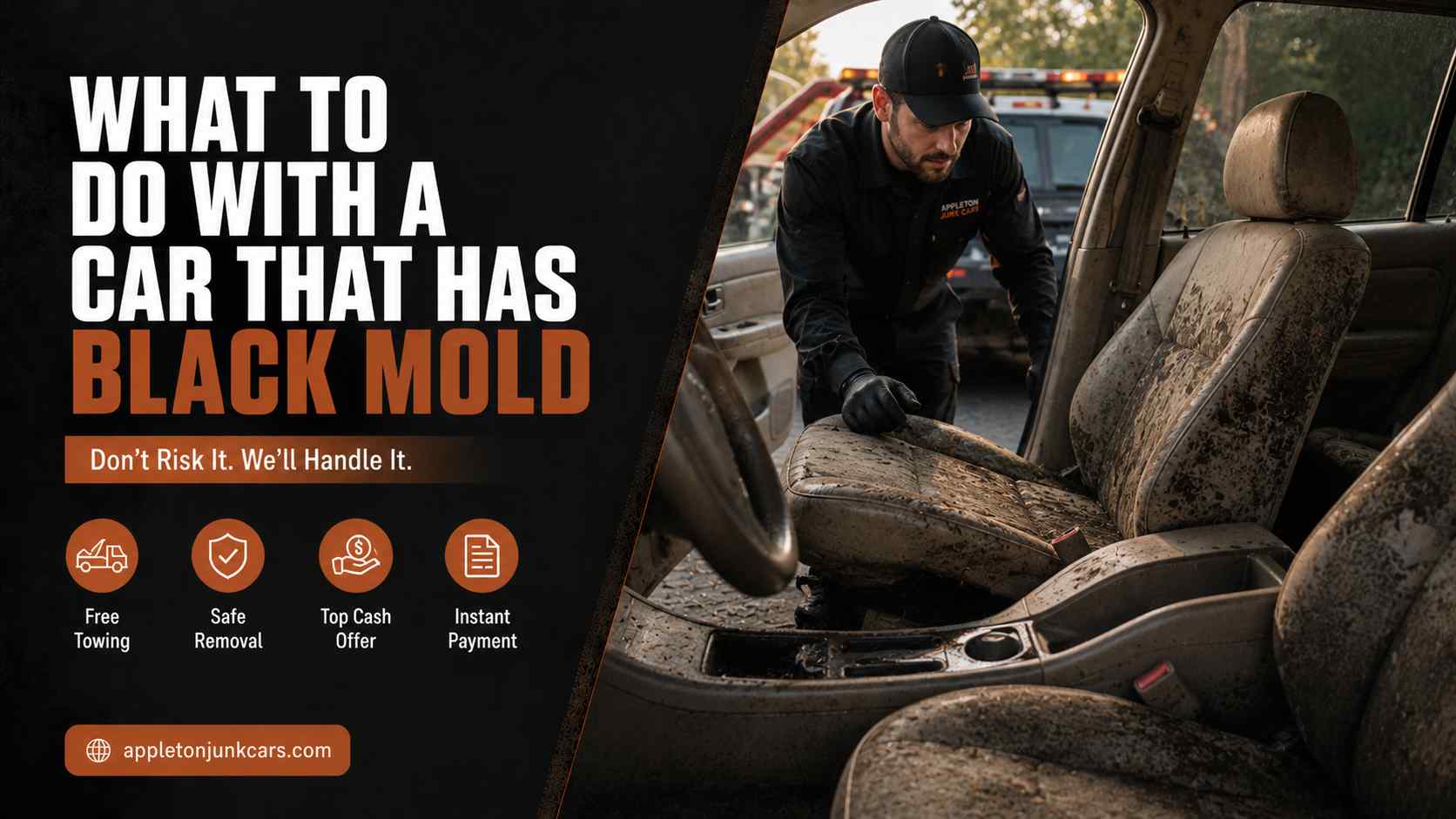
Opening the door to your car and being hit by that musty, earthy, unmistakably wrong smell is a moment most people will not forget. If you can see dark patches on the seats, the carpet, or the headliner alongside that smell, you are dealing with a mold problem. And if those patches are greenish-black, slimy, or spreading, black mold may have taken hold of your vehicle.
The options in front of you range from DIY cleaning to professional remediation to selling the car as-is. Which one makes sense depends on how far the mold has spread, how much the vehicle is worth, and your tolerance for the health risks involved in driving a moldy car. This guide covers everything you need to make that decision clearly.
What Is Black Mold in a Car?
Mold is a living organism from the fungus family that grows wherever moisture and organic material coexist. Car interiors provide exactly the conditions mold needs: fabric, foam, carpet padding, and wood trim as food sources, combined with the enclosed, often humid environment inside a vehicle. Several mold species grow inside cars, and not all of them are black.
The term “black mold” usually refers to Stachybotrys chartarum, a dark greenish-black mold that grows specifically on materials with high cellulose content that have been wet for an extended period. Other molds found in vehicles include Cladosporium (which appears green to black), Aspergillus (often yellow to green), and Penicillium (blue-green). All molds in a car represent a health concern and a deterioration problem, but Stachybotrys is considered the most hazardous because of the mycotoxins it produces.
Common Causes of Black Mold in Cars
Mold does not appear randomly. It requires persistent moisture and an organic surface to colonize. Understanding what caused your mold problem is essential because treating the mold without addressing the moisture source guarantees it will return.
Water Leaks
Leaking door seals, cracked windshield seals, sunroof drainage tube blockages, and poorly sealed body panel gaps allow rainwater to enter the vehicle interior. Water that accumulates under carpet padding or inside door panels creates the sustained damp environment that mold requires. A car that has had an interior water leak and was not thoroughly dried within 24 to 48 hours almost always develops mold within one to two weeks.
Flood Damage
A vehicle that has been through a flood event, even partially, carries a very high risk of black mold growth. Floodwater that enters the passenger compartment soaks the carpet, the foam padding beneath it, the seat cushions, and the insulation in the doors and roof. Professional drying within the first 24 hours can prevent mold development. After 48 to 72 hours in a wet condition, mold is virtually certain to have begun growing in the seat foam, carpet backing, and door panels regardless of surface appearance.
Spills and Poor Ventilation
Food and drink spills that are not properly cleaned provide immediate organic material for mold growth. A spilled beverage that soaks into the carpet and is not extracted and dried will produce mold within days during warm weather. Cars that are stored for extended periods with windows closed in humid climates develop mold from normal condensation that has nowhere to evaporate. Wet umbrellas, damp gym clothes, or wet car seats left in an enclosed vehicle are common triggers.
Signs and Symptoms of Mold in Your Car
Mold is often more advanced than it appears from a surface inspection. Knowing all the signs helps you assess the true extent of the problem before deciding on a course of action.
Visual and Odor Signs
The most obvious sign is visible mold growth: dark spots, fuzzy patches, or discolored areas on seats, carpet, headliner, door panels, or trunk lining. The color ranges from white to green to black depending on the species. A persistent musty, earthy, or sour smell that does not disappear when windows are opened is often the first sign of mold in areas you cannot easily see. A smell that comes specifically from the air vents when the fan is running indicates mold inside the HVAC system.
Physical Symptoms in the Driver or Passengers
Mold exposure triggers symptoms that many people attribute to allergies or a recurring cold: sneezing, runny nose, itchy eyes, skin irritation, coughing, and headaches. If these symptoms appear specifically when you are inside your car and improve when you leave, mold is a strong candidate. Prolonged exposure to black mold specifically can cause more serious symptoms including chronic fatigue, difficulty breathing, and in people with compromised immune systems, severe respiratory infections.
Hidden Places Mold Grows in a Car
Surface mold you can see is rarely the full extent of the problem. Mold spreads to wherever moisture has traveled, and in a car that means places you cannot inspect without disassembly.
Under the Carpet and Padding
The carpet in a car sits on top of a layer of foam padding and a jute or fiber mat, then the bare metal floor pan. Moisture that soaks through the carpet continues down through each layer. The carpet surface may look and feel dry while the padding beneath it remains wet and actively growing mold. Pulling back a corner of the carpet and inspecting the padding is the only way to assess the true condition.
Inside the HVAC System
The evaporator core inside the HVAC system collects condensation during AC operation. If the AC condensate drain tube is blocked or if mold spores enter the fresh air intake, mold can grow on the evaporator core surface and throughout the ductwork. HVAC mold is particularly concerning because every time the fan runs, it disperses spores throughout the passenger compartment into the breathing air.
Inside Door Panels, Seats, and the Trunk
Door panels contain insulation and vapor barrier materials that hold moisture against the interior of the door skin. Seat foam absorbs spills and stores moisture for extended periods. The trunk, particularly if the spare tire well has collected water, is a common mold location that goes unnoticed for months. The headliner backing material can grow mold if a roof leak or sunroof seal failure has allowed water to penetrate the overhead structure.
Health Risks of Black Mold in a Car
The health risks from mold exposure inside a car are real and should not be dismissed as minor. An enclosed vehicle with poor ventilation concentrates mold spores at levels that would not occur in a well-ventilated building. Every breath inside a moldy car draws those spores into the respiratory system.
BLACK MOLD HEALTH WARNING: Stachybotrys chartarum (black mold) produces mycotoxins that cause serious health effects with prolonged exposure. Do not drive a vehicle with visible black mold or a persistent moldy smell without respiratory protection. People with asthma, allergies, or compromised immune systems are at significantly higher risk and should not enter the vehicle at all until remediation is complete.
Short-Term Health Effects
Allergic reactions including sneezing, runny nose, red eyes, and skin rashes are the most common short-term effects of mold exposure. These symptoms are caused by the immune system responding to mold spores and fragments. Headaches and irritation of the throat and sinuses are also common. These effects typically begin immediately or within a short period after exposure and resolve when the exposure stops.
Long-Term and Serious Health Effects
Chronic mold exposure, particularly to Stachybotrys, has been linked to more serious conditions including asthma development and worsening, chronic sinus infections, neurological symptoms including memory problems and mood changes, and fatigue that does not resolve with rest. People who are immunocompromised can develop serious pulmonary infections from mold spore inhalation. Children are particularly vulnerable because their respiratory and immune systems are still developing.
Is It Safe to Drive a Moldy Car?
The honest answer is: no, not without protection, and not long-term even with it. A car with visible black mold or a strong mold odor exposes every occupant to elevated mold spore concentrations during every trip. The enclosed cabin, particularly with the windows up and the ventilation recirculating, concentrates spores in the breathing air.
If you must drive a moldy car temporarily while arranging remediation, keep all windows open to maximize ventilation, do not use the recirculation setting on the HVAC, and wear an N95 respirator. Limit trips to short, necessary distances. Do not transport children, elderly individuals, or anyone with respiratory conditions in a vehicle with active mold growth. For black mold specifically, the vehicle should not be driven until professional remediation is completed.
Can Black Mold Be Removed From a Car?
In many cases, yes. Surface mold on non-porous surfaces can be effectively killed and removed. Mold that has penetrated deep into foam seat cushions, carpet padding, and HVAC ductwork is far more difficult to fully eradicate. The key factor is whether the affected materials are cleanable or need to be replaced.
The critical point about mold removal that most guides underemphasize: killing mold is not the same as removing it. Dead mold spores still trigger allergic reactions and still produce mycotoxins. Effective mold remediation requires removing the mold (physically extracting it), not just killing it in place. This is why wiping down mold with bleach, while it kills surface mold, does not address spores embedded in porous materials.
DIY Mold Removal Methods
DIY mold removal is appropriate only for light surface mold on non-porous or semi-porous surfaces where the mold has not penetrated into foam or padding materials. If the mold is widespread, deeply embedded, or has reached the HVAC system, professional remediation is the appropriate response.
What You Need
Before starting: an N95 respirator (mandatory, not optional), nitrile gloves, eye protection, a HEPA-filtered vacuum, a spray bottle, clean cloths or disposable wipes, and an antimicrobial cleaning solution. Effective options include white vinegar (undiluted), a diluted solution of borax in water (1 cup per gallon), or an enzyme-based automotive mold cleaner. Avoid bleach on colored fabrics and leather: it kills mold but can damage the material.
The Process
Work outdoors or with all vehicle doors and windows open for maximum ventilation. First, HEPA vacuum all surfaces to remove loose spores without spreading them. Apply the antimicrobial solution to affected areas and allow it to dwell for 10 to 15 minutes. Gently scrub with a soft brush. Extract and wipe away the residue. Allow the surfaces to dry completely: this may require a fan and several hours. Repeat for any remaining visible growth.
Limitations of DIY Removal
DIY methods cannot reach mold inside seat foam, under carpet padding, inside door panels, or within the HVAC system. If you can smell mold after visible surface cleaning, there is still active growth in a location the cleaning has not reached. DIY is appropriate for a single moldy spot found early. It is not appropriate for a car that smells strongly of mold throughout the interior.
Professional Mold Remediation
Professional automotive mold remediation involves specialized equipment and techniques that reach contamination in locations that DIY methods cannot access. It is the appropriate response for any widespread mold problem, any mold involving the HVAC system, or any visible black mold growth.
What Professionals Do
Professional remediators begin with a full interior inspection to assess the extent of contamination. They remove and replace materials that cannot be effectively cleaned: carpet padding, seat foam, and any structural insulation that has been penetrated. Remaining surfaces are treated with EPA-registered antimicrobial solutions and HEPA-extracted. The HVAC system is treated specifically, often using fogging or direct application of antimicrobial solution to the evaporator core and ductwork. The vehicle is then dried with industrial air movers and dehumidifiers.
Cost of Professional Mold Remediation
Light surface mold remediation at a professional detailer runs $200 to $800 depending on the severity and vehicle size. Moderate infestations requiring material replacement and HVAC treatment run $1,000 to $2,000. Severe cases involving extensive material removal, full interior disassembly, and multiple treatment phases can exceed $2,500. Compare these costs to the vehicle’s current market value before committing to professional remediation.
Step-by-Step Mold Removal Process
Whether you are tackling mold yourself or working with a professional, the effective process follows the same sequence. Skipping steps leads to recurrence.
Step 1: Find and Fix the Moisture Source
No mold removal is permanent if the moisture source remains active. Before any cleaning begins, identify and fix what caused the moisture: seal the leaking door, repair the windshield seal, clear the sunroof drainage tube, or address whatever introduced the water. Skipping this step means mold will return within weeks of even the most thorough remediation.
Step 2: Remove Contaminated Materials
Remove affected carpet, carpet padding, seat covers, and any other materials that are heavily contaminated and cannot be effectively cleaned. Bag them immediately in heavy plastic and dispose of them as contaminated waste.
Step 3: Treat All Surfaces
Apply antimicrobial treatment to all interior surfaces including hard plastics, metal, and glass. Treat the HVAC evaporator core and ducts. Allow adequate dwell time for the treatment to work. HEPA vacuum all treated surfaces.
Step 4: Dry Completely
Drying is the most critical and most often rushed step. Residual moisture allows mold to return. Use fans, a dehumidifier, and if possible direct sunlight to dry the interior completely. This may take 24 to 48 hours or longer for a heavily soaked vehicle. Do not reinstall new materials until the interior measures less than 50 percent relative humidity.
Step 5: Prevent Recurrence
Apply a mold inhibitor spray to new materials and existing surfaces. Consider a desiccant pack in the vehicle to absorb ambient moisture. Address any remaining ventilation or drainage issues. Inspect monthly for early signs of regrowth.
When the Car Is Beyond Saving
Some mold situations cannot be practically remediated. When mold has penetrated structural components, when the HVAC system is thoroughly contaminated, when the vehicle has been wet for months, or when the total remediation cost exceeds the vehicle’s value, the car is effectively beyond practical saving.
Is It Worth Repairing?
Compare the total remediation cost to the vehicle’s clean market value. If remediation at $2,000 would restore a car worth $8,000, it is financially justifiable. If remediation at $2,000 would restore a car worth $2,500, the math clearly does not work. Get a professional remediation quote and compare it honestly to the vehicle’s market value on a platform like Kelley Blue Book.
Should You Sell the Car Instead?
Selling a mold-damaged car as-is is a legitimate option, particularly when the vehicle’s market value does not justify the remediation cost. You must disclose the mold damage to any buyer. In most states, selling a vehicle with known material defects without disclosure creates liability. But buyers who specifically purchase mold-damaged vehicles for salvage, parts, or professional restoration are not deterred by honest disclosure.
Who Buys Mold-Damaged Cars?
Despite the off-putting nature of mold, an active buyer market exists for mold-damaged vehicles. The same platforms and services that buy cars with other damage types also buy mold-damaged cars.
Online Junk Car Buyers
Services like Peddle, Wheelzy, and CarBrain buy cars in any condition including mold damage. They include free towing and pay within 24 to 48 hours. Their offers reflect the vehicle’s diminished value due to the mold damage, but they are a legitimate and fast option. Get quotes from two or three platforms before accepting an offer.
Local Salvage Yards
Local junkyards accept mold-damaged cars for scrap and parts value. Their offers are based on weight and parts demand rather than the mold condition specifically. For a vehicle where the mold damage is primarily interior (the mechanical and body components are still valuable), a junkyard may pay similarly to a clean car of the same type.
How Much Is a Moldy Car Worth?
A car with significant mold damage is worth substantially less than the same vehicle in clean condition. The deduction reflects both the remediation cost and the residual risk perception that even a remediated vehicle carries.
Mold-damaged vehicles typically sell for 30 to 60 percent below their clean market value in a private sale, depending on the severity and visibility of the damage. Junk buyers price these vehicles based on mechanical and parts value, largely ignoring the interior mold condition when calculating scrap and parts worth. A car worth $8,000 clean might realistically sell for $3,200 to $5,600 with disclosed mold damage. Get multiple quotes and use the highest as your baseline.
Does Insurance Cover Mold Damage in Cars?
Auto insurance rarely covers mold damage directly. Mold is typically classified as gradual damage rather than a sudden and accidental loss, and most comprehensive policies exclude gradual damage explicitly. However, if the mold resulted directly from a covered event (a flood that the policy covered, or a vandalism event that broke a window and allowed water in), a claim for the resulting mold damage may have merit.
Contact your insurer to describe the specific circumstances and ask whether the mold damage is covered under your policy. If the mold originated from flood damage and you have comprehensive coverage that paid the flood claim, ask specifically whether the resulting mold is included. Do not assume coverage exists, but do not assume it does not without asking.
How to Prevent Mold From Returning
After remediation, prevention is the ongoing discipline that protects your investment.
Ventilation and Moisture Control
Park with a window cracked slightly when conditions permit to allow air circulation. After rain, wipe down any water that has entered the vehicle. Do not leave wet items (umbrellas, swimwear, gym clothes) inside the car. Run the AC periodically even in cool weather: the AC system dries the interior air and prevents humidity buildup.
Regular Inspection and Maintenance
Inspect door seals, windshield seals, and sunroof drainage channels annually or after any season with heavy rainfall. Address any water entry immediately. Check under the carpet corner in the driver and passenger footwells after heavy rain: finding moisture here early prevents it from becoming a mold problem. Clean up any spills immediately and ensure complete drying before closing the vehicle.
Frequently Asked Questions
What does black mold smell like in a car?
Black mold in a car produces a musty, earthy, damp odor often described as similar to wet cardboard, old paper, or a damp basement. The smell is distinct from simple dust or dirt. It tends to be stronger when the car has been closed and warm, and may be most pronounced when the HVAC fan runs and circulates air through contaminated ducts.
Can you get sick from black mold in a car?
Yes. Mold spore inhalation causes respiratory irritation, allergic reactions, and headaches in most people. Black mold (Stachybotrys chartarum) produces mycotoxins that can cause more serious symptoms with prolonged exposure. People with asthma, allergies, or weakened immune systems are at the highest risk. Children should not be regularly transported in a vehicle with confirmed mold growth.
Is it worth fixing a car with black mold?
It depends on the remediation cost versus the vehicle’s value. Get a professional remediation quote and compare it to the vehicle’s clean market value on Kelley Blue Book. If remediation costs less than 30 to 40 percent of the car’s value, repair typically makes financial sense. If the cost approaches or exceeds 50 percent of the vehicle’s value, selling the car as-is and using the proceeds toward a replacement is often the better financial decision.
Conclusion
Black mold in a car is a serious problem that sits at the intersection of health, finance, and practicality. The right course of action depends on how far it has spread, what caused it, and whether the remediation cost makes sense against the vehicle’s value. Address the moisture source first, always. DIY cleaning works for early-stage surface mold. Professional remediation is necessary for any widespread, embedded, or HVAC-involved infestation. And if the math does not support repair, selling the car as-is to a junk buyer or online service is a legitimate path that gets you out from under the health risk and into a clean vehicle.