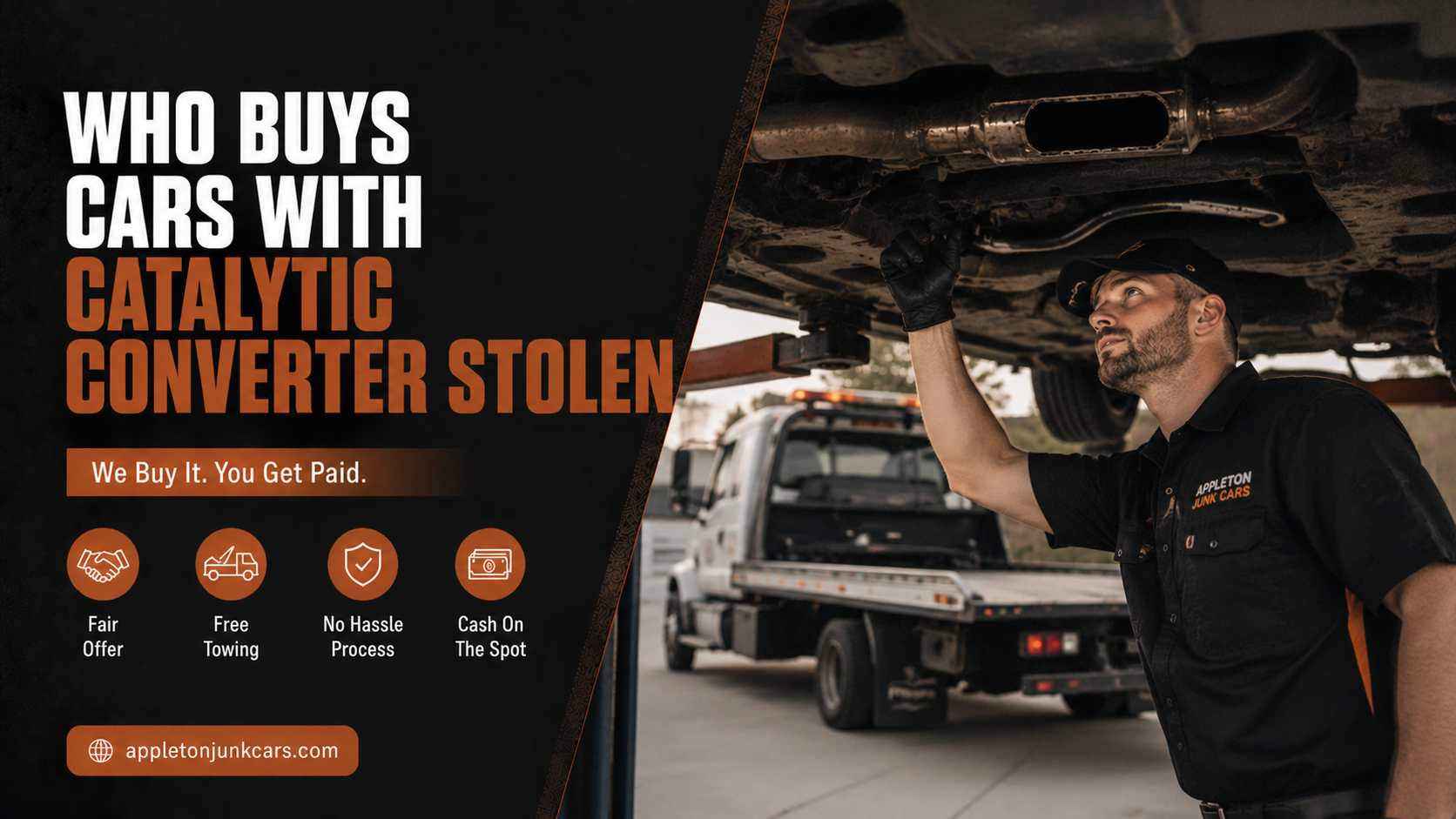
You walked out to your car, turned the key, and were greeted by a roar that sounded like a fighter jet rather than your morning commute. Or maybe you noticed the check engine light and a drop in performance before looking underneath and confirming the worst. Your catalytic converter is gone. You are not alone: tens of thousands of catalytic converters are stolen each year in the United States, and the question of what to do next is one that many car owners face.
Your options are more varied than you might think: file an insurance claim, replace the converter and keep the car, or sell the car as-is to one of several buyer types who will take it without a catalytic converter. This guide covers every path with honest guidance on what to expect financially and legally.
Can You Sell a Car Without a Catalytic Converter?
Yes. Selling a car without a catalytic converter is legal as long as you disclose the missing component to the buyer. The catalytic converter is a required emissions control device, and a car missing it will fail an emissions test in most states. This limits the pool of buyers who can register and drive the car in regular use, but it does not prevent the sale itself.
One important financial note before anything else: if your catalytic converter was still attached to the car when it was taken, your car’s value to most junk buyers is 30 to 50 percent lower than if you sold the whole car with the converter intact. The catalytic converter contains platinum, palladium, and rhodium and is one of the highest-value components in a junk car offer. That is why junk buyers pay so much for these cars whole, and why the offer drops significantly when it is missing.
Legal Considerations When Selling Cars With Catalytic Converter Stolen
Disclosure of the missing catalytic converter is legally required in any sale. Most states have disclosure laws that require sellers to inform buyers of known material defects. A missing catalytic converter is a significant material defect that affects the car’s ability to pass emissions testing, its drivability, and its value.
Title and Documentation
If the theft was reported to police, you may have a theft report number that documents the loss. This documentation is useful when dealing with insurance and can also provide context for buyers. The car still has its original title and can be sold in a normal private transaction with full disclosure of the missing component. Nothing about the title changes because of the theft.
State Emissions Laws
In states with mandatory emissions testing, a car without a catalytic converter will fail the emissions inspection and cannot be legally registered for road use. Buyers who plan to use the car on public roads in these states will need to factor in the cost of converter replacement before registration. This limits your private buyer pool to people outside emission-test states, people who will not register the car for road use, or mechanics and rebuilders who plan to replace the converter before use.
Who Buys Cars With a Stolen Catalytic Converter?
Multiple buyer categories will purchase a car with a missing catalytic converter. The right choice depends on how quickly you need to sell, how much money matters, and how much effort you want to put in.
Junk Car Buyers
Online junk car buying services are among the best options for a car with a stolen catalytic converter. Services like Peddle, Wheelzy, and CarBrain specifically ask about converter condition when generating quotes because it affects the value. They buy these cars, arrange free towing, and pay quickly. Their offers will be lower than if the converter were present, but they are legitimate, fast, and include no towing fees.
Salvage Yards
Local salvage yards and junkyards accept cars without catalytic converters. They buy for scrap weight and the value of remaining parts. Without the converter, one of the higher-value components is gone, so the offer will be lower than for the same car with its converter intact. Calling three local yards and comparing gives you a baseline before approaching online buyers.
Auto Recyclers
Auto recyclers buy vehicles for systematic parts removal and recycling of materials. They will buy a car without a catalytic converter because every other component still has value: the engine, transmission, alternator, doors, glass, and scrap metal. Recyclers operate similarly to salvage yards and often pay comparably.
Cash for Cars Companies
National cash-for-cars companies advertise specifically for problem vehicles and damaged cars. They accept cars missing catalytic converters as part of their regular business. These companies work similarly to online instant-offer platforms and typically include free towing in their offers. Get multiple quotes: rates vary significantly between companies for the same vehicle.
Dealerships
Dealerships may accept your car as a trade-in even without a catalytic converter, but they will deduct the full replacement cost from the trade value plus their profit margin on the repair. This typically produces a lower net than selling directly to a junk buyer or salvage yard. Dealerships are more useful as a trade-in path when you are buying a replacement vehicle from them simultaneously and the simplicity of one transaction is worth the lower trade value.
Private Buyers
Private buyers exist for cars without catalytic converters: mechanics who will install a converter and use the car, people in states without emissions testing who can register and drive the car with a replacement cat (or in some states even without one), and buyers in other countries where the converter is not required. Listing on Facebook Marketplace, Craigslist, and eBay Motors with full disclosure of the missing converter reaches this audience. Expect to price the car at least $1,500 to $3,000 below its normal private sale value to attract realistic offers.
How Much Is the Car Worth Without a Catalytic Converter?
The value reduction from a missing catalytic converter depends on three things: the car’s overall value, the cost to replace the converter, and whether you are selling to a private buyer or a junk buyer.
To an online junk buyer or salvage yard: expect the offer to be 30 to 50 percent lower than if the converter were present, because the cat is one of the highest-value parts in a junk offer. A car that would receive a $1,200 offer with its converter might get $700 to $850 without it. To a private buyer: the deduction is roughly the cost of converter replacement ($1,200 to $3,500 depending on the vehicle) plus a risk discount because the buyer is uncertain about the full condition. Catalytic converter replacement averages about $2,900 per State Farm claims data, meaning a car worth $10,000 running clean might realistically sell for $6,500 to $7,500 to a private buyer who plans to replace the cat.
Should You Replace the Catalytic Converter Before Selling?
This is the question most owners wrestle with. The answer depends on one calculation: will the replacement cost be recovered in a higher sale price?
Sell As-Is vs. Repair First
Replacing the catalytic converter typically costs $1,200 to $3,500 including parts and labor, depending on the vehicle. After replacement, the car returns to its full clean market value. The question is whether the increase in sale price exceeds the cost of replacement. On a newer, high-value vehicle where the converter replacement is relatively low-cost, replacing first and selling clean typically produces a better financial outcome. On an older, lower-value vehicle where the replacement cost approaches or exceeds the vehicle’s clean value, selling as-is to a junk buyer is almost always the better financial choice.
A useful rule: if the replacement cost is less than 25 percent of the vehicle’s clean market value, replacement and sale typically produces a better net outcome. If it is more than 40 percent, selling as-is is usually better financially.
How to Sell the Car Step by Step Guide
If you have decided to sell the car with the catalytic converter missing, the process is straightforward.
Step 1: Get Multiple Quotes
Start with two or three online instant-offer platforms. Enter the vehicle details and indicate specifically that the catalytic converter is missing. These quotes are free, instant, and establish the range you are working in. Follow with a call to one or two local salvage yards for comparison.
Step 2: Accept the Best Offer and Schedule Pickup
Compare all quotes and accept the highest. Confirm that free towing is included. Schedule the pickup for a time when you will be available to hand over the keys and title. Remove your personal belongings, license plates, and any accessories you want to keep before pickup.
Step 3: Complete the Paperwork
Sign the title over to the buyer. If the buyer provides a bill of sale, sign it as well. Note the buyer’s name, the sale date, and the sale price for your records. Some states require you to notify the DMV of the vehicle transfer: check your state’s requirements.
Required Documents
The vehicle title (clear and in your name) is the primary document required. A government-issued ID is typically required at pickup. If the title is lost, contact your DMV for a replacement duplicate before proceeding. Some buyers also require a bill of sale for their own records.
Insurance Claim Considerations
Catalytic converter theft is covered under comprehensive auto insurance, not liability or collision. If you have comprehensive coverage, file a claim. The average catalytic converter theft claim runs approximately $2,900 based on State Farm data.
Filing the Claim
Contact your insurer immediately after confirming the theft. File a police report first if you have not already: your insurer will require the police report number. The insurer will assess the repair cost and may either pay for replacement directly or issue a check for the ACV of the loss. Your deductible applies: if your deductible is $500 and the replacement costs $2,500, you receive $2,000.
Impact on Your Rates
A comprehensive claim for theft typically has less impact on your premium than a collision claim, but it can still affect rates at renewal. Check with your agent about the potential rate impact before filing if the theft amount is only modestly above your deductible. Paying out of pocket for a $2,500 theft with a $500 deductible and receiving $2,000 may be better than triggering a rate increase worth more than $2,000 over the next few years.
Can You Drive Without a Catalytic Converter?
Yes, for short distances, but with significant caveats. A car without a catalytic converter is extremely loud because the exhaust note is no longer muffled by the converter housing. The check engine light will illuminate immediately. Fuel economy drops because the oxygen sensor readings are disrupted. In states with emissions requirements, the car cannot legally be registered or pass inspection without the converter.
In many states, driving without a catalytic converter is technically illegal on public roads because it violates federal emissions standards. Law enforcement rarely stops vehicles specifically for this violation, but the check engine light and extreme exhaust noise may attract attention. Limit driving without the converter to essential trips while arranging repair or sale.
What If the Car Will Not Start After Converter Theft?
A catalytic converter theft sometimes damages adjacent exhaust components, oxygen sensors, or electrical wiring in the process of cutting. If the car will not start or runs very poorly after the theft beyond the normal loud exhaust note, inspect for cut wiring to the oxygen sensors, damage to the exhaust manifold, or disruption to other nearby components.
If the car is non-starting due to theft damage, this does not change your selling options significantly. Online junk buyers and salvage yards buy non-starting vehicles with equal ease, using flatbed trucks for collection. Simply indicate that the car is non-starting when getting quotes so the offer reflects the full condition accurately.
Tips to Get the Best Offer
A few practices consistently produce better offers for cars missing catalytic converters.
Be Accurate and Complete in Your Description
When requesting quotes online, disclose the missing converter but also highlight what is still working: a running engine, functioning transmission, clean body, good interior, and working electronics all contribute to a higher offer. Buyers value everything the car has, not just what is missing. A well-described listing with accurate condition information produces firm offers that do not get revised downward at pickup.
Get at Least Three Competing Quotes
Never accept the first offer from any single source. Quotes vary by $200 to $600 for the same vehicle across different buyers. Use the highest quote as leverage when calling others. Some services will match or beat a competing offer when presented with it directly. The 15 minutes you spend getting multiple quotes typically produces a meaningfully higher sale price.
How to Prevent Future Catalytic Converter Theft
After your experience, prevention is the most valuable investment.
Anti-Theft Devices
Catalytic converter protection devices, often called cat locks or cat shields, are steel plates or cages that bolt around the converter and make cutting it off significantly more difficult and time-consuming. They cost $150 to $400 installed. Shield brands like Catstrap, CatSecurity, and MillerCAT are widely used on the most frequently targeted vehicles. Many insurance companies offer discounts for vehicles with documented anti-theft devices.
Parking and Environmental Deterrents
Park in well-lit areas with security cameras whenever possible. Thieves avoid locations where their activity will be recorded. Home garage parking eliminates the risk almost entirely. If you park outdoors regularly in a high-theft area, consider a vehicle alarm that detects vibration from sawing or cutting. VIN etching on the converter, which some dealers and shops offer, makes the converter harder to sell on the black market.
Frequently Asked Questions
Who buys cars with a stolen catalytic converter?
Online junk car buying services like Peddle, Wheelzy, and CarBrain buy cars with missing catalytic converters and include free towing in their offers. Local salvage yards and auto recyclers accept them as well. Private buyers willing to replace the converter before use are also a realistic option. Dealerships will accept trade-ins but typically offer the least money.
How much less is a car worth without a catalytic converter?
To junk buyers: 30 to 50 percent less than with the converter present because the cat is one of the highest-value components in a junk car offer. To private buyers: approximately the cost of replacement ($1,200 to $3,500) plus a risk discount. Getting multiple quotes from different buyer types reveals the actual spread for your specific vehicle.
Does insurance cover catalytic converter theft?
Yes, under comprehensive coverage. Comprehensive covers theft events. You are responsible for your deductible. File a police report immediately and provide the report number to your insurer. The average claim for a stolen catalytic converter runs approximately $2,900. Consider the potential rate impact before filing if the amount is only slightly above your deductible.
What cars are most targeted for catalytic converter theft?
Toyota Prius hybrids are the most frequently targeted because their converters contain a higher loading of precious metals. Toyota trucks and SUVs, Honda Element, Ford F-Series trucks, and Chevrolet full-size trucks are also commonly targeted due to easy undercar access. Trucks and SUVs in general are at higher risk because their ground clearance makes the converter more accessible without specialized equipment.
Conclusion
A stolen catalytic converter is an infuriating crime, but it does not leave you without options. File a police report and an insurance claim if you have comprehensive coverage. Get quotes from multiple junk buyers and salvage yards before making any decisions. Decide whether replacing the converter and selling the car clean, or selling it as-is, produces the better financial outcome for your specific vehicle. If selling, disclose the missing converter to every buyer, get at least three competing quotes, and accept the highest.
And once you have the replacement or the new vehicle, invest in a cat shield. The $200 to $400 cost of a protection device is far less than the deductible and rate impact of a second theft claim.