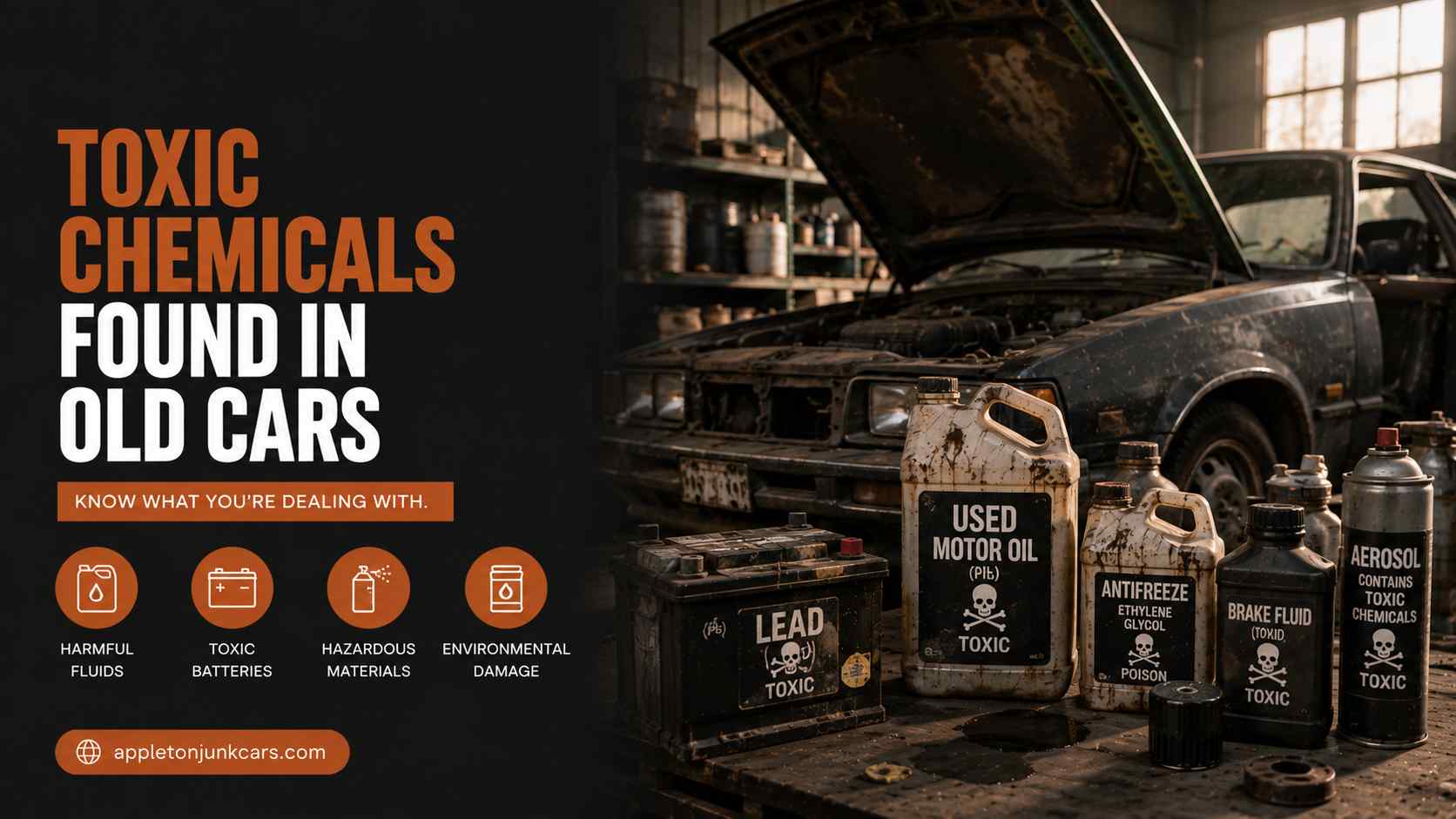
Owning or restoring a classic car is one of the most rewarding things a person can do. There is a reason people dedicate decades to these machines: they represent history, craftsmanship, and a connection to something tangible in an increasingly digital world. But beneath the chrome and patina of a vintage vehicle, there is a chemistry story that most owners and restorers never hear until someone gets sick.
Old cars were built in an era when the health effects of many industrial chemicals were unknown, ignored, or deliberately underplayed. Asbestos, lead, PCBs, brominated flame retardants, and volatile organic compounds were standard materials in vehicles manufactured before the 1980s and in many cases well into the 1990s. These compounds do not neutralize with age. In many cases they become more dangerous as they degrade, flake, and release particles or vapors that were never present when the vehicle was new.
This guide covers every major toxic chemical category found in old vehicles, where each one is hidden in the car, how it becomes a hazard during restoration or daily use, and what you can do to protect yourself and the people around you.
Why Old Cars Carry Chemical Risks That Modern Vehicles Do Not
The chemical environment inside and around a vintage vehicle is fundamentally different from a modern car, and the difference is not just a matter of degree. It is a matter of which chemicals were considered acceptable at the time of manufacture. Modern vehicles are subject to extensive chemical restrictions: REACH in Europe, EPA guidelines in the United States, and various international standards that effectively eliminated most of the compounds discussed in this guide from new vehicles over the course of the 1980s through 2000s.
Vehicles built before these regulations took effect were designed and manufactured with no such constraints. Asbestos was the best heat-resistant material available and cost very little. Lead compounds produced the most vibrant paint colors. PCBs made plastics more durable. No one building a 1967 Mustang or a 1972 Chevelle was thinking about what would happen when someone tried to sand the fenders fifty years later.
The Regulatory Timeline That Changed Automotive Chemistry
Understanding the timeline helps you assess which chemicals are likely present in any specific vehicle you own or work on. The EPA began restricting PCBs in 1976 and largely phased them from manufacturing by 1979. Lead in automotive paint was significantly reduced in the late 1970s and largely eliminated by the mid-1980s, though its use was never uniformly banned in automotive applications the way it was in residential paint. Asbestos use in friction materials continued until the late 1980s and was not fully phased out in the US automotive aftermarket until 1993. Brominated flame retardants in vehicle interiors were progressively reduced from the 2000s onward but remain present in many vehicles from the 1980s and 1990s.
Why Working on These Cars Is More Dangerous Than Simply Driving Them
The hazard from toxic materials in old vehicles scales dramatically with what you do to them. Sitting in a well-preserved 1965 Ford Thunderbird and driving it on a sunny afternoon carries minimal risk because the materials are intact and sealed. Grinding the brake drums, sanding the paint, cutting the headliner, or disturbing old gaskets releases the hazardous compounds from their contained state into breathable air and onto skin surfaces. This is why restoration and maintenance work carries risks that simple ownership does not. The distinction matters because it determines when protective equipment is essential versus when normal driving is reasonably safe.
Asbestos: The Most Serious Chemical Hazard in Classic Car Work
Asbestos is not a historical curiosity in classic car restoration. It is an active hazard in every garage where someone is working on a vehicle manufactured before the early 1990s. Asbestos was used so extensively in automotive applications specifically because it is extraordinarily effective at what it does: withstanding extreme heat and friction without degrading. The same properties that made it invaluable to manufacturers make it nearly impossible to substitute without careful engineering, which is why it persisted in automotive use long after its health risks were documented.
Where Asbestos Is Found in Classic Vehicles
Brake pads and brake shoes are the most documented asbestos-containing components in old vehicles. Drum brake shoes on vehicles from the 1950s through the 1980s frequently contained chrysotile (white) asbestos as the primary friction material. Disc brake pads from the same era similarly used asbestos in the friction compound. Clutch discs and clutch facings used asbestos for the same heat-resistance reasons. Beyond friction components, asbestos appears in engine head gaskets, exhaust manifold gaskets, and valve stem seals where heat management was critical. Interior applications include headliner backing materials in some models, underbody sound deadening compounds, and in some cases the insulation around firewall penetrations.
The Health Risk and Why No Exposure Level Is Safe
Asbestos causes disease through inhalation of microscopic mineral fibers that lodge permanently in lung tissue. The fibers cannot be expelled by the body and cause cumulative damage over years and decades. The diseases associated with asbestos exposure include asbestosis (progressive scarring of lung tissue), mesothelioma (an aggressive cancer of the lung lining that is caused exclusively by asbestos exposure), and lung cancer. Disease onset typically appears 20 to 40 years after exposure, which means a mechanic who worked on classic car brakes in the 1980s may be receiving a diagnosis today.
There is no established safe level of asbestos exposure. Even a single significant exposure event carries statistical risk. Asbestos fibers are invisible to the naked eye, have no smell, and produce no immediate sensation when inhaled. This makes the hazard uniquely deceptive: there is no way to know you have been exposed during the exposure event itself.
How to Protect Yourself When Working Near Asbestos Components
If you are working on brakes, clutch components, or gaskets on a vehicle built before 1993, treat every component as potentially containing asbestos until you can confirm otherwise. Never use compressed air to blow dust from brake drums, bell housings, or gasket surfaces: this aerosolizes fibers directly into breathing air. Use a wet wipe-down method or a HEPA-filtered vacuum designed for asbestos instead. Wear a properly fitted N100 or P100 respirator, not a dust mask, not a surgical mask, and not an N95 alone. If you have any reason to believe materials require cutting, grinding, or significant disturbance, contact a certified asbestos professional for testing and removal.
SAFETY: There is no safe way to grind, sand, or cut brake shoes, clutch discs, or engine gaskets from pre-1993 vehicles without respiratory protection. The only appropriate respirator for asbestos work is one rated N100 or P100. Change your clothes before entering your home after brake or clutch work and wash them separately to prevent secondhand family exposure.
Lead and Cadmium in Vintage Automotive Paint
The paint on a classic car is often the first thing a restorer touches and one of the most hazardous surfaces to disturb. Vintage automotive paint, particularly from the 1950s through the 1970s, used lead chromate and cadmium compounds to produce the vivid, durable colors that made those cars visually spectacular. The chemistry worked beautifully: lead chromate produced brilliant yellows, oranges, and reds that were far more stable under ultraviolet light than organic pigments. Cadmium compounds produced similar bright reds and oranges with extraordinary color depth. Both happen to be acutely toxic heavy metals.
Which Colors and Eras Carried the Highest Concentrations
The highest lead and cadmium concentrations are found in bright yellows, vivid oranges, intense reds, and bright whites from vehicles manufactured before 1980. Green and blue paints of the same era also contain lead but typically at lower concentrations. The practice of applying multiple layers of original paint over decades of repainting means that an older vehicle may have several generations of lead-containing paint beneath the current surface, each layer waiting to be released by sanding. Vehicles from the late 1970s through the mid-1980s occupy a transitional zone where some paints used lead compounds and others did not, depending on the manufacturer and the specific color.
The Dangers of Sanding and Stripping Old Paint
Dry sanding or grinding lead-bearing paint produces a fine metallic dust that remains airborne for extended periods. Lead dust is absorbed through inhalation and through skin contact. Children are particularly vulnerable to lead exposure, which is why secondhand contamination from a restorer’s clothing and work area is a genuine risk to family members. Lead damages the nervous system, kidneys, and reproductive system. Neurological effects from significant lead exposure are not fully reversible. Cadmium exposure is similarly serious, causing kidney damage, lung disease, and bone fragility.
Safe Practices for Paint Removal Work
Wet sanding significantly reduces airborne paint dust compared to dry sanding. Chemical strippers that soften the paint without abrading it produce less airborne contamination than mechanical removal methods. When mechanical sanding is necessary, wear an N100 respirator and nitrile gloves, work outdoors or with dedicated ventilation exhausting away from any living space, and wet the surface before beginning. Dispose of paint dust and stripping residue as hazardous waste, not in regular trash. Never sand lead paint in a space where children or pregnant women are present. Many municipalities have hazardous waste collection programs for lead-containing automotive materials.
Polychlorinated Biphenyls (PCBs) in Interior Plastics and Adhesives
Polychlorinated biphenyls were once considered a marvel of industrial chemistry: stable, fire-resistant, excellent electrical insulators, and useful as plasticizers in rubber and plastic compounds. The automotive industry used them in plastics, adhesives, and sealants throughout the 1950s and into the early 1970s. They were phased out of manufacturing in the United States following the Toxic Substances Control Act of 1976, but the vehicles that contain them are still on the road and in garages.
Where PCBs Were Used in Classic Car Interiors
PCBs appear in the plastics of dashboards and instrument clusters on vehicles from the 1950s through the early 1970s. Headliner backing materials, door panel adhesives, and the vinyl compounds used in seat upholstery may contain PCBs depending on the manufacturer and model year. Electrical insulation throughout the vehicle, including the wiring harness jacketing, is another documented location. The challenge with PCBs is that they do not announce themselves visually: a PCB-containing plastic dashboard looks identical to one without them.
Health Effects and Handling Precautions
PCBs are classified as probable human carcinogens and are linked to liver cancer, thyroid disease, immune system disruption, and neurological effects. They are persistent in the environment and accumulate in body fat, meaning exposure effects can compound over time. When PCB-containing plastics age and crack, they can off-gas PCB vapors into the vehicle interior. Cutting or heating these materials increases vapor release significantly. Wear nitrile gloves when handling old dashboard and trim components and avoid cutting or grinding old plastic trim without respiratory protection. Work outdoors or in well-ventilated spaces when removing interior components from pre-1975 vehicles.
Brominated Flame Retardants in Interior Materials
Brominated flame retardants (BFRs) were added to automotive interior materials to meet flammability standards that became more stringent from the 1970s onward. The irony is that these chemicals, added to make vehicle interiors safer from fire, have their own set of health concerns that have only become clear decades after their widespread adoption. BFRs are found in seat foam, seat belt webbing, dashboard plastics, carpet backing, and door panel materials across vehicles from the 1970s through the 2000s.
Recognizing Degrading BFR-Treated Components
BFR-treated materials do not look different from untreated materials when new. With age and UV exposure, however, BFR-containing plastics often develop a yellowish or brownish discoloration, become brittle, and eventually crumble or flake. This degradation is the point of greatest hazard: flaking and crumbling materials release BFR compounds as dust particles that can be inhaled or deposited on skin and surfaces. An old car with a dashboard that is crumbling or foam seat inserts that are breaking down should be treated as a BFR hazard source.
Reducing Exposure During Interior Restoration Work
When removing old interior components that are visibly degrading, wear nitrile gloves and an N95 or better respirator to limit dust inhalation. Avoid breaking or crumbling old seat foam, headliner material, or dashboard padding unnecessarily. Wet the surface of degrading materials with a light mist of water before disturbing them to reduce airborne dust. Dispose of old interior foam and plastic materials through appropriate channels, as some BFRs are classified as persistent environmental contaminants. Replacing degraded interior materials with modern alternatives eliminates the ongoing exposure risk from off-gassing and particle release.
Volatile Organic Compounds from Aging Cabin Materials
Volatile organic compounds (VOCs) are chemicals that evaporate at room temperature, transitioning from solid or liquid form into gas that occupies the breathing air inside the vehicle. Modern cars have a VOC problem during the first few months of ownership, known as the new car smell, as fresh materials off-gas. Old cars have a different and in some ways more serious VOC problem: aging polyurethanes, vinyl (PVC) compounds, glues, and sealants continue to release chemical vapors as they deteriorate. The specific compounds released include benzene, formaldehyde, styrene, toluene, and xylene, several of which are classified carcinogens.
The Most Harmful VOCs in Old Car Interiors
Benzene is a known human carcinogen associated with leukemia and other blood cancers. It is released by aging plastics and adhesives and is also present in gasoline vapors that can enter the cabin from fuel system leaks. Formaldehyde, released by older glues and foam backing materials, is a respiratory irritant and carcinogen at elevated concentrations. Styrene from aged polyurethane foam causes neurological symptoms including headaches and dizziness with prolonged exposure. Toluene and xylene from solvents and adhesives affect the central nervous system and kidneys. In a closed, poorly ventilated old car with degrading interior materials, these compounds can reach concentrations well above safe ambient levels.
Reducing VOC Exposure During Restoration and Daily Use
When working inside an old vehicle interior, keep doors and windows open at all times. Avoid working inside the vehicle in an enclosed garage: VOC concentrations build rapidly in confined spaces. For vehicles used regularly, replacing degraded interior materials (crumbling foam, cracked vinyl, disintegrating headliners) eliminates the primary source of ongoing VOC release. A portable VOC air quality monitor, available for $50 to $150, can give you a real-time reading of indoor air quality and inform decisions about ventilation and material replacement priorities.
Ethylene Glycol in Older Coolant Formulations
Ethylene glycol is the primary active ingredient in most conventional automotive antifreeze and has been the standard coolant base since the mid-20th century. It is an extraordinarily effective freeze-point depressant and corrosion inhibitor, which is why it became universal in automotive cooling systems. It is also a highly toxic substance that presents a deceptively dangerous hazard: it has a sweet taste and smell that is attractive to children and pets, but it causes rapid and severe kidney failure if ingested in even small quantities.
Why Ethylene Glycol Is Deceptively Dangerous
The sweetness of ethylene glycol is not accidental: it is a product of the compound’s chemical structure. This property makes it attractive to animals and potentially to small children who encounter spills or puddles under a vehicle. A fatal dose for a domestic cat is approximately 1.4 milliliters per kilogram of body weight, which means a very small puddle of coolant on a garage floor represents a lethal risk to a cat that walks through it and then grooms its paws. Dogs require a larger dose but are equally vulnerable if they find a coolant puddle in a parking lot or garage. Human toxicity is significant as well, particularly for children. Ethylene glycol poisoning causes central nervous system depression followed by severe kidney damage as the body metabolizes it into toxic oxalic acid compounds.
Safe Handling and Disposal of Old Coolant
Drain old coolant into a sealed, clearly labeled container rather than allowing it to pool on the floor or drain into the ground. Never pour old coolant down a household drain: it is a water-soluble environmental contaminant that reaches waterways and affects aquatic life. Many auto parts retailers accept used coolant for recycling at no charge, and municipal hazardous waste collection events also accept it. Clean up any coolant spills immediately with an absorbent material and dispose of the contaminated absorbent as hazardous waste. In a garage with pets, keep coolant sealed and in a location completely inaccessible to animals. Consider switching to propylene glycol-based antifreeze for vehicles you maintain regularly: it performs comparably to ethylene glycol and is significantly less toxic to animals and children.
Carbon Monoxide from Aging Exhaust Systems
Carbon monoxide is the most immediately life-threatening chemical hazard associated with old vehicles in regular use, and it is the one that receives the least attention in discussions of classic car safety. CO is a colorless, odorless, tasteless gas produced by incomplete combustion in the engine. Modern vehicles manage CO with catalytic converters that oxidize it to carbon dioxide before it exits the tailpipe. Older vehicles without functioning catalytic converters produce substantially higher CO concentrations in their exhaust, and the aging body structures of classic cars create multiple pathways for that exhaust to enter the passenger cabin.
How CO Infiltrates the Cabin on Old Cars
Fresh vehicles are designed to be sealed against exhaust intrusion, but old cars are not fresh. Decades of heat cycling cause body seams and firewall penetrations to develop gaps. Rubber grommets around electrical and mechanical penetrations through the firewall harden, shrink, and crack. Floor pan rust can create pinhole perforations directly into the exhaust flow path. The exhaust system itself develops leaks from rusted mufflers, cracked flex pipes, and deteriorated exhaust manifold gaskets. Each of these conditions allows CO to migrate into the passenger compartment at low concentrations that build over time during driving. Initial symptoms of CO exposure, headache, dizziness, and fatigue, are nonspecific and easily misattributed to other causes, which is why CO poisoning from vehicle exhaust can go unrecognized until it becomes severe.
Testing and Sealing Against CO Leaks
A portable CO detector designed for personal or home use, available for $25 to $60, can be placed in the passenger compartment during a test drive to measure ambient CO concentration. A reading above 9 ppm consistently indicates a leak that needs to be found and sealed. Inspect the full exhaust system for rust, holes, and loose connections. Seal firewall penetrations with heat-resistant silicone or foam. Replace deteriorated floor pan areas rather than patching them cosmetically. Never run an old car in a closed garage, even briefly: CO can reach fatal concentrations in an enclosed garage in minutes from a single vehicle.
FATAL RISK: Never warm up, start, or run any vehicle in a closed or partially closed garage. Carbon monoxide from the exhaust accumulates to fatal concentrations faster than most people expect. This applies to all vehicles but is especially urgent for older cars without functioning catalytic converters. Even a briefly opened garage door does not provide adequate ventilation.
Essential PPE and Safety Practices for Classic Car Restoration
The protection measures for each individual hazard have been covered in their respective sections above. This section brings them together into a practical framework for anyone who works regularly on older vehicles. The investment in proper protection is small compared to the medical costs and consequences of the exposures it prevents.
Hazard | Task That Creates Risk | Required Protection | When to Call a Professional |
|---|---|---|---|
Asbestos | Brake/clutch work, gasket removal on pre-1993 vehicles | N100 respirator, disposable coveralls, HEPA vacuum | Any cutting or grinding of suspected materials |
Lead/cadmium paint | Sanding, grinding, or stripping old paint | N100 respirator, nitrile gloves, wet methods | Large-scale paint stripping on pre-1980 vehicles |
PCBs | Removing or cutting pre-1975 interior plastics | Nitrile gloves, N95 respirator, outdoor work | Suspected PCB material testing before removal |
BFRs and VOCs | Interior restoration, removing degraded materials | N95 respirator, ventilation, nitrile gloves | Rarely; focus on ventilation and replacement |
Ethylene glycol | Coolant draining and system work | Nitrile gloves, sealed disposal container | Never; focus on cleanup and proper disposal |
Carbon monoxide | Running engine in enclosed space, driving with exhaust leaks | CO detector in cabin, exhaust system inspection | Full exhaust system replacement if leaks are extensive |
Respiratory Protection: Matching the Mask to the Hazard
The respirator hierarchy in classic car work runs from basic dust masks (useful only for coarse visible dust) through N95 (fine particulate protection, appropriate for BFRs and most VOC situations) to N100 and P100 (required for asbestos and heavy metal dust). A P100 half-face respirator with organic vapor cartridges covers the widest range of classic car hazards and is the single most useful respiratory protection investment for a restorer working regularly on old vehicles. Fit-testing matters: a respirator that does not seal to your face provides substantially less protection than its rating suggests. Beards prevent proper seal.
Skin and Eye Protection
Nitrile gloves (not latex, which some people are sensitive to) are appropriate for most classic car chemical hazards. Chemical splash goggles or safety glasses with side shields are appropriate when working with coolant, brake fluid, or chemical strippers. Full face shield protection is appropriate when using power tools that can direct particles toward the face. Disposable coveralls prevent heavy metal dust and asbestos fiber contamination of regular clothing. Change and bag work clothes before entering living areas when working on brake, clutch, or paint stripping tasks.
When to Call a Professional Instead
Some situations in classic car work exceed the risk threshold where DIY protection is reliable. If you cannot confirm whether brake or clutch components contain asbestos and the job requires significant disturbance of the friction material, a professional certified in asbestos handling is the correct path. If you are stripping paint from an entire body panel or the full exterior of a pre-1980 vehicle, a professional abatement approach significantly reduces heavy metal exposure risk compared to DIY methods. If a vehicle has extensive rust perforations in the floor and firewall and a functional exhaust system cannot be verified, professional exhaust and floor pan restoration is appropriate before the vehicle is driven.
Frequently Asked Questions
Are old cars safe to drive every day?
For most well-maintained classic cars, occasional driving carries lower risk than restoration work. The hazards described in this guide become significant during disturbance of materials. However, two driving-related hazards deserve attention regardless of maintenance state: carbon monoxide from exhaust system leaks and VOC off-gassing from deteriorated interior materials in a closed cabin. Have the exhaust system inspected annually, and replace obviously degraded interior materials to reduce cabin air chemical load.
How do I know if my old car has asbestos brake pads?
You cannot tell visually. Asbestos-containing brake pads look identical to non-asbestos pads. Any vehicle manufactured before 1993 should be treated as potentially having asbestos-containing friction materials unless you have documentation showing they have been replaced with certified asbestos-free components. Certified asbestos testing of removed brake material is available through industrial hygiene laboratories for $25 to $75 per sample if confirmation is needed.
What should I do with old coolant, brake fluid, and other hazardous fluids?
Most auto parts retailers including AutoZone, O’Reilly, and Advance Auto Parts accept used coolant, motor oil, and brake fluid for recycling at no charge. Municipal hazardous waste collection events accept a wider range of materials. Never pour automotive fluids down drains, onto the ground, or into regular trash. Ethylene glycol antifreeze in drains reaches waterways and is toxic to aquatic life. Lead-contaminated paint dust and stripping residue should be disposed of at a hazardous waste facility.
Is it dangerous to buy an old car without knowing its history?
Owning and driving it is generally low risk if the vehicle is in good condition. Beginning restoration work without knowing what materials are present is where the risk increases. Before starting any significant restoration on a vehicle of unknown history, consider having suspicious materials (old brake pads, gaskets, underbody coatings, heavily degraded interior plastics) tested by a certified laboratory. The cost of testing is modest compared to the health consequences of significant asbestos or heavy metal exposure.
The Bottom Line
Classic cars are worth preserving, and the people who preserve them deserve complete information about what they are working with. Asbestos in brake and clutch components, lead and cadmium in old paint, PCBs in early plastics, brominated flame retardants in interior materials, volatile organic compounds from aging cabin components, ethylene glycol in old coolant, and carbon monoxide from aging exhaust systems are all real hazards in vintage vehicles. None of them are reasons to stop the work. All of them are reasons to do the work correctly.
The protective measures for each hazard are available, affordable, and not particularly burdensome: the right respirator, the right gloves, adequate ventilation, wet methods over dry, and the willingness to call a professional when a job genuinely exceeds safe DIY thresholds. A classic car restoration project that runs for years deserves the respect of treating each phase as the health consideration it is.