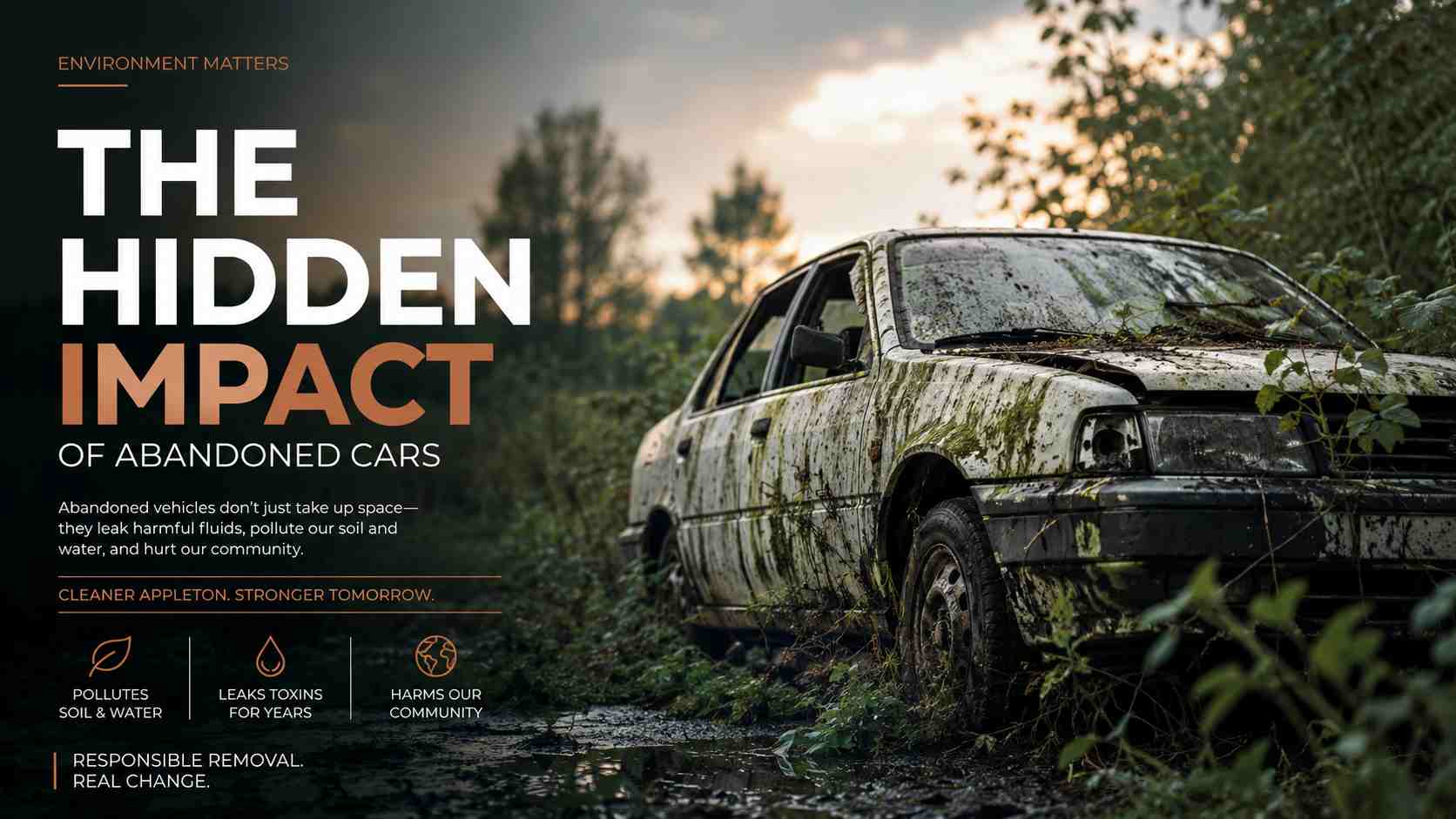
An abandoned car is not a passive presence in its environment. From the day it is left, it begins releasing the chemicals it contains into the surrounding soil, water, and air. It creates breeding habitat for disease-carrying insects, becomes a harbor for rodents and other pests, poses fire risk from deteriorating fuel systems, and gradually collapses into a permanent contamination footprint that can persist for decades after the metal frame has rusted through.
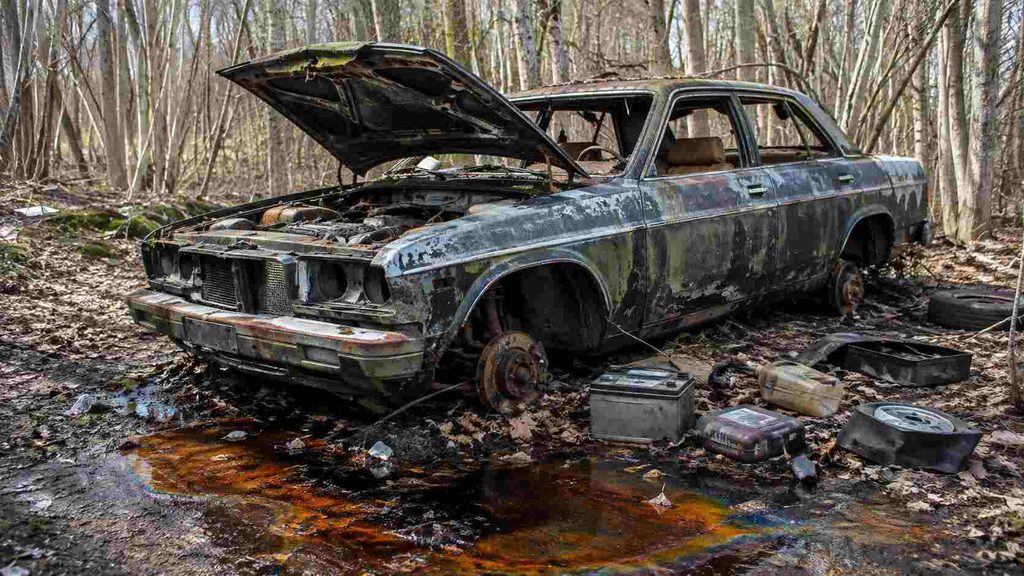
The contrast with a properly processed vehicle is stark. A car that goes through a licensed depollution and recycling process has its approximately 12 to 25 gallons of hazardous fluids safely removed and redirected within 24 to 48 hours of arrival. Its refrigerant is captured. Its battery is recycled. The 80 to 85 percent of its material weight that is recoverable metal is melted and reused. None of the contamination that defines abandonment ever occurs.
Understanding what actually happens to an abandoned vehicle over time makes clear why the licensing requirements, environmental regulations, and recycling infrastructure that govern end-of-life vehicles exist. This guide covers the timeline of abandonment, the specific contamination mechanisms, the public health impacts, and the legal consequences that affect property owners who allow abandoned vehicles to remain on their land.
What Happens to an Abandoned Car Over Time
Timeframe | What Occurs | Primary Environmental Impact |
|---|---|---|
First 6 months | Tires begin to lose pressure; standing water accumulates inside; seals begin to dry and crack; minor fluid seepage begins at gaskets and seals | Early fluid leaching; standing water in tires and body panels creates initial mosquito habitat |
Year 1 to 2 | Significant fluid seepage from degraded gaskets; fuel tank rust-through begins; refrigerant leak from UV-degraded AC hoses; battery begins to corrode; rust formation on body panels | Oil, coolant, and fuel begin reaching soil; refrigerant release accelerates; battery acid exposure |
Year 2 to 5 | Major rust progression on body and frame; fuel tank failure and ground spill; battery casing cracks and releases acid; mercury switches begin to corrode in place; vegetation around the vehicle shows die-off from soil contamination | Significant petroleum contamination radius in soil; heavy metal contamination from battery and mercury switches; local plant mortality |
Year 5 to 10 | Structural rust compromises frame integrity; tire rubber degrades and leaches carbon black and zinc; foam and interior materials deteriorate and fragment; paint and coatings release lead compounds in pre-2000 vehicles | Expanding contamination footprint; microplastic and rubber fragment dispersal; potential lead compound release from older vehicles |
Year 10 and beyond | Complete structural collapse of corroded sections; accumulated contamination from all fluid releases; persistent soil and groundwater contamination that requires active remediation to address | Long-term groundwater contamination potential; decades-long persistence of petroleum hydrocarbons and heavy metals in soil |
The contamination footprint of a single abandoned car after five to ten years is not dramatic in visual terms but is chemically significant. Petroleum hydrocarbons from engine oil, fuel, and transmission fluid persist in soil for 20 to 50 years or more without remediation. Lead from battery corrosion binds to soil particles and does not migrate rapidly but remains bioavailable to plants and soil organisms indefinitely at the contamination site.
Fluid Contamination: How Automotive Chemicals Reach Soil and Groundwater
Every vehicle contains fluid systems that are held under pressure or in sealed reservoirs. As a vehicle sits outdoors without maintenance, the seals, gaskets, and hoses that keep these fluids contained degrade from ultraviolet radiation, temperature cycling, and oxidation. The typical failure sequence is rubber seal degradation first, followed by gasket failure, followed eventually by the structural failure of tanks and reservoirs.
Engine oil is the first and most consequential fluid to reach the soil in most abandoned vehicles. The crankshaft seals and valve cover gaskets dry and shrink over months of disuse, allowing oil to seep onto the ground beneath the engine. A single quart of used motor oil can contaminate approximately 250,000 gallons of drinking water if it reaches a groundwater source. A vehicle with 5 quarts of oil, left to seep over a year, represents a meaningful contamination event even if no single spill is visible.
Gasoline and diesel fuel pose the highest acute environmental risk. Fuel tanks rust from the inside and outside simultaneously. A tank that has been partially full for years develops significant internal rust and eventually leaks. Gasoline and diesel contain benzene, toluene, ethylbenzene, and xylene, collectively called BTEX compounds, which are carcinogenic and highly mobile in groundwater. These compounds migrate through soil much faster than motor oil and can reach water table depth in months to years depending on soil permeability.
Lead, Mercury, and Heavy Metal Contamination
Lead from the car battery is the primary heavy metal contamination pathway in abandoned vehicles. A standard 12-volt lead-acid battery contains 18 to 22 pounds of lead. As the battery casing corrodes and cracks over years of outdoor exposure, the lead plates, sulfuric acid electrolyte, and lead oxide dust are released to the surrounding soil. Lead is a persistent heavy metal that does not biodegrade and bioaccumulates in the food chain through soil organisms and plants.
Mercury from convenience lighting switches in pre-2003 vehicles represents a secondary contamination pathway. A single mercury switch contains approximately 0.8 to 3 grams of elemental mercury. Mercury is one of the most environmentally persistent and toxic metals known, bioaccumulating through the food chain and converting to methylmercury in anaerobic soil and water environments where it becomes most dangerous to human health. An abandoned fleet of older vehicles can represent a meaningful mercury contamination risk even from this small per-vehicle contribution.
Zinc from tire rubber is a less immediately apparent but persistent contamination pathway. Zinc oxide is used in tire vulcanization and leaches from tires as they degrade. Zinc is toxic to aquatic organisms at concentrations found in runoff from areas with tire debris. Degrading tires also release polycyclic aromatic hydrocarbons (PAHs) from the carbon black they contain, many of which are classified as probable or known carcinogens.
Fire Risk From Deteriorating Fuel Systems
Fuel system deterioration creates increasing fire risk as an abandoned vehicle ages. Fuel tanks that have developed rust-through leaks, degraded fuel lines that crack under UV and temperature stress, and carburetor float bowls that overflow in older vehicles all produce conditions where ignition is possible from any spark source, including lightning strikes, nearby grass fires, or vandalism.
Abandoned vehicle fires are particularly problematic because they are often located in areas not easily accessible to fire equipment, burn at high temperatures from the combined fuel of gasoline, synthetic rubber, and interior materials, and contaminate the surrounding soil with fire suppression water that mixes with released petroleum compounds.
The fire risk accelerates in dry conditions and in areas with vegetation growth around the vehicle. Vehicles abandoned in grass fields create especially high-risk configurations because the vegetation provides both fuel for fire propagation and a pathway for fire spread from the vehicle to surrounding areas.
Public Health Impacts: Mosquito Breeding and Rodent Habitat
Abandoned vehicles provide multiple forms of standing water habitat that are ideal for mosquito breeding. Tires are the most documented example: water that collects inside upright tires provides warm, sheltered, predator-limited habitat where Aedes mosquitoes breed at high rates. Aedes aegypti and Aedes albopictus, the primary vectors for dengue fever, Zika virus, chikungunya, and West Nile virus, are specifically associated with artificial container habitats including tires.
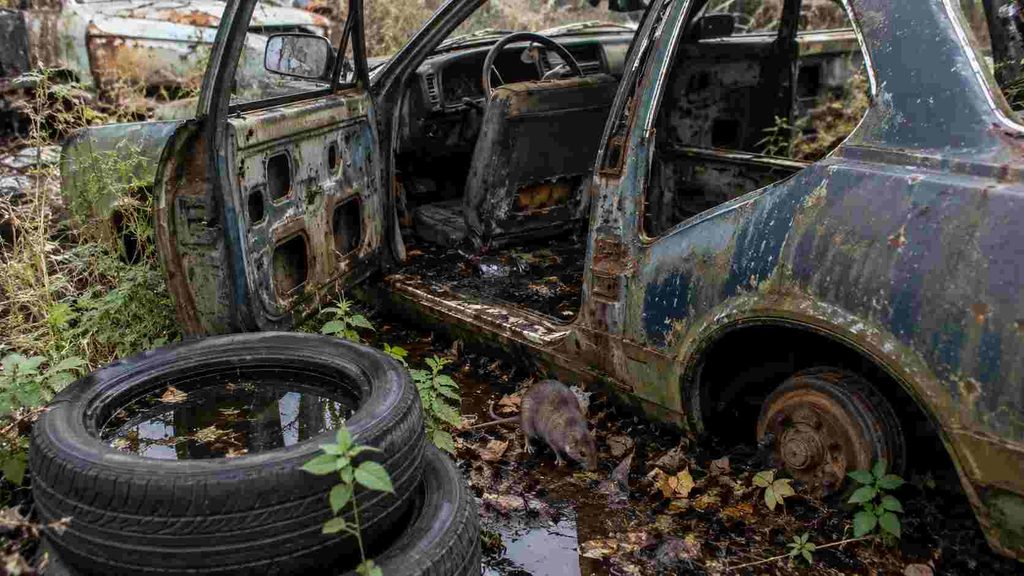
Vehicle interior water collection points are equally productive breeding sites. Floor drains that clog with debris, door sills that collect rainwater, and trunk areas that pool water all provide standing water in warm, enclosed environments. A single abandoned vehicle can harbor thousands of mosquito larvae simultaneously across its various water-collecting surfaces.
Rodent habitation is the other consistent public health impact. Hollowed seats, open trunk areas, and the sheltered space under a vehicle hood provide nesting habitat for mice and rats. Rodents in these habitats have direct contact with any remaining petroleum compounds and carry the contamination on their fur and feet as they move through the surrounding area. Rodent-harboring structures also increase the risk of hantavirus and other rodent-borne diseases in areas where reservoir species carry them.
Legal Consequences for Property Owners With Abandoned Vehicles
Vehicle owners and property owners have distinct and sometimes overlapping legal exposure from abandoned vehicles. The registered owner of an abandoned vehicle can face citations, fines, and in some states, registration revocation or license suspension for allowing a vehicle to remain abandoned on public or private property. In most states, “abandoned” is defined by a combination of time (vehicles left for 72 hours to 30 days depending on the state and location) and condition (inoperable, missing plates, or showing signs of neglect).
Property owners who allow abandoned vehicles to remain on their land can face environmental liability if the vehicle produces contamination that reaches neighboring properties or public waterways. In cases where soil or groundwater contamination is attributed to an abandoned vehicle, cleanup costs are the property owner’s responsibility under various state and federal environmental statutes including CERCLA.
Municipal abandoned vehicle programs exist in most jurisdictions to remove abandoned vehicles from public streets and rights-of-way. Vehicles removed through these programs are typically sold or junked through city-contracted salvage operations, with any proceeds applied to the removal cost. Private property is more complex: most municipalities require a formal complaint and inspection process before compelling removal of a vehicle from private land, but the legal mechanisms for requiring removal do exist.
Frequently Asked Questions
What happens to a car left to rot?
A car left to decay outdoors releases its automotive fluids into the surrounding soil over a period of months to years as seals, gaskets, and tanks degrade. The sequence typically begins with minor fluid seepage in the first year, escalates to significant petroleum contamination from engine oil, fuel, and coolant in years two through five, and progresses to structural collapse and persistent soil contamination by year ten and beyond. Each vehicle contains 12 to 25 gallons of hazardous fluids plus a battery, mercury switches, and pressurized refrigerant, all of which eventually reach the environment without proper disposal.
Is an abandoned car a hazard to the environment?
Yes. Abandoned cars release petroleum hydrocarbons, heavy metals from the battery and older paint systems, refrigerant from deteriorating AC hoses, and toxic compounds from degrading rubber and plastics. They create mosquito breeding habitat in standing water that accumulates in tires and body cavities, harbor rodents, and pose fire risk from deteriorating fuel systems. The contamination from a single abandoned vehicle can persist in soil for decades.
How does an abandoned car affect groundwater?
Fuel compounds including benzene, toluene, ethylbenzene, and xylene from a leaking fuel tank are highly mobile in soil and can reach groundwater within months to years depending on soil permeability. Engine oil, which is less mobile but persistent, contaminates the soil column above the water table. Battery acid from a corroding battery case can acidify local soil. These contamination pathways collectively represent a meaningful risk to shallow groundwater in the immediate vicinity of an abandoned vehicle.
What are the legal consequences of abandoning a car?
Vehicle owners can face fines, citations, registration revocation, and in some states, license suspension for abandoning a vehicle. Property owners who allow abandoned vehicles to remain on their land can face environmental liability for any contamination the vehicle produces, with cleanup costs potentially running to tens of thousands of dollars if soil or groundwater remediation is required. Most states have formal abandoned vehicle programs that eventually result in removal and disposal at the registered owner’s cost.
Do abandoned cars contaminate the soil?
Yes. The fluids in an abandoned car, including engine oil, fuel, coolant, brake fluid, and transmission fluid, reach the soil as the seals, gaskets, and tanks that contain them degrade over months and years of outdoor exposure. Engine oil in particular is highly persistent in soil, with petroleum hydrocarbons remaining measurable for 20 to 50 years without remediation. Heavy metals from the battery and older paint systems also accumulate in the soil beneath and around an abandoned vehicle.
Why is it illegal to abandon a car?
Vehicle abandonment is illegal primarily because of the environmental contamination, public health hazards, and property damage that abandoned vehicles create. The legal framework reflects the documented harm: fluid contamination reaching groundwater, mosquito breeding habitats that increase disease risk, fire hazards, and rodent habitation. Most states also have public nuisance statutes that apply to abandoned vehicles regardless of whether they have caused measurable environmental harm.
How does a properly recycled car compare to an abandoned one?
A properly recycled car has its approximately 12 to 25 gallons of hazardous fluids removed and safely managed within 48 hours of arrival at a licensed facility. Its refrigerant is captured. Its battery is recycled. Its mercury switches are removed. The 80 to 85 percent of its weight that is recoverable metal is recycled into new steel and aluminum. None of the contamination associated with abandonment occurs. The contrast between abandonment and proper recycling represents the full difference between a persistent environmental liability and a productive contribution to the materials economy.
What should I do with an abandoned car on my property?
Contact a licensed junk car buyer or auto recycler to have the vehicle removed. Most licensed buyers arrange free towing and complete the title transfer and paperwork as part of the transaction. If the vehicle has a title associated with it, the title holder (the registered owner) must sign it over; if the title holder is unknown or unreachable, contact your local DMV or county clerk for the process to obtain a lien title or abandoned vehicle title that allows legal disposal. Removing the vehicle promptly stops any further contamination accumulation and eliminates your potential environmental liability.
The Bottom Line
An abandoned car is an environmental liability that grows with every month it sits. The fluids it contains begin reaching the soil within the first year of abandonment. The contamination radius expands over years as tanks rust through and seals fail completely. By year five, the vehicle has created a contamination footprint that may require active remediation to address.
The public health impacts, mosquito breeding, rodent habitation, and fire risk, are concurrent with the environmental damage rather than sequential. They begin early in the abandonment period and persist as long as the vehicle provides habitat.
The property owner’s legal exposure is the most immediate practical concern: environmental liability for contamination, potential fines for allowing abandonment, and cleanup costs if the contamination spreads beyond the property boundary. Having the vehicle removed by a licensed recycler eliminates all of these exposures and ensures the vehicle’s materials are recovered rather than lost to contamination.