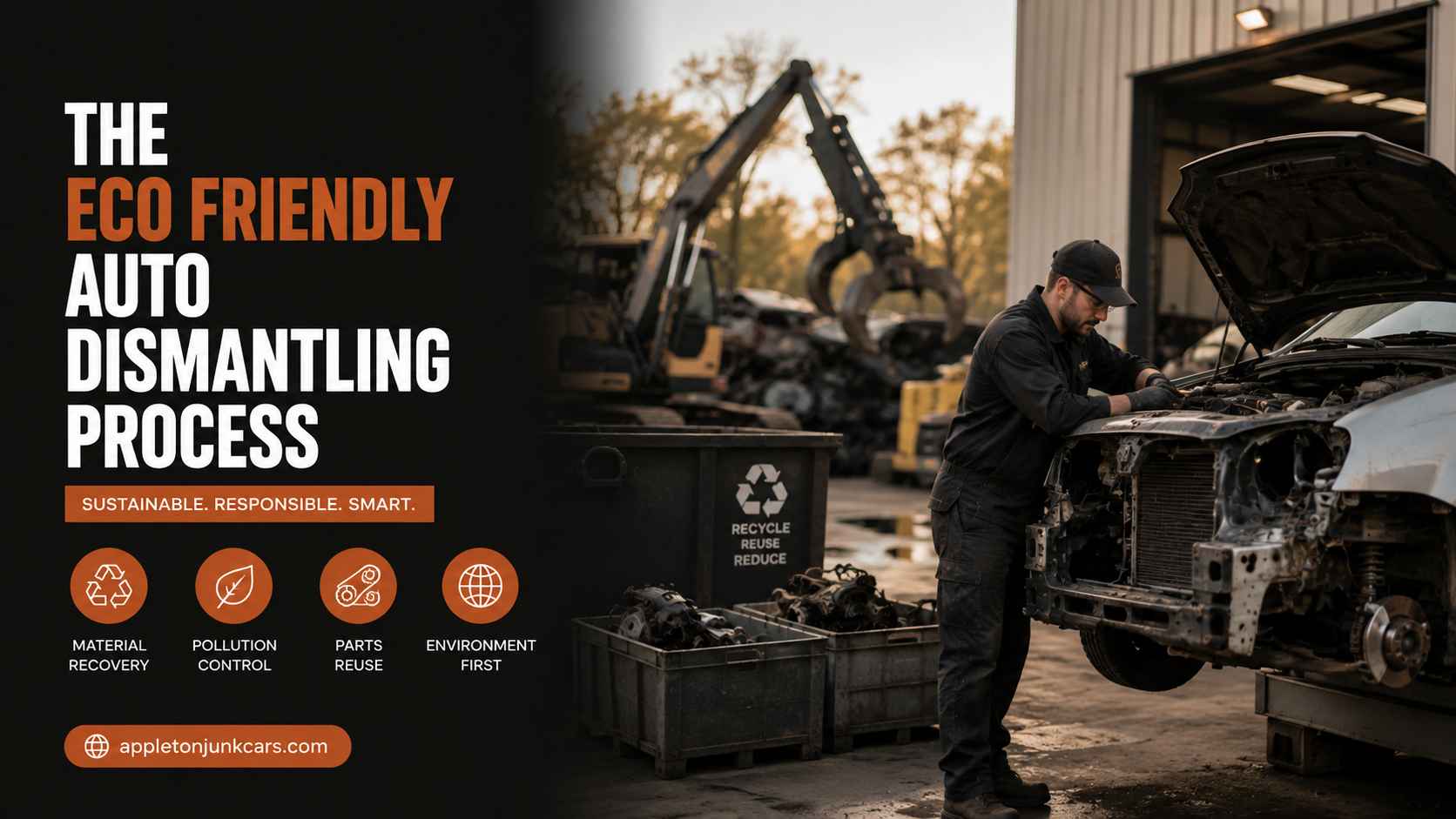
The image of a junkyard as an environmental problem, with leaking fluids, crushed cars, and contaminated soil, reflects the industry as it operated before the 1990s. Modern auto dismantling, when conducted at a licensed and certified facility, is a tightly regulated process that recovers more than 80 percent of every vehicle’s material by weight, manages all hazardous materials through certified pathways, and prevents contamination through containment systems that older operations never had.
An end-of-life vehicle is, by material composition, approximately 80 percent steel and iron, 5 percent aluminum, 3 percent copper and other non-ferrous metals, 5 percent glass, and the remaining 7 percent a mix of plastics, fluids, rubber, and electronics. The goal of eco-friendly dismantling is to recover as much of that material as possible in a usable form, rather than routing the entire vehicle to a shredder and losing the value embedded in recoverable components and recyclable materials.
This guide explains every stage of the modern eco-friendly auto dismantling process, the regulatory framework that governs it, the certifications that identify responsible dismantlers, and what the process means for the environmental impact of your decision to junk a car.
What Eco-Friendly Auto Dismantling Actually Means
Eco-friendly auto dismantling, also called green dismantling or responsible auto recycling, refers to a set of practices and standards that licensed auto dismantlers follow to minimize the environmental impact of end-of-life vehicle processing. The term encompasses three interconnected goals: preventing the release of hazardous materials from vehicles into the environment, recovering the maximum amount of material for reuse and recycling, and operating the dismantling facility in compliance with all applicable environmental regulations.
The regulatory framework is primarily established through state environmental agencies operating under federal law, including the Clean Air Act, the Clean Water Act, the Resource Conservation and Recovery Act, and the Toxic Substances Control Act. These laws establish which materials require special handling, how they must be stored and transported, and who can legally receive them. State auto recycler licensing programs implement these requirements at the facility level through inspections, permitting, and record-keeping requirements.
Certifications such as the Certified Automotive Recycler (CAR) program administered by the Automotive Recyclers Association and state-level equivalents provide a third-party verification layer on top of regulatory compliance. These programs assess facilities against industry best practices that go beyond minimum legal requirements and recognize operations that achieve the highest standards of environmental responsibility.
Understanding the Eco-Friendly Auto Dismantling Process
Stage 1: Vehicle Intake and Hazardous Material Identification
The dismantling process begins when a vehicle arrives at the facility. The intake stage involves recording the vehicle’s VIN, year, make, model, and condition, and identifying any special hazardous materials that will require specific handling protocols before the vehicle enters the standard depollution and dismantling queue.
Pre-1994 vehicles may contain mercury-bearing components that must be identified and removed before the vehicle is shredded. Mercury switches were used in convenience lighting (hood lights, trunk lights) and antilock brake systems on vehicles from the early 1980s through approximately 2003, depending on the manufacturer. The NVMSRP (National Vehicle Mercury Switch Recovery Program), administered cooperatively by the automotive industry and state governments, collects mercury switches from dismantlers for safe disposal.
Vehicles with deployed or defective airbags require specific handling because the airbag inflator contains sodium azide or similar pyrotechnic compounds. Undeployed airbag modules must be handled carefully during dismantling. Some states and the vehicle manufacturers have programs to safely deploy airbag modules before disposal. Dismantlers trained in airbag module handling follow specific protocols for each manufacturer’s system.
Stage 2: Fluid Depollution: Every Vehicle Before Anything Else
Depollution is the mandatory first stage of dismantling. No component is removed and no further processing occurs until all hazardous fluids have been drained from the vehicle and collected into appropriate containment systems. This sequence is required by regulation at licensed facilities.
Depollution Step | Fluid or Material Removed | Collection Method | Regulatory Basis |
|---|---|---|---|
Fuel recovery | Gasoline or diesel from tank | Pump extraction into sealed drums | State hazmat regulations, fire codes |
Engine oil drain | Motor oil from crankcase | Drain into sumps, transfer to bulk tank | RCRA used oil regulations |
Transmission fluid drain | ATF or gear oil | Drain into used oil collection system | RCRA used oil regulations |
Coolant drain | Antifreeze and water mixture | Separate collection tank for glycol recycling | State used coolant regulations |
Brake fluid drain | Hygroscopic glycol-based fluid | Separate collection, hazardous waste disposal | State hazmat regulations |
AC refrigerant recovery | R-134a or HFO-1234yf | EPA-certified recovery machine and cylinder | Clean Air Act Section 608 |
Mercury switch removal | Elemental mercury in sealed switch | Manual removal, NVMSRP collection container | TSCA, state regulations |
Battery removal | Lead-acid battery | Stored for battery recycler pickup | State battery regulations, RCRA |
The depollution stage at a well-equipped facility takes 30 to 60 minutes per vehicle and requires trained technicians with the appropriate certification for each fluid type, particularly for refrigerant recovery. Facilities that rush this stage or skip any component create regulatory liability and environmental risk that can result in closure.
Stage 3: Component Recovery and Parts Resale
After depollution, the vehicle moves to the dismantling stage where usable parts are identified, removed, and cataloged for resale. This stage is where the most economic value and the most environmental benefit are generated simultaneously. Selling a used engine, transmission, or door panel extends the useful life of that component, reduces demand for new parts manufacturing, and recovers a fraction of the energy and raw materials embedded in the original production.
Parts recovery decisions are based on market demand, part condition, and the economics of removal time versus resale value. High-value components that are typically removed regardless of age include catalytic converters (recovered for precious metal content), engines and transmissions from popular makes and models with active parts markets, airbag modules where undeployed, electronics and control modules from late-model vehicles, and body panels from vehicles with clean, collision-free sections.
The environmental benefit of used parts reuse is significant. Manufacturing a new automotive alternator requires approximately 5.4 pounds of steel, 1.2 pounds of copper, and associated energy inputs. A used alternator pulled from a dismantled vehicle and resold to a repair shop avoids all of that manufacturing energy and material. Multiplied across the millions of parts recovered annually by the auto recycling industry, the environmental offset is substantial.
Stage 4: Mercury Switch and Airbag Module Removal
Mercury switch removal is a specific depollution step for older vehicles that deserves its own explanation because the material involved, elemental mercury, is one of the most environmentally persistent toxic substances managed by the dismantling industry.
A mercury switch is a small glass capsule containing a drop of liquid mercury that completes an electrical circuit when tilted. These switches were used in convenience lighting applications on vehicles from approximately 1971 to 2003 and in antilock brake systems on some models. When a vehicle containing mercury switches is shredded without prior removal, the mercury vaporizes at shredding temperatures and contaminates the steel scrap and the air around the shredder.
The NVMSRP provides dismantlers with collection kits and a free mail-back program for recovered mercury switches. Participating dismantlers remove the switches before the vehicle is processed and ship the sealed collection containers to a licensed mercury disposal facility. This voluntary-plus-regulated program has removed millions of mercury switches from the waste stream since its implementation in the mid-2000s.
Airbag module handling requires dismantlers to assess whether each module has been deployed or is still live. Undeployed modules contain pyrotechnic material and must be handled according to manufacturer-specific protocols. Many dismantlers partner with airbag recycling programs that safely deploy and recycle live modules, recovering the hardware for reuse in airbag system repairs.
Stage 5: Metal Shredding, Separation, and Material Recovery
After all recoverable parts and hazardous materials have been removed, the vehicle hull, known as a hulk, is sent to an auto shredder. Industrial auto shredders are among the most powerful pieces of recycling equipment in operation, capable of processing a vehicle hulk into fist-sized pieces of mixed metal in under one minute.
The Shredding Process
A shredder uses rotating hammers to tear the vehicle apart. The output is a mixed material stream containing ferrous metal fragments, non-ferrous metal pieces (aluminum, copper, zinc, lead), and shredder residue (also called fluff), which is the non-metallic portion of the vehicle including plastics, foam, glass, and fabric.
Metal Separation
After shredding, the material stream passes through a series of separation systems. Magnetic separators extract ferrous metal (primarily steel and iron) from the mixed stream. Eddy current separators, which generate a magnetic field that repels non-ferrous metals, separate aluminum and copper-containing pieces from the residue. Air classifiers and density separators remove lighter non-metallic materials.
The ferrous metal stream, approximately 60 to 65 percent of the original vehicle weight, is sold to steel mills as scrap feedstock for electric arc furnaces that melt and refine it into new steel. The non-ferrous stream, representing approximately 5 to 8 percent of vehicle weight, is further sorted and sold to aluminum smelters, copper processors, and specialty metal recyclers.
Shredder Residue
Shredder residue, the material remaining after metals are recovered, represents approximately 20 to 25 percent of the shredded vehicle by weight and is the primary remaining environmental challenge in auto recycling. It contains plastics, foam, glass, fiber, and traces of metal and fluid contamination. Current technology routes most shredder residue to landfill, though research into thermal processing and chemical recovery of the plastic fraction is ongoing. Several European countries have implemented regulations requiring auto manufacturers to finance shredder residue processing, and similar policy frameworks have been proposed in some US states.
What the Full Vehicle Recovery Rate Looks Like
Material Category | Approximate Percentage of Vehicle Weight | Recovery Destination | Recovery Rate |
|---|---|---|---|
Steel and iron (structural) | 65 to 70 percent | Steel mill scrap for new steel production | Near 100 percent when shredded |
Aluminum (body, wheels, engine) | 5 to 8 percent | Aluminum smelters for new aluminum | Near 100 percent when separated |
Copper and wiring | 1 to 2 percent | Copper processors and wire recyclers | High; partially recovered in shredding |
Usable parts (engines, drivetrains, body parts) | Variable, 5 to 20 percent by value | Resold through parts market | Varies by vehicle and market demand |
Fluids (all types) | 3 to 5 percent | Various recovery pathways by fluid type | High at licensed facilities |
Glass | 3 to 4 percent | Specialty glass recyclers; some landfill | Moderate; infrastructure varies by region |
Plastics and foam (shredder residue) | 10 to 15 percent | Primarily landfill; some thermal recovery | Low; ongoing research to improve |
The overall material recovery rate for modern licensed auto dismantling, including parts resale, metals from shredding, and fluid recovery, reaches approximately 80 to 85 percent of vehicle weight. The primary gap is the plastic and foam shredder residue fraction, which represents the central unsolved challenge in moving toward a fully circular auto recycling system.
Certifications That Identify a Responsible Dismantler
The Certified Automotive Recycler (CAR) program, administered by the Automotive Recyclers Association, is the primary national certification for auto dismantlers that go beyond minimum regulatory compliance. CAR-certified facilities are assessed against standards covering environmental management, business ethics, parts quality, and operational safety. Certification requires a documented audit and periodic renewal.
The Automotive Recyclers Environmental Assistance Program (AREAP) provides technical guidance and training resources to help dismantlers achieve and maintain environmental compliance. Many state recycler associations operate parallel certification programs that include state-specific regulatory requirements.
For consumers who want to ensure their junk car is handled by a responsible facility, verifying that the buyer holds a valid state operating license for auto dismantling is the baseline check. Membership in the Automotive Recyclers Association and CAR certification provide additional confirmation of commitment to responsible practices above the regulatory minimum.
Frequently Asked Questions
What does eco-friendly auto dismantling mean?
Eco-friendly auto dismantling refers to the process of handling end-of-life vehicles at licensed facilities that drain and properly manage all hazardous fluids before dismantling, recover usable parts for resale, remove mercury switches and airbag modules according to specific protocols, and route all remaining materials to appropriate recycling or disposal pathways. The process is governed by federal and state environmental regulations and verified through facility licensing and, at the highest tier, voluntary certification programs.
What percentage of a car is recycled?
Approximately 80 to 85 percent of a vehicle’s material weight is recovered through the modern auto dismantling and recycling process. Steel and iron, which make up 65 to 70 percent of vehicle weight, are almost entirely recovered through shredding and metal separation. Aluminum, copper, and usable parts add additional recovery. The primary unrecovered fraction is the plastic, foam, and glass shredder residue that represents 15 to 20 percent of vehicle weight.
What is vehicle depollution?
Vehicle depollution is the mandatory first stage of the licensed auto dismantling process, during which all hazardous fluids and materials are removed from a vehicle before any component is dismantled or the vehicle is crushed. Depollution includes draining gasoline, motor oil, transmission fluid, coolant, and brake fluid; recovering AC refrigerant using EPA-certified equipment; removing the lead-acid battery; and removing mercury switches from applicable vehicles. It is required by law at all licensed auto dismantling facilities.
What happens to mercury switches in old cars?
Mercury switches in older vehicles (approximately 1971 to 2003) must be removed before the vehicle is shredded under environmental regulations in most states. Licensed dismantlers remove the switches manually and collect them in sealed containers provided by the National Vehicle Mercury Switch Recovery Program (NVMSRP), which provides a free mail-back service for the collected switches to a licensed mercury disposal facility. The program has removed millions of mercury switches from the waste stream since its implementation.
Is a junkyard considered an environmentally friendly business?
A licensed auto dismantling facility operating under current environmental regulations is significantly more environmentally responsible than the junkyards of previous decades. Modern licensed operations manage all hazardous fluids through certified pathways, recover 80 to 85 percent of vehicle material for reuse or recycling, and operate under inspection and permit requirements that prevent the ground contamination common at older facilities. Unlicensed operations do not have these requirements and may cause the environmental impacts that gave older junkyards their poor environmental reputation.
What is the Certified Automotive Recycler program?
The Certified Automotive Recycler (CAR) program is a voluntary certification administered by the Automotive Recyclers Association that recognizes auto dismantlers who meet environmental management, parts quality, business ethics, and safety standards that exceed minimum regulatory requirements. CAR-certified facilities undergo documented audits and periodic renewal assessments. Certification signals that a facility is operating at the highest standard of the licensed dismantling industry.
What happens to the plastic in a junk car?
Plastic from junk cars follows two pathways. Plastic components removed during parts dismantling (such as bumpers, dashboards, and trim panels) may be resold if in usable condition or sent to plastic recyclers if the material is clean and sortable. Plastic that remains in the vehicle hull and passes through the auto shredder becomes part of the shredder residue stream, which is primarily landfilled currently. Research into thermal processing and chemical recovery of shredder residue plastic is ongoing.
How can I tell if a junk car buyer is environmentally responsible?
Verify that the buyer holds a valid state license to operate as an auto dismantler. Licensed facilities have been inspected for environmental compliance and hold the legal permits to receive and process end-of-life vehicles. Membership in the Automotive Recyclers Association and CAR certification indicate commitment to standards that go beyond the regulatory minimum. An unlicensed buyer who offers to pick up and scrap a vehicle without holding a facility license has no regulatory obligation to manage fluids or hazardous materials properly.
The Bottom Line
Eco-friendly auto dismantling is not a marketing label. It is a specific set of regulated, licensed practices that determine what actually happens to a vehicle at the end of its life. The difference between a licensed certified dismantler and an unlicensed operation is the difference between a vehicle that is properly depolluted, parts-recovered, and materials-recycled, and one that may be crushed whole or abandoned with fluids intact.
The modern licensed auto recycling industry recovers approximately 80 to 85 percent of every vehicle by weight through a combination of parts resale, metal shredding, and fluid recovery. The remaining fraction, primarily plastic shredder residue, is the focus of ongoing research and regulatory development. The system is imperfect but substantially better than the alternative of no regulation at all.
For consumers who are junking a vehicle, choosing a licensed buyer is the single most impactful environmental decision in the transaction. The license means the facility has the equipment, training, and legal obligation to handle the vehicle responsibly. Everything downstream of that choice, the fluid recovery, the parts resale, the metal recycling, follows from a system that has been built and refined over decades of regulatory development.