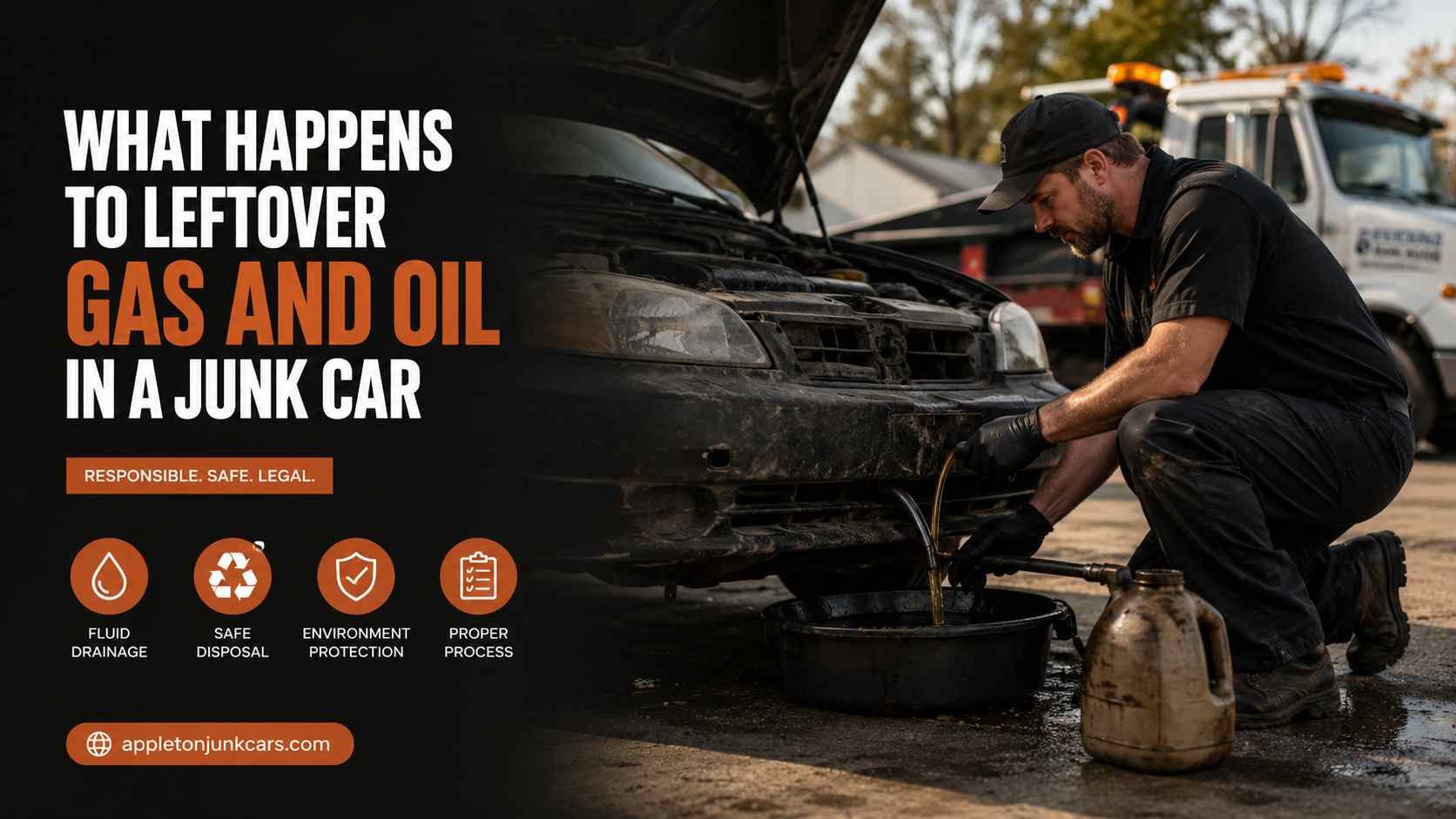
A typical junk car arrives at a salvage yard carrying several gallons of fluids that were still in the vehicle when it was driven, towed, or loaded for the last time. The gas tank may hold a quarter tank of fuel. The engine oil is dark and overdue for a change. The coolant reservoir is full. Brake fluid sits in the master cylinder reservoir. Air conditioning refrigerant pressurizes the sealed AC system. Before any part of the vehicle is dismantled, resold, or crushed, every one of those fluids must be drained, collected, and managed in compliance with federal and state environmental regulations.
The process of removing fluids from a vehicle before dismantling is called depollution. It is required by law in most states and under federal hazardous waste regulations for any facility that handles end-of-life vehicles at commercial scale. A vehicle that is crushed without first being depolluted is not just an environmental problem; it is a regulatory violation that can result in fines, facility shutdowns, and cleanup liability for the operator.
This guide explains what happens to each type of automotive fluid at a professional salvage yard, why each requires a different handling pathway, and what junk car sellers should know about fluid management before they hand over their vehicle.
Why Fluid Removal Must Happen Before Crushing or Dismantling
The requirement to drain automotive fluids before processing a vehicle is rooted in two federal environmental frameworks. The Clean Water Act prohibits discharges of pollutants including petroleum products into navigable waters and groundwater. The Resource Conservation and Recovery Act (RCRA) classifies certain automotive fluids as hazardous wastes that must be handled by licensed facilities and cannot be disposed of in landfills or poured down drains.
The practical enforcement mechanism is through state environmental agencies that license salvage yards and auto dismantlers. Licensed facilities must demonstrate that they have fluid collection systems in place, that collected fluids are being sent to licensed recyclers or disposal facilities, and that their operations prevent spills from reaching soil or stormwater drainage. Facilities that fail inspections face permit revocation, meaning they cannot legally operate.
The environmental stakes are meaningful. A single gallon of used motor oil can contaminate 250,000 gallons of drinking water if it reaches a groundwater source. Gasoline and its combustion byproducts are carcinogenic compounds that persist in soil for years. A modern salvage yard that processes thousands of vehicles per year without proper fluid management would become one of the more significant point sources of contamination in its region within a few years of operation.
Gasoline and Diesel Fuel: Collection and Recovery
Residual gasoline and diesel in a junk car’s fuel tank is typically recovered using a pump extraction system. A technician inserts a probe into the fuel tank through the filler neck or a dedicated access point and pumps the remaining fuel into a collection drum or tank. The amount recovered varies from nearly empty to several gallons depending on the fuel level when the car was last driven.
Collected gasoline is aggregated from multiple vehicles into bulk storage tanks. From there, it follows one of two pathways. Fuel that is relatively clean and uncontaminated can be sold to waste fuel processors who blend it into fuel products for use in industrial boilers, asphalt plants, and cement kilns where the fuel specifications are less strict than for refined consumer fuel. Fuel that is water-contaminated, phase-separated (in the case of ethanol blends that have absorbed water), or otherwise degraded goes to licensed hazardous waste fuel blenders who process it for energy recovery in permitted industrial facilities.
Diesel fuel from trucks and older vehicles follows the same general pathway. Because diesel is less prone to water contamination than ethanol-blended gasoline, recovered diesel fuel is sometimes usable directly as off-road fuel or as a component in waste fuel blends. The economic value of recovered fuel is lower than virgin fuel but typically enough to offset collection costs when aggregated across many vehicles.
Engine Oil: From Drain Pan to Re-Refinery
Used motor oil is one of the most important fluid recovery streams in automotive recycling because of its volume, its hazardous properties, and the high quality of the recycled product. Engine oil does not wear out in the chemical sense: the base oil molecules remain intact after use. What degrades is the additive package, the combination of detergents, dispersants, antioxidants, and viscosity modifiers that protect the engine. The base oil can be recovered and returned to full performance with a new additive package.
Salvage yards drain engine oil from every vehicle using oil drain equipment that captures the oil in collection sumps. The oil is stored in bulk tanks and collected periodically by licensed used oil haulers. Federal and state regulations classify used motor oil as a material that must be recycled rather than disposed of and mandate that licensed collectors manage the material under specific handling and storage requirements.
The Re-Refining Process
Collected used motor oil is transported to re-refineries, facilities that process the oil through a series of treatment steps to produce base oil that meets API specifications for lubricant production. The process typically involves dehydration to remove water, vacuum distillation to separate the oil into fractions by boiling point, hydrotreating to remove sulfur compounds and improve stability, and blending with fresh additive packages to restore performance properties.
Re-refined base oil produced by this process is functionally equivalent to virgin base oil and meets the same API quality standards. It is sold to lubricant blenders who use it to produce motor oil, hydraulic fluid, and other lubricant products. Using one gallon of used oil to produce re-refined lubricant saves approximately the same amount of energy as burning that gallon for fuel, while also recovering a higher-value product than energy generation provides.
Transmission Fluid, Power Steering Fluid, and Brake Fluid
These secondary fluids are present in smaller volumes than engine oil and gasoline but are collected as part of the same depollution process.
Transmission Fluid
Automatic transmission fluid (ATF) and manual transmission gear oil are collected from transmissions during draining. ATF has recovery pathways similar to motor oil: it can be processed by re-refineries or used as waste fuel. The volume recovered per vehicle is relatively small, typically 4 to 12 quarts for automatic transmissions, but across thousands of vehicles annually it becomes significant.
Power Steering Fluid
Power steering fluid is a petroleum-based hydraulic fluid found in conventionally powered steering systems. It is collected in the general used oil stream in most facilities because it is chemically similar to ATF and motor oil. Electric power steering systems, increasingly common on newer vehicles, do not contain hydraulic fluid and have no associated recovery requirement.
Brake Fluid
Brake fluid is a glycol-based hydraulic fluid that is hygroscopic, meaning it absorbs moisture from the air during service. This moisture absorption is why brake fluid must be periodically replaced in service vehicles. At a salvage yard, brake fluid is drained from the brake master cylinder reservoir and collected. Because of its water content and glycol composition, brake fluid does not integrate easily into the used oil stream and is typically managed as a separate waste stream, either sent to licensed hazardous waste processors or, in facilities with glycol recovery capabilities, processed alongside antifreeze.
Air Conditioning Refrigerant: The Required Recovery Step
Vehicle air conditioning refrigerant is in a separate regulatory category from other automotive fluids. Under Section 608 of the Clean Air Act, it is illegal to intentionally release refrigerant from any air conditioning system into the atmosphere. All refrigerant must be recovered before any AC system component is removed or the vehicle is crushed.
Recovery requires certified technicians and EPA-approved recovery equipment that captures the refrigerant from the AC system into a pressure vessel for reuse or recycling. Modern vehicles use HFC-134a or the newer HFO-1234yf refrigerant, both of which are valuable enough to justify recovery and recycling. Recovered refrigerant is sold to refrigerant recyclers who filter, test, and repackage it for reuse in vehicle AC systems.
Salvage yards are required to have refrigerant recovery equipment on site and to maintain records of recovered refrigerant volumes. Facilities that allow refrigerant to escape during vehicle dismantling are subject to significant EPA fines. The requirement is strictly enforced because HFC compounds are potent greenhouse gases with global warming potentials hundreds of times greater than carbon dioxide.
All Automotive Fluids at a Glance
Fluid Type | Typical Volume Per Vehicle | Regulatory Classification | End Destination |
|---|---|---|---|
Gasoline or diesel fuel | 0 to 10 gallons (variable) | Hazardous material | Waste fuel blending, industrial energy recovery |
Engine motor oil | 3 to 8 quarts | Used oil (regulated material, must be recycled) | Re-refinery, lubricant blending |
Automatic transmission fluid | 4 to 12 quarts | Used oil stream | Re-refinery or waste fuel |
Power steering fluid | Under 1 quart | Used oil stream | Mixed with used oil recovery |
Brake fluid | Under 1 quart | Hazardous waste in most states | Licensed hazardous waste disposal or glycol recycler |
Engine coolant / antifreeze | 1 to 3 gallons | Used coolant (regulated in most states) | Antifreeze recycler or hazardous waste |
AC refrigerant (R-134a or 1234yf) | 0.5 to 2 lbs | Clean Air Act Section 608 regulated | Refrigerant recycler, repackaging for reuse |
Windshield washer fluid | Variable | Generally non-hazardous | Drain or general waste stream |
The total fluid volume in a typical passenger vehicle that arrives at a salvage yard with moderate fuel and all systems intact is approximately 12 to 25 gallons across all categories. Managing that volume correctly per vehicle, across thousands of vehicles per year, requires the systematic depollution process that modern licensed salvage operations use as the first step in every vehicle intake.
What Happens When Fluids Are Not Properly Managed
Improper fluid management at salvage yards produces two categories of harm. Environmental contamination occurs when fluids spill or leach into soil and groundwater. A single spill event can contaminate a localized area that requires years of remediation. Accumulated small spills over time are less visible but equally damaging to the groundwater and soil beneath and around an improperly managed facility.
Regulatory consequences for facilities that fail fluid management requirements include permit suspension, mandatory cleanup at operator expense, and fines from state environmental agencies and the EPA. In cases of chronic violations, facility closure is possible. The costs of cleanup and regulatory penalties typically far exceed the cost of installing and operating proper fluid collection systems, which is why modern licensed facilities invest in compliant infrastructure.
The distinction between a licensed salvage yard and an unlicensed operation is significant for sellers. A licensed yard has been inspected and certified to handle end-of-life vehicles in compliance with environmental requirements. An unlicensed buyer may not have the infrastructure, training, or legal obligation to handle fluids properly. Selling to a licensed facility protects the seller from any association with improper disposal downstream.
What Junk Car Sellers Should Know
For sellers, the fluid situation in a junk car is primarily a concern when the vehicle has obvious leaks or spills before pickup. A car that has been sitting on a driveway and has left oil stains is not itself a problem for the salvage yard. The yard is equipped to handle normal fluid content. A car with a ruptured fuel tank or a major oil leak that is actively draining may require additional cleanup before it can be loaded, which some buyers factor into their offer.
It is not necessary or expected for sellers to drain fluids before junking a car. The depollution process is the salvage yard’s responsibility and is included in their standard operating procedure for every vehicle they receive. Attempting to drain fluids at home without proper collection equipment and disposal pathways creates more risk than it eliminates, since improper home disposal of used oil or gasoline is also a regulatory violation.
The one exception worth knowing: if you want to recover usable fuel from the gas tank before the car is picked up, a hand pump or siphon can transfer the fuel to an approved container for use in another vehicle. This is legal, practical, and recovers a resource that would otherwise be managed as waste. Everything else is better left to the salvage yard’s certified depollution process.
Frequently Asked Questions
Do junk car buyers drain the fluids before crushing the car?
Licensed junk car buyers and salvage yards are required by law to drain all fluids before crushing a vehicle. This process, called depollution, removes gasoline, motor oil, transmission fluid, coolant, brake fluid, and refrigerant from the vehicle before it is dismantled or crushed. Facilities that operate without performing depollution are in violation of state and federal environmental regulations.
What happens to the oil left in a junk car?
Used motor oil drained from a junk car is collected in bulk storage by the salvage yard and picked up by a licensed used oil hauler. The oil is transported to a re-refinery where it is processed through vacuum distillation and hydrotreating to produce base oil. That base oil is blended with additive packages to produce re-refined motor oil or other lubricants that meet the same API performance standards as virgin oil.
What happens to gas in a junk car?
Residual gasoline is pumped from the fuel tank using extraction equipment and collected in bulk storage. Depending on its condition, recovered gasoline is either sold to waste fuel processors who blend it into industrial fuel products or managed as hazardous waste and sent to permitted energy recovery facilities. Gasoline that has absorbed water or is heavily phase-separated due to ethanol content is treated as degraded fuel and processed through hazardous waste channels.
Is it illegal to drain oil on the ground at a junkyard?
Yes. Draining automotive fluids directly onto the ground is prohibited under the Clean Water Act and RCRA at any commercial facility and is also illegal for homeowners in most states. Salvage yards that allow ground-draining of fluids are in violation of their operating permits and subject to significant fines from state environmental agencies and the EPA. Licensed facilities use containment equipment and collection systems for all fluid removal.
Do I need to drain the gas tank before junking my car?
No. You are not required to drain the fuel tank before your car is picked up by a junk buyer. The salvage yard handles fluid removal as part of their standard intake process. If you want to recover usable fuel for personal use, you can siphon or pump it out before pickup, but this is optional and not expected. Leave the other fluids in place for the yard to manage through their certified depollution process.
What do salvage yards do with refrigerant from junk cars?
Under EPA Section 608 of the Clean Air Act, refrigerant must be recovered from vehicle air conditioning systems before any AC component is removed or the vehicle is crushed. Certified technicians use EPA-approved recovery equipment to capture the refrigerant into pressure vessels. Recovered refrigerant is sold to refrigerant recyclers who test, filter, and repackage it for use in vehicle AC recharge services. Intentional release of refrigerant is illegal and subject to fines.
Can used motor oil from junk cars be recycled?
Yes. Used motor oil is one of the most successfully recycled industrial materials in the United States. The EPA classifies it as a material that must be recycled rather than disposed of, and an established infrastructure of licensed haulers and re-refineries processes it back into base oil for lubricant production. One gallon of used oil can be re-refined into approximately one quart of base oil, compared to 42 gallons of crude oil required to produce the same quart from virgin sources.
What happens to brake fluid from a junk car?
Brake fluid is a glycol-based hydraulic fluid that absorbs moisture during service, making it hygroscopic and chemically different from petroleum-based fluids. It is collected separately from used oil at most salvage facilities and managed as either a hazardous waste through a licensed disposal company or, at facilities with glycol recovery capabilities, processed alongside antifreeze. It cannot be mixed into the used oil stream or disposed of through standard drain pathways.
The Bottom Line
Every fluid in a junk car follows a regulated pathway from the moment the vehicle arrives at a licensed salvage yard. Gasoline goes to waste fuel recovery. Motor oil goes to re-refineries. Refrigerant is captured and recycled. Each fluid is handled by a different process designed for its specific chemistry and hazard profile, and the whole system is required by law rather than left to facility discretion.
The practical message for sellers is that fluid management is not your problem or your responsibility when selling to a licensed operation. The yard is legally obligated to handle it and operationally equipped to do so. What matters for sellers is verifying that the buyer is licensed: a licensed facility has been inspected, certified, and holds the legal permits to receive and process end-of-life vehicles. An unlicensed buyer may not.
The broader message is that the junk car industry, when operating through licensed channels, manages automotive fluids with more regulatory rigor than most people assume. The environmental record of the modern licensed auto recycling industry is significantly better than the salvage yards of previous decades, driven by regulatory requirements that have strengthened consistently since the 1970s and by the operational efficiencies that proper fluid management enables.