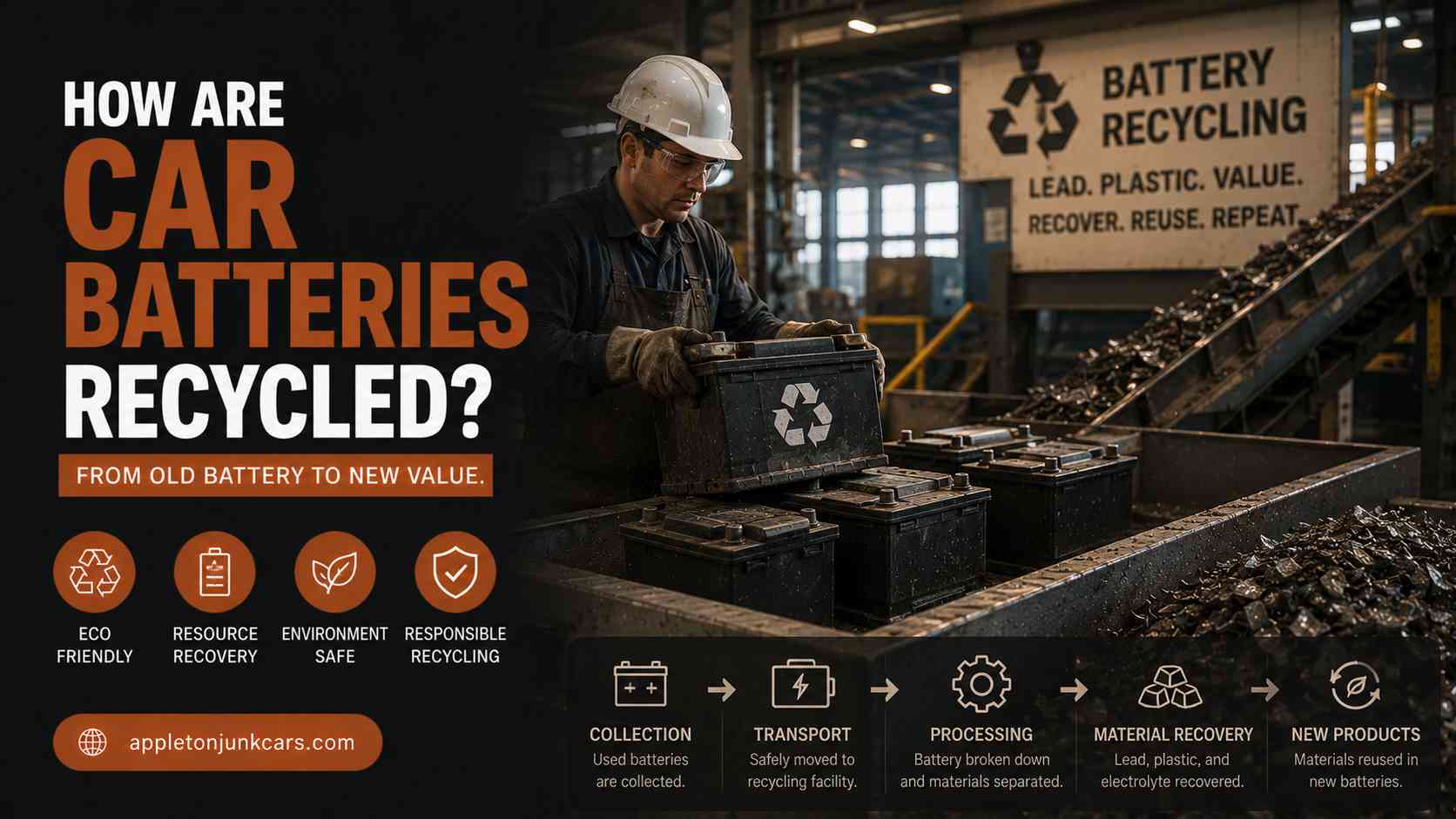
The 12-volt lead-acid battery in every conventional vehicle is the most successfully recycled consumer product in North America. More than 99 percent of lead-acid batteries are collected and recycled at the end of their service lives, a rate that no other manufactured product comes close to matching. A car battery that dies in your driveway today will, within a matter of months, have its lead melted, refined, and poured into a new battery that goes back on a store shelf.
This recycling rate is not accidental. Lead is toxic, federal and state regulations mandate proper disposal, and the economic value of recovered lead makes the entire system financially self-sustaining. The recycling industry does not need subsidies to make car battery recycling work because the lead inside every battery is worth money. That financial incentive has produced a collection and processing infrastructure that functions at nearly perfect efficiency.
This guide explains every stage of the process: how batteries are collected and transported, how each component is physically separated, what happens to the lead, the plastic case, and the sulfuric acid electrolyte, and how the recycled materials flow back into new battery production. It also covers how lithium-ion and AGM batteries are handled differently and what junk car sellers should know about battery handling before a car is scrapped.
Why Lead-Acid Car Batteries Are the Most Recycled Product in America
A lead-acid car battery contains approximately 18 pounds of lead, 1 pound of polypropylene plastic, and 1 gallon of sulfuric acid electrolyte solution. Every one of those components has established recovery value and an established recycling pathway. The lead is the primary driver: refined lead is a commodity that sells for more than $1,000 per ton, which means the raw material inside every 18-pound battery is worth approximately $9 to $12 in recovered lead at commodity prices.
That value creates a closed-loop system. Battery retailers charge a core deposit when a customer buys a new battery, which is refunded when the old battery is returned. The retailer ships the old batteries to a battery wholesaler or directly to a secondary lead smelter. The smelter processes the batteries, sells the recovered lead to battery manufacturers, and the cycle restarts. No government mandate is needed to make this loop close: the economics of lead recovery make it mandatory on their own terms.
The contrast with other recyclable materials is stark. Recycled plastic bottles and aluminum cans depend on collection infrastructure, consumer participation, and often government mandates to achieve 30 to 60 percent recycling rates. Lead-acid batteries achieve over 99 percent because every participant in the supply chain has a financial reason to make sure the battery is returned.
From Collection to Recovered Lead: The Car Battery Recycling Process
Stage 1: Collection: Where Old Car Batteries Go First
Car battery collection happens through several parallel channels that together capture nearly every battery that reaches end of life.
Auto parts retailers including AutoZone, O’Reilly, Advance Auto Parts, and NAPA accept old batteries at their stores, typically as part of a core exchange when a new battery is purchased. This single channel captures the majority of consumer battery returns because the transaction is built into the sale: you pay a core charge when you buy the battery and receive it back when you return the old one.
Junkyards and salvage yards remove batteries from every vehicle before dismantling and store them for collection pickup. Battery wholesalers and recycling companies run scheduled pickup routes to collect batteries from auto shops, dealerships, salvage yards, and fleet maintenance operations.
Household hazardous waste collection programs in most municipalities accept car batteries from residents. These programs handle the batteries that fall outside the retail core exchange system, typically from vehicles that were disposed of without a formal sale or from batteries that failed outside a retail purchasing context.
Stage 2: Breaking and Separation: How the Battery Is Physically Taken Apart
Once batteries arrive at a secondary lead smelter or battery breaking facility, they are processed through a hammer mill or specialized battery breaker. This machine physically shatters the battery case into pieces, releasing the internal components for separation. The process happens inside a contained environment to prevent sulfuric acid mist from becoming airborne.
After breaking, the material falls into a separation tank. The components separate based on density and physical properties. Polypropylene plastic floats to the surface and is skimmed off. Lead plates, grids, and oxide paste sink to the bottom and are collected. Sulfuric acid electrolyte drains into a separate containment system. Separators and other minor components are collected for individual processing or disposal.
Battery Component | Percentage of Battery Weight | What Happens to It |
|---|---|---|
Lead plates, grids, and posts | 60 to 70 percent | Smelted into refined lead ingots; returned to battery production or industrial use |
Lead oxide paste (active material) | 15 to 20 percent | Smelted with plates; produces refined lead after desulfurization |
Polypropylene plastic case and caps | 5 to 8 percent | Shredded, cleaned, pelletized, and sold to manufacturers of new battery cases |
Sulfuric acid electrolyte solution | 10 to 15 percent | Neutralized with sodium bicarbonate or recovered as sodium sulfate for industrial use |
Separators (polyethylene or fiberglass) | Under 3 percent | Sent to solid waste or energy recovery; not currently recycled at high rates |
The separation stage is highly efficient. Modern battery breaking equipment achieves separation rates that leave less than 2 percent of lead in the plastic stream and less than 1 percent of plastic in the lead stream. This purity matters because even small amounts of contamination in the lead stream increase smelting costs and reduce the quality of the refined metal.
Stage 3: Lead Smelting and Refining: Recovering the Core Material
Lead smelting is the core of car battery recycling. The process converts the mixed lead materials from the breaking stage into refined lead ingots that meet the purity standards required for new battery production.
The Smelting Process
The separated lead materials, plates, grids, posts, and oxide paste are charged into a blast furnace or reverberatory furnace along with fluxing agents that help separate impurities from the molten lead. Temperatures in the furnace reach 1,000 to 1,200 degrees Celsius. The lead melts and flows to the bottom of the furnace. Slag, containing the non-lead impurities, floats on top and is separated.
Desulfurization
Lead oxide paste contains lead sulfate compounds from the electrochemical reactions that occurred during battery use. Before smelting, many facilities treat the oxide paste with sodium carbonate or sodium hydroxide to convert lead sulfate into lead carbonate and sodium sulfate. This desulfurization step reduces the amount of sulfur dioxide emitted during smelting, improving both the environmental performance of the operation and the quality of the recovered lead.
Refining
The molten lead from the furnace is a mixture of lead and small amounts of antimony, tin, arsenic, and other metals that were present in the battery alloys. Refining separates these metals to produce lead of specific purity grades. Hard lead, which retains some antimony content, is used for battery grids that require structural strength. Soft lead, from which antimony is removed, is used for battery terminals, cable connectors, and applications requiring higher purity. The refined lead is cast into ingots weighing 50 to 2,000 pounds and shipped directly to battery manufacturers.
Stage 4: Polypropylene Plastic Recovery
The polypropylene plastic from battery cases is one of the cleaner plastic recycling streams in the industry because the material is homogeneous (a single resin type), comes from a known source, and arrives in large consistent volumes. After separation from the lead and acid, the plastic is washed, shredded into flakes, and melted into pellets.
These pellets are sold primarily back to battery case manufacturers. An estimated 70 to 80 percent of the polypropylene recovered from old battery cases returns to new battery case production. The remainder goes to other polypropylene product manufacturers for applications including automotive parts, storage containers, and industrial components.
The closed-loop nature of battery plastic recycling is one of the more complete material cycles in consumer product manufacturing. A battery case made today has a high probability of being returned to the recycling stream within three to five years and emerging as part of another battery case.
Stage 5: Sulfuric Acid Recovery and Management
Sulfuric acid management is the most complex part of car battery recycling from a regulatory standpoint because the acid is classified as a hazardous material and its handling is subject to EPA and state environmental regulations.
Recovered acid is handled through one of three pathways. Neutralization is the most common: the acid is treated with sodium bicarbonate, sodium hydroxide, or lime to raise the pH to a safe level, converting the sulfuric acid to sodium sulfate or calcium sulfate. The resulting material is no longer hazardous and can be landfilled or, in the case of sodium sulfate, sold to detergent manufacturers where it is used as a processing aid.
Some large-volume recyclers send recovered sulfuric acid to industrial acid reprocessors who clean and concentrate it for resale to industrial users including chemical manufacturers, metal treatment operations, and water treatment facilities. This pathway recovers the most value from the acid but requires higher-purity acid than is typically available from the mixed battery stream.
A third pathway is acid re-use within the same facility for other industrial processes, which is practiced at some integrated chemical facilities that both recycle batteries and manufacture sulfuric acid products.
What Happens to Lithium-Ion and AGM Batteries
Absorbed glass mat (AGM) batteries, increasingly common in newer vehicles as start-stop technology becomes standard, follow the same lead-acid recycling pathway as conventional flooded batteries. The AGM separator material is one additional component to manage, but the primary materials, lead, plastic, and acid, are identical and processed through the same infrastructure.
Lithium-ion batteries, used in hybrid vehicles, electric vehicles, and some high-performance applications, require a fundamentally different recycling process. Lithium-ion cells contain lithium, cobalt, nickel, manganese, and other metals in various chemistries that do not have a single established recovery pathway equivalent to the lead-acid system.
The primary lithium-ion recycling processes are hydrometallurgical processing (dissolving the cathode materials in acid and selectively precipitating the metals out of solution), pyrometallurgical processing (high-temperature smelting to recover nickel and cobalt from the cathode materials), and direct recycling (recovering cathode material without full chemical breakdown). Each method recovers different metal fractions at different efficiency rates. The lithium-ion battery recycling infrastructure is less mature than lead-acid recycling and is actively expanding as EV battery volumes grow.
What Junk Car Sellers Should Know About Battery Handling
For anyone selling a junk car, the battery is a component worth understanding before the tow truck arrives. A working 12-volt lead-acid battery from a junk car has value at any auto parts store through the core exchange system. A battery that is fully dead but complete (no cracks, acid not leaked) is still accepted at auto parts stores and recycling locations at no charge. A cracked battery that has leaked acid is a hazardous material that requires handling through a certified facility.
Junk car buyers and salvage yards remove the battery as one of the first steps in the depollution process. If the car has a relatively new or functional battery, asking the junk buyer whether the battery’s value is factored into the offer is worth doing. Many junk buyers include the battery in their standard pricing. Some buyers who purchase vehicles for parts may offer slightly more for a car whose battery is new or recently replaced because it represents a component they can resell rather than send straight to recycling.
Never attempt to puncture, crush, or burn a car battery for disposal. The sulfuric acid is corrosive and the lead is a toxic heavy metal. Improper disposal of car batteries is illegal in all 50 states and subject to fines. Every community has free collection options: auto parts stores, salvage yards, and household hazardous waste programs all accept car batteries at no charge.
Frequently Asked Questions
What percentage of car batteries are recycled?
More than 99 percent of lead-acid car batteries sold in the United States are collected and recycled. This makes lead-acid batteries the most successfully recycled consumer product in North America by participation rate. The high recycling rate is sustained by the economic value of recovered lead and the core deposit system used by battery retailers, which creates a financial incentive for consumers to return old batteries when purchasing new ones.
What happens to a car battery when it is recycled?
A recycled car battery is first physically broken apart by a hammer mill or battery breaker. The components are separated by density: plastic floats, lead sinks, and acid drains into a containment system. The lead is smelted in a furnace, refined to remove impurities, and cast into ingots. The ingots are sold to battery manufacturers and used to produce new batteries. The plastic case is shredded, cleaned, and pelletized for reuse in new battery cases. The sulfuric acid is neutralized or processed for industrial reuse.
Where can I recycle a car battery?
Car batteries are accepted for recycling at auto parts retailers including AutoZone, O’Reilly, Advance Auto Parts, NAPA, and Walmart Auto Center, typically as a core exchange when a new battery is purchased. Most salvage yards and junk car buyers also accept batteries. Municipal household hazardous waste collection programs accept car batteries from residents. In most states, it is free to drop off an old battery at any of these locations.
Can a car battery be recycled if it is completely dead?
Yes. A dead car battery that is otherwise intact, meaning no cracks in the case and no acid leakage, is fully recyclable through the standard lead-acid battery recycling process. The recycler does not need the battery to hold a charge. The lead, plastic, and acid content are the same regardless of the battery’s electrical state. Drop it off at any auto parts store or battery collection point.
How is the lead in car batteries recycled?
Lead from car batteries is recovered through secondary lead smelting. The broken battery components are charged into a furnace, where the lead melts at approximately 1,100 degrees Celsius. Impurities are removed through a refining process, and the resulting lead is cast into ingots. These ingots are sold to battery manufacturers, where they are alloyed and cast into new battery grids, plates, and posts. Most new lead-acid batteries contain 60 to 80 percent recycled lead.
Are lithium-ion car batteries recycled the same way as lead-acid batteries?
No. Lithium-ion batteries require different recycling processes because they do not contain the same materials as lead-acid batteries. The primary recycling methods for lithium-ion batteries are hydrometallurgical processing (chemical dissolution and selective precipitation of metals), pyrometallurgical smelting (high-temperature recovery of nickel and cobalt), and direct recycling of cathode materials. The lithium-ion recycling infrastructure is less developed than lead-acid recycling and is actively expanding alongside growing EV adoption.
What is the core charge on a car battery?
A core charge is a deposit, typically $10 to $20, charged by auto parts retailers when a new battery is sold without an old battery being returned at the same time. The core charge is refunded when the customer returns an old battery within the retailer’s core return window. The core deposit system is the primary mechanism that drives the high return rate for used car batteries. It converts battery return from an optional environmental action into a direct financial incentive.
Is it safe to throw a car battery in the trash?
No. Disposing of a car battery in regular household trash is illegal in all 50 states and subject to fines. Lead-acid batteries contain lead, a toxic heavy metal, and sulfuric acid, a corrosive substance. Both materials can leach into soil and groundwater from landfills. Free recycling options are available at every auto parts store and most salvage yards, making safe disposal universally accessible.
The Bottom Line
Car battery recycling is one of the genuine success stories in materials recovery. The combination of lead’s commodity value, the core deposit financial incentive, and an established processing infrastructure has produced a recycling system that captures more than 99 percent of batteries, converts their hazardous materials into safe recovered commodities, and routes the recovered lead directly back into new battery production.
Every component inside a lead-acid battery has a defined fate: the lead returns to battery manufacturing, the polypropylene case returns to battery case production, and the sulfuric acid is neutralized or recovered for industrial reuse. Nothing in a lead-acid battery needs to go to a landfill.
For junk car sellers, the practical implication is simple: leave the battery in the car unless it is brand new and worth removing for separate resale. The salvage yard handles collection. If you have a standalone dead battery to dispose of, any auto parts store takes it for free. The infrastructure for doing the right thing with a car battery is more accessible than for almost any other automotive waste material.