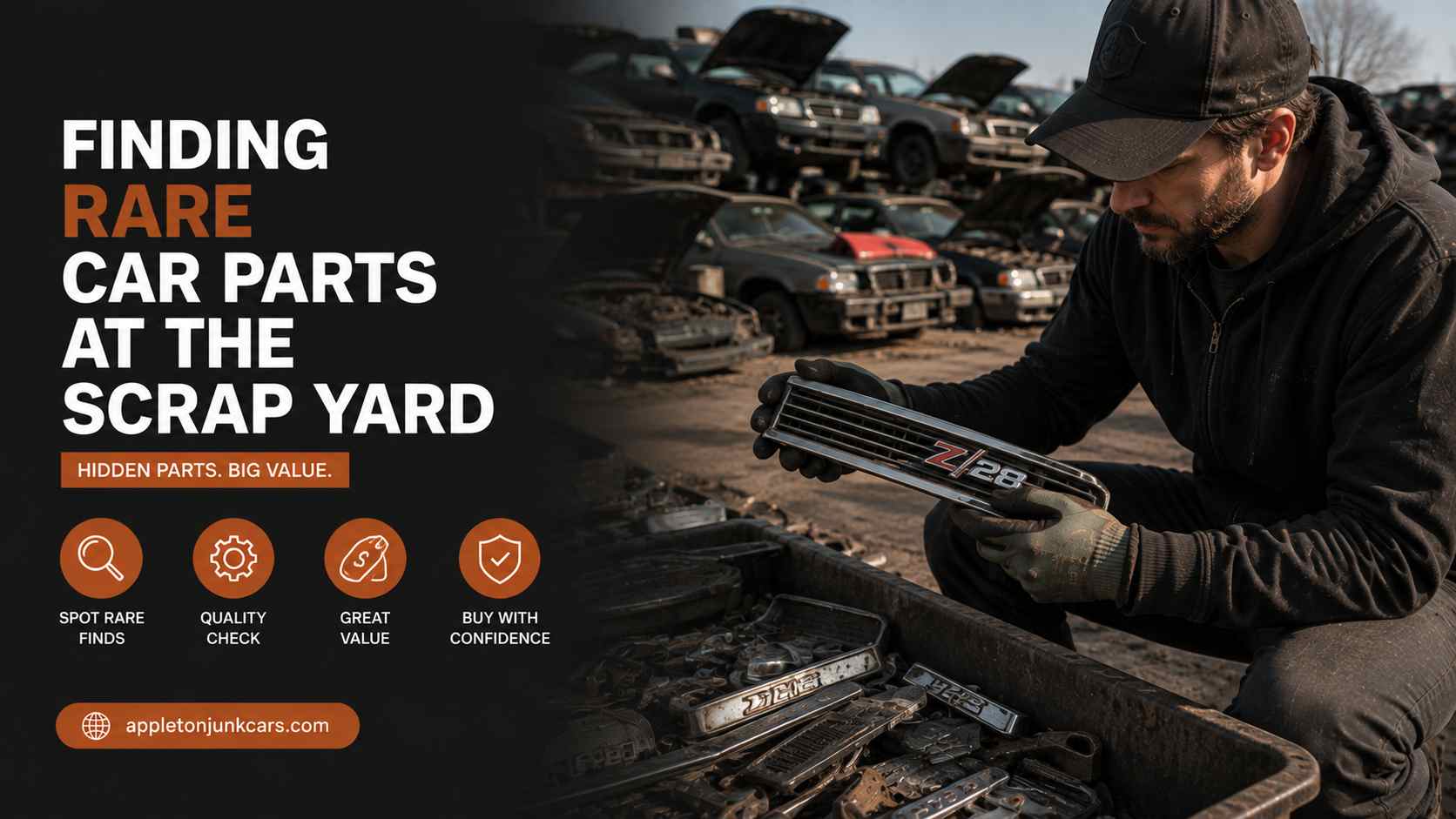
The part you need is discontinued, back-ordered at every dealer, priced at $800 when someone does have it, or simply impossible to find through standard channels. The salvage yard is where discontinued, low-production, and hard-to-source parts end up when the vehicles that originally carried them reach end of life. Finding them there requires a different approach from picking up a common alternator or a door handle. The prepared shopper who knows what to look for, where to look, and how to verify what they have found walks out with parts that everyone else missed.
The key difference between a productive rare-parts search and a wasted afternoon is preparation done before you leave the house. Knowing the exact OEM part number, which other vehicle platforms share the same component, and which yards in your region have the right donor vehicles in their inventory turns a speculative trip into a targeted retrieval. That preparation, combined with knowing how to work with yard staff and how to identify the correct part on the vehicle, is what this guide covers.
This guide is written for the buyer who already knows what they need and wants to maximize the probability of finding it at a self-service or full-service salvage yard. It covers research strategy, platform cross-compatibility, digital inventory tools, on-site search technique, and the specific methods used to identify part numbers on unmarked components in the yard.
Research Before You Go: The Work That Makes the Difference
Successful rare-parts hunting at a salvage yard begins at home, not in the yard. The preparation work that pays the highest return is identifying the exact OEM part number for the component you need, learning which other vehicle platforms use the same part, and confirming which yards in your region have the right donor vehicles before you make the drive.
Find the Exact OEM Part Number
Every automotive component has at least one OEM part number, and most have several: the manufacturer’s original part number, one or more aftermarket part numbers, and in some cases superseded numbers from parts updates. Find the OEM number using the vehicle identification number (VIN) at a dealership parts counter, through an online dealer parts catalog (Rock Auto and similar sites display OEM numbers for many applications), or through the factory service manual for your specific vehicle.
The OEM part number is the most reliable identifier for searching across platforms. When you know the part number, you can search for exactly that number or its cross-references rather than relying on a description match that may not find the component if it was shared across multiple vehicle lines under different catalog names.
Learn Your Specific Vehicle’s Production Details
Year, make, model, and engine are the minimum. For rare parts, the trim level, production date (found on the door jamb sticker as a month and year), plant code, and specific option codes may matter. A part that fits a base model may differ from the same part on a sport trim. A part produced before a mid-year engineering change may not match one produced after. Recording these details on a reference sheet you carry to the yard prevents incorrect pulls.
Platform Cross-Compatibility: The Hidden Inventory in Every Yard
The most powerful tool for finding rare parts in a salvage yard is platform cross-compatibility knowledge: knowing which other vehicles share the same component as yours. Manufacturers commonly use the same parts across multiple models to reduce costs, and those other models may be far more common in salvage yards than your specific vehicle.
Your Platform | Compatible Donor Vehicles | Common Shared Components |
|---|---|---|
Ford Fox Body (1979 to 1993 Mustang) | Fairmont, Mercury Zephyr, LTD, Thunderbird (some years) | Front suspension, brake components, steering, engine mounts |
Ford Modular engine (4.6L, 5.4L) | F-150, Mustang GT, Crown Victoria, Mercury Marauder, Expedition, Navigator | Engine internals, accessory brackets, oil pans, heads (generation-specific) |
GM G-body (Regal, Cutlass, Grand Prix, Monte Carlo) | All 1978 to 1988 GM G-body platforms share extensively | Suspension, brakes, drivetrain components, interior |
GM Silverado / Sierra (1999 to 2006) | Tahoe, Suburban, Yukon, Avalanche, Escalade (same generation) | Nearly all chassis, suspension, drivetrain, and brake components |
Toyota 4Runner, Tacoma, Tundra (2nd gen+) | Land Cruiser, FJ Cruiser, Sequoia (generation-specific) | Drivetrain, transfer case, axle components, suspension arms |
Chrysler / Dodge LX platform (300, Charger, Challenger) | Dodge Magnum, Jeep Grand Cherokee (some versions) | Suspension, brakes, engine mounts, electrical components |
VW / Audi MQB platform | Golf, Jetta, Passat, A3, A4, Q3, Tiguan (generation-specific) | Extensive platform sharing of suspension, electrical, and powertrain components |
Verifying compatibility before pulling is essential. Platform sharing does not always mean the part is identical: there may be left-hand vs right-hand drive differences, wheelbase variations, or submodel differences that affect fitment. Cross-reference the OEM part numbers from both vehicles to confirm the part is exactly shared before investing time and money in the removal.
Using Digital Inventory Tools Before You Drive
Tool / Platform | What It Provides | Best For | Web Address |
|---|---|---|---|
Car-Part.com | Real-time inventory from thousands of US salvage yards; searchable by part, year, make, model | Finding the specific yard with your part before making the drive | car-part.com |
LKQ Online (Pick Your Part) | Inventory for LKQ self-service locations nationwide; shows which vehicles are in each yard by make, model, and year | Verifying specific donor vehicles are available at LKQ locations | lkqpickyourpart.com |
U-Pull-It and regional chains | Yard-specific online vehicle lists updated as cars arrive | Checking inventory at independent self-service yards in your region | Varies by yard |
iATN (International Automotive Technicians Network) | Technical discussions including part cross-references and platform sharing | Verifying cross-compatibility with professional technicians | iatn.net |
Model-specific forums and registries | Owner communities with accumulated knowledge of rare parts, sources, and compatibility | Parts that require specialist knowledge not in standard databases | Search by make/model + forum |
Car-Part.com is the most immediately useful tool for the rare parts hunter. Before driving anywhere, search for your specific part on this platform. The search returns a list of yards that have the part in inventory, with pricing and contact information. Call the yard to confirm the part is still on the vehicle and has not been pulled since the database was last updated. Databases can lag behind actual inventory by several days.
What to Bring: The Prepared Shopper’s Kit
Item | Why You Need It | Notes |
|---|---|---|
OEM part number and cross-references (printed or saved) | Confirms you are pulling the correct part; allows quick comparison with part numbers stamped on components | Print it or screenshot it; no signal in many yards |
Photos of the part in its installed position on your vehicle | Shows you exactly what to look for and how it connects | Include close-ups of connectors, mounting points, and orientation |
Flashlight or headlamp | Many parts are inside dark cavities; essential for reading casting numbers and part stamps | A headlamp keeps both hands free |
Full tool set appropriate to the removal | Sockets, wrenches, pry bars, screwdrivers, torx bits, pliers | Match to your specific removal; research what tools the job needs beforehand |
Measuring tape or calipers | Verify dimensions of unlabeled parts before pulling | Critical for rubber components, gaskets, and fitment confirmation |
Clean rags and plastic bags | Protect parts during transport; wrap sensors and electrical connectors | Zip-lock bags for small hardware; garbage bags for larger assemblies |
Pen and paper or phone notes | Record part numbers, casting numbers, and VINs of donor vehicles for future reference | A found-part log pays off on future searches |
Paint marker or chalk | Mark the exact part location on the car before dismantling; helps with reassembly orientation | Useful for suspension and steering components that have directional orientation |
The photos of the part in its installed position on your own vehicle are the single most underused preparation item. A detailed photo of the part, showing how it connects, which side is up, and what it looks like from multiple angles, eliminates the uncertainty that causes incorrect pulls. Many rare parts look similar to common parts from a distance; the photos confirm you have the correct item before you invest time in removal.
Working With Yard Staff: What They Know That the Database Does Not
Salvage yard staff, particularly at full-service and specialty yards, often know their inventory in ways that no database reflects. They know which vehicles came in recently and have not yet been cataloged, which cars have specific rare equipment installed, and which donor vehicle sections of the yard are most likely to have what you need.
How to approach yard staff effectively: be specific. “I’m looking for the rear lower control arm bushing bracket from a 2002 Chevrolet Corvette C5, OEM part number 10397813, or equivalent from a C5 coupe or convertible from any year. Do you have any C5 Corvettes in inventory?” is a vastly more productive conversation opener than “do you have any Corvette parts?”
Yard staff at specialty yards (Corvette-only, Volkswagen-only, European imports-only) have accumulated knowledge about which donor vehicles share components that general salvage yard databases do not capture. Cultivating a relationship with these specialists by being a repeat, informed customer produces referrals to parts that never appear in any database search.
Timing Your Visit: When New Inventory Arrives
Self-service salvage yards receive new vehicles continuously, and the freshest inventory is both the most complete and the most picked-over depending on the yard’s traffic. Understanding each yard’s receiving and crushing schedule helps you time your visit for maximum productive inventory.
Most large self-service yards receive new vehicles throughout the week and crush older stripped inventory on a regular schedule, typically one to three times per week. Visiting a day or two after a large receiving day gives you access to fresh inventory before other parts hunters have stripped the vehicles. The optimal timing varies by yard and by which types of vehicles the yard focuses on; call ahead and ask when they typically receive new inventory of your make.
For rare and specific models, monitor yard inventory tools daily when you know you have a specific need. Car-Part.com and LKQ’s online inventory update when new vehicles are entered into the yard’s system. Setting up searches for specific vehicle types and reviewing results daily can alert you within hours of a rare donor vehicle arriving in inventory.
On the Ground: How to Search the Yard Systematically
Salvage yards are large and rarely organized in ways that match how shoppers think about their needs. Most yards organize by vehicle type (domestic, import, truck) and within that by make, with vehicles parked in rows that shift as new inventory arrives and old inventory is crushed. Systematic searching within these sections is more productive than random walking.
Start at the section boundary for your target make and model and walk each row completely before moving to the next. Look at windshield VINs and door jamb stickers on every candidate vehicle as you pass. When you find a potential donor, spend time fully assessing the vehicle before beginning disassembly: check that the specific part you need is present, undamaged, and accessible before investing removal time.
For parts that may be shared across multiple models, walk all sections where compatible donor vehicles appear rather than limiting your search to the specific make section. A platform-compatible part in better condition or at lower difficulty of removal on a more common vehicle is worth finding before committing to a difficult removal on the rare vehicle.
Identifying What You Have Found: Casting Numbers and Part Stamps
Rare automotive components often carry identifying information that is not visible from a distance: casting numbers stamped or molded into metal components, date codes that confirm production period, and plant codes that confirm origin. Reading this information before pulling allows you to verify the part matches what you need and documents what you have for future reference.
Casting numbers on iron and aluminum components are typically recessed numbers molded into the part during manufacturing. On engine blocks, cylinder heads, differential housings, and suspension components, the casting number is the definitive identifier. Cross-referencing the casting number against a factory casting number guide (available for most popular vehicles through enthusiast communities and factory service manuals) confirms whether the specific casting is the correct version for your application.
Stamped part numbers on sheet metal, brackets, and fabricated components are typically shallower and may be harder to read on a rusty surface. A wire brush, chalk rubbed into the stamped surface and then wiped off (leaving chalk in the recessed letters), or a flashlight held at a raking angle across the surface all improve legibility. Clean the area before attempting to read any stamped identification.
Frequently Asked Questions
How do I find rare car parts at a junkyard?
Finding rare parts at a junkyard starts with preparation before you visit: identify the exact OEM part number, learn which other vehicle platforms share the same component, and search Car-Part.com to find which yards have compatible donor vehicles in their current inventory. Call the yard to confirm the vehicle and part are still available before making the drive. At the yard, work with staff who may know about recent inventory that is not yet in the database, and search all sections where platform-compatible donors may be parked.
What is Car-Part.com and how does it help find junkyard parts?
Car-Part.com is an online inventory database that aggregates listings from thousands of salvage yards across the United States and Canada. You can search by part type, year, make, and model to find specific yards that have the part in inventory, along with pricing and contact information. It is the most comprehensive online tool for locating specific salvage yard parts before making a trip. Search results should be confirmed with the yard by phone because database updates can lag behind actual inventory changes.
What tools should I bring to a self-service junkyard?
Bring a complete set of hand tools appropriate to the removal you are planning (research the specific job beforehand), a headlamp or flashlight, the OEM part number printed or saved offline, photos of the part installed on your vehicle, plastic bags and rags for protecting parts, a measuring tape for verification, and a pen and paper for recording casting numbers and part numbers. Most self-service yards supply few or no tools; assume you need to provide everything.
How do platform sharing and cross-compatibility help find rare parts?
Many manufacturers use the same components across multiple models to reduce costs. If the rare part you need is shared with a more common vehicle, that more common donor vehicle is more likely to appear in salvage yards. Knowing which vehicles share your part expands your effective search inventory significantly. Always verify cross-compatibility by comparing OEM part numbers from both vehicles before pulling, as platform sharing does not always mean identical parts across all trim levels or production years.
Do salvage yards have online inventory I can search?
Many salvage yards publish their vehicle inventory online. LKQ Pick Your Part publishes its inventory by location at lkqpickyourpart.com. Car-Part.com aggregates inventory from thousands of independent yards. Individual yard websites often publish their vehicle lists updated daily or weekly. For self-service yards, the vehicle list shows which donor cars are available rather than which specific parts; you visit to pull what you need from those vehicles.
What are the best times to visit a junkyard for rare parts?
Visit a day or two after the yard receives a large batch of new vehicles, when fresh inventory is complete and before other parts hunters have stripped the best pieces. Avoid visiting immediately after the yard crushes old inventory, when the remaining vehicles are heavily picked over. Call ahead to ask when the yard typically receives new inventory of your target make and model, and monitor online inventory tools daily to be alerted when a rare donor vehicle arrives.
How do I read casting numbers on junkyard parts?
Casting numbers are recessed numbers molded into metal components during manufacturing. They appear on engine blocks, cylinder heads, differential housings, and structural components. Use a wire brush to clean corrosion from the surface, then hold a flashlight at a low angle across the casting to reveal the numbers in relief. For deeply pitted or rusty castings, rubbing chalk into the surface and wiping it off leaves chalk residue in the recesses that makes numbers visible. Cross-reference the casting number against factory casting guides in enthusiast communities or service manuals to confirm the part version.
How can junkyard staff help me find rare parts?
Yard staff at specialty salvage operations often know their inventory beyond what appears in databases. They are aware of recently received vehicles that have not yet been cataloged, know which vehicles carry specific rare equipment, and can point you toward sections of the yard where compatible donor vehicles are parked. Approach them with a specific part description, OEM number, and compatible donor vehicle information. A precise, informed request produces far more useful assistance than a general inquiry.
The Bottom Line
Finding rare car parts at a salvage yard is primarily a preparation problem, not a search problem. The shoppers who consistently find what they need are the ones who arrive knowing the exact OEM part number, which other platforms share the component, and which yards have the right donor vehicles in current inventory before they leave the driveway. Car-Part.com, a call to the yard, and 20 minutes with platform cross-compatibility information are the preparation steps that convert a speculative trip into a targeted retrieval.
On the ground, the combination of systematic row-by-row searching, engagement with knowledgeable yard staff, and the ability to read casting numbers and part stamps to verify what you have found produces results that shoppers who browse without preparation consistently miss. Rare parts are in yards far more often than casual visitors believe; they are simply rarely identified as rare by people who do not know what they are looking at.
The self-documented search log, recording casting numbers, donor VINs, and part numbers as you search, is the tool that pays off on every subsequent trip. Parts you find and do not need today may be exactly what you or someone in your network needs next month, and a record of where a specific casting was found on a specific date is information that cannot be reconstructed after the donor vehicle is crushed.