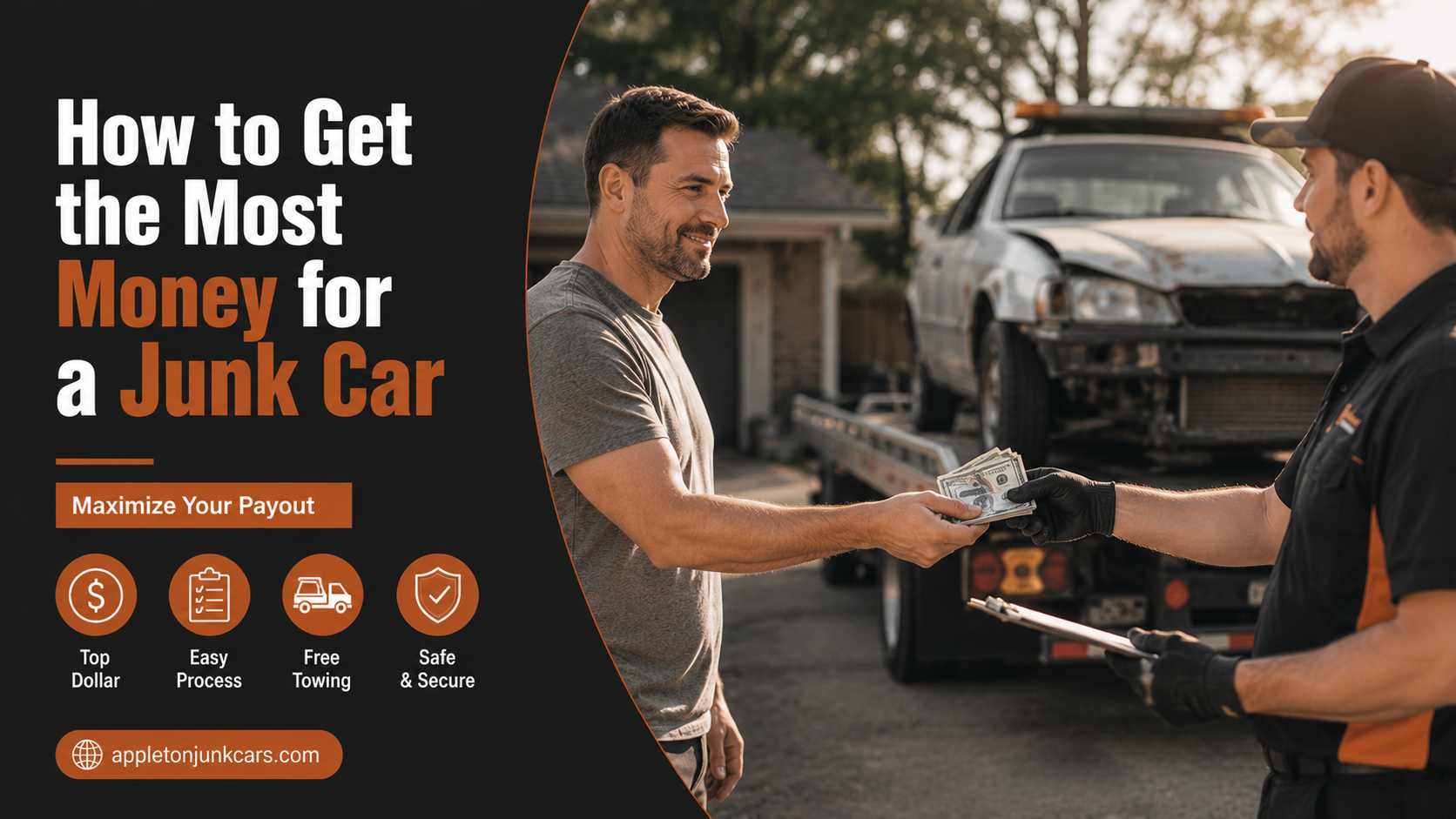
The difference between the first offer you receive for a junk car and the best offer the market will produce for that same car is rarely small. On a typical non-running vehicle from a popular make, the gap between a generic junk buyer’s first quote and the offer from the right specialist buyer can be $300 to $1,000 or more. On a diesel truck, a Harley-Davidson, or a vehicle with a high-value drivetrain, the gap can be several thousand dollars. This is not about luck. It is about sequence, preparation, and knowing which buyers to contact in which order for your specific vehicle.
Most sellers leave money on the table by doing one of two things: accepting the first offer they receive without shopping it, or calling the wrong type of buyer first. The right buyer for a 7.3 Power Stroke F-350 is not the same as the right buyer for a 1997 Honda Civic. Approaching them the same way and expecting similar results is the primary reason offers vary as much as they do for vehicles of equivalent condition.
This guide lays out a specific seven-step sequence that consistently produces better outcomes than the typical approach. It also covers the preparation steps that increase the offers you receive before the first call is made, and the negotiation principles that make competing offers actually work in your favor.
The Complete Step-by-Step Guide to Selling a Junk Car for Top Dollar
Step 1: Know What Your Car Is Actually Worth Before Any Call
Before contacting any buyer, establish two reference points: the scrap floor and the parts market potential. These two numbers define the range within which every offer you receive should fall, and knowing them in advance lets you evaluate any quote immediately rather than wondering whether it is fair.
The scrap floor is the absolute minimum the car is worth. Calculate it by finding your vehicle’s approximate weight (consult the manufacturer’s spec sheet or a reference site like curb weight databases) and multiplying by the current shredded steel price per ton. Check iScrapApp (iscrapapp.com) for current local steel prices. Add $80 to $300 for the catalytic converter if it is intact. This is your floor. No buyer should receive the car for less.
The parts market potential is harder to calculate precisely but easy to estimate directionally. Search eBay sold listings for your specific year, make, and model. Look at what transmissions, engines, doors, and major components sell for. Search Facebook Marketplace for non-running examples of your vehicle near you and see what they are listed and sold for. These two data points tell you whether your car has meaningful parts value above scrap or whether it is close to scrap value regardless of who you call.
Step 2: Locate the Title and Resolve Any Complications
The title is the most important document in any junk car transaction. Buyers pay more, move faster, and have more confidence in transactions where the title is clean, in the seller’s name, and in hand at the start of the conversation. A title problem discovered during a buyer’s due diligence reduces offers and stalls transactions.
Before making any calls, confirm the title is in your name with no lien recorded. If there is a lien, get the payoff amount from the lender and understand the release process. If the title is lost, order a replacement from your state DMV before starting the sale process. A replacement title takes one to three weeks and costs $15 to $30 in most states. The time invested pays back many times over in better offers and cleaner transactions.
A clean title in hand is worth an additional $150 to $400 in most junk car transactions over a “title available, need to replace it” situation, because buyers discount for uncertainty. The title is not the obstacle it seems; it is a preparation step that should happen before the first call, not after the first offer is received.
Step 3: Identify High-Value Components Before Any Buyer Visits
Certain components on almost every vehicle are worth significantly more sold separately than they contribute to a whole-car offer. Identifying them before any buyer conversation puts you in a position to either sell them separately or negotiate from knowledge rather than from ignorance.
Component | When Worth Selling Separately | Typical Separate Sale Value |
|---|---|---|
Catalytic converter | Never remove before sale; included in whole-car offer | $50 to $600; leave on car, confirm it’s included in offer |
Aftermarket head unit with wireless CarPlay | If purchased within 3 years from name brand (Pioneer, Kenwood, Alpine) | $80 to $300 on Facebook Marketplace; 20-min removal |
Aftermarket amplifier or subwoofer (name brand) | If Rockford Fosgate, JL Audio, Alpine; good condition | $100 to $500; quick eBay or FB sale |
OEM fifth wheel or gooseneck hitch (trucks) | If installed and in good working condition | $400 to $1,200; sell before truck is junked |
Service body or flatbed bed (trucks) | If in good structural condition; branded (CM, Knapheide) | $1,500 to $5,000; sell to truck body dealer |
New or recent tires (under 25% wear) | If less than 2 years old and matching set | $150 to $600 per set; private sale |
Working OEM wheels (aluminum, matching set) | If not aftermarket; stock wheel with good condition | $100 to $400 per set |
Never remove the catalytic converter before selling the car. This is the most common mistake that reduces total recovery. The converter is already factored into every buyer’s offer for the complete car. Removing it reduces the offer by at least its full value and often more, because buyers discount for the indication that other components may also be missing.
Step 4: Get the Scrap Floor Quote First
Call a local scrap metal yard before calling any junk buyer or salvage yard. Ask for their current price per ton for complete cars or shredded steel and calculate your vehicle’s value at that rate. Write the number down. This is the lowest number you should accept under any circumstances. Any offer below this should be declined immediately because you can do better with a five-minute phone call.
The scrap floor quote also serves as leverage in every subsequent conversation. When a junk buyer or salvage yard is not meeting your expectations, “I have a scrap yard offering $X” is a specific floor that puts pressure on the buyer to improve their offer rather than leaving you in a position where any number seems reasonable because you have nothing to compare it to.
Mention to the scrap yard whether the catalytic converter is intact and whether the battery is still in the car. Both components add to the scrap quote. If the catalytic converter is large (V8 truck or SUV), ask specifically what value they assign to it separately from the steel weight. This information is also useful in subsequent conversations with salvage buyers.
Step 5: Call Specialist Buyers for Your Specific Vehicle Before Generic Services
Generic junk car buying services use algorithmic pricing formulas that apply the same basic calculation across all makes and models. These formulas do not fully account for the specific parts market premiums that brand-specific salvage buyers and specialist markets apply to popular makes and high-demand components.
Vehicle Type | Call This Buyer First | Why |
|---|---|---|
Any Harley-Davidson motorcycle | HD-specific salvage buyer or HD parts dealer | HD parts market pays 2x to 4x generic scrap for intact bikes |
7.3 or 6.7 Power Stroke F-250/F-350 | Diesel-specific salvage buyer or diesel forums | Engine alone worth $2,000 to $7,000; generic buyers undervalue |
Cummins-equipped Ram 3500 | Cummins salvage buyer or diesel community Facebook groups | Same engine premium logic as Power Stroke |
Mercedes Sprinter (any condition) | Van life / conversion community Facebook groups | Conversion buyers pay $2,000 to $6,000 for non-running Sprinters |
Toyota Camry, Accord, Civic (any year) | Toyota or Honda-specific salvage yard | Parts demand drives 30 to 60 percent premium over generic quote |
School bus (Type C or D) | Skoolie/conversion Facebook groups | Conversion buyers pay 3x to 5x scrap for intact conventional buses |
F-150 Raptor (any condition) | Raptor parts buyers and forums | OEM parts have extreme premiums; generic buyers do not know this |
Standard economy car (no specialty) | National junk car platform for speed; local salvage for value | Parts premium is modest; efficiency matters more |
The specialist buyer column represents the highest-paying buyer category for each vehicle type. The reason: specialist buyers have direct relationships with the end buyers for specific components and they can accurately price the parts value those components represent. A generic junk buyer cannot price a 7.3 Power Stroke engine or a Sprinter chassis the way a diesel specialist or a van conversion buyer can.
Step 6: Get Three Competing Quotes and Use Them as Leverage
Three competing quotes, including your scrap floor, a specialist buyer offer, and a national junk car platform quote, give you everything you need to negotiate effectively. Each offer you hold becomes leverage in every other conversation.
How to use competing quotes in negotiation: be specific and be direct. “I have a competing offer of $850 from another salvage yard” gives the buyer you are currently speaking with a concrete number to beat. “I have a few other quotes I’m comparing” gives them nothing specific to respond to. The specific number creates a clear binary: beat it or lose the vehicle to a competitor. Most buyers with flexibility will make an effort to meet or beat a specific competing offer, particularly for vehicles they specifically want in their inventory.
Competing quotes also protect you from the most common junk car negotiation problem: offer reduction at pickup. A buyer who calls back with a lower offer than quoted, or whose driver arrives with a revised number, loses their leverage when you have documented quotes from two other buyers ready to receive a call. Having backup quotes converts the in-person pressure moment into a decision where walking away from a reduced offer is genuinely fast and easy to execute.
Step 7: Negotiate the Final Terms and Confirm What Is Included
Before accepting any offer as final, confirm five specific things in writing (text or email is sufficient).
First: the offer amount is the amount you receive. No additional fees, charges, or deductions at pickup. Some buyers deduct for towing that was described as free, or apply condition adjustments after inspecting the vehicle. Confirming that the quoted amount is the final amount before pickup prevents the most common disappointment.
Second: towing is included at no charge. If towing is not included, ask for the tow cost to be added to the offer or arrange your own towing and factor the cost into the net comparison.
Third: confirm what components are included in the offer. Specifically confirm the catalytic converter, the battery, and any major components you discussed. An offer that assumes the converter is missing when yours is present, or vice versa, produces an incorrect quote.
Fourth: confirm the pickup timeline. If the pickup window matters to you, confirm it at the time of acceptance rather than discovering on the day that the buyer’s schedule has shifted. Most established buyers honor their committed pickup windows; confirming it creates an expectation that helps ensure it.
Fifth: confirm payment method and timing. Most established junk car buyers pay cash or check at pickup. National platforms sometimes pay by check after the title is processed, which takes three to seven business days. Know which method applies before the vehicle leaves.
What Sellers Who Maximized Their Junk Car Payout Consistently Did
Sellers who report the highest payouts relative to what generic junk buyers initially quoted share a pattern of behaviors. The most consistent: they called a specialist buyer for their vehicle type rather than defaulting to the closest or fastest generic service. The difference between a specialist and a generic quote for a diesel truck, a popular Japanese make, or a conversion-platform van was consistently $500 to $2,000 in the cases reviewed.
The second consistent behavior: they got the scrap quote first and used it explicitly in every other conversation. Sellers who said “I have a scrap yard offering $480; can you beat that?” consistently received better offers from salvage buyers than those who called without any floor established. The floor changes the negotiation from “how low can you go?” to “how much above floor can you offer?”
Those who removed one or two high-value accessories before the junk buyer arrived, when appropriate and specifically for items the buyer would not have included in their offer, consistently recovered those components’ full market value. The key distinction these sellers reported: they never removed the catalytic converter, always left the battery in the car, and focused only on accessories like aftermarket stereos, hitches, and service bodies that were clearly not factors in the junk buyer’s calculation.
Frequently Asked Questions
How do I get the most money for a junk car?
Get the scrap floor quote first so you have a baseline no buyer should beat downward. Then call a specialist buyer for your vehicle type: diesel buyers for diesel trucks, van conversion communities for Sprinters and Transits, brand-specific salvage yards for popular Japanese makes. Get three competing quotes before accepting any offer. Use each quote as explicit leverage in subsequent conversations. Confirm the final offer in writing before scheduling pickup, including that the catalytic converter and battery are included in the quoted price.
Should I remove the catalytic converter before selling my junk car?
No. Removing the catalytic converter before selling almost always reduces your total recovery. Every legitimate buyer prices the intact vehicle with the converter included. Removing it reduces the offer by at least the converter’s value and often more, because buyers see a missing converter as a signal that other components may also be missing. Leave the converter in place, confirm it is included in every quote you receive, and collect the full value as part of the whole-car sale.
How many quotes should I get for a junk car?
Get at least three quotes before accepting any offer: the scrap yard floor price, a specialist buyer quote for your vehicle type, and a national junk car platform quote. These three quotes give you a range to evaluate offers against and provide the competing leverage needed to move a buyer toward their best number. Calling only one buyer and accepting their first quote is the most common way to leave money behind in a junk car transaction.
Does having a title make my junk car worth more?
Yes. A clean title in hand consistently produces offers $150 to $400 higher than a “title not available” situation, because it removes uncertainty from the buyer’s transaction and simplifies their paperwork. Buyers discount for title complications even when the complication is resolvable, because their time and risk exposure increases. If the title is lost, replacing it before the sale almost always recovers more than the replacement cost in the form of higher offers.
What is the fastest way to sell a junk car for cash?
The fastest route is a national junk car buying platform that provides instant online quotes and schedules pickup within 24 to 48 hours. These platforms are not typically the highest-paying route, but they are the most efficient if speed is the priority. For maximum speed on a specific vehicle type, calling the right specialist buyer directly often matches the 24 to 48-hour timeline while producing a higher offer.
Does the condition of my junk car affect how much I get?
Yes, though in specific ways. The mechanical failure type matters: a car with a blown head gasket where the engine is otherwise intact is worth more than the same car with a seized engine that has run with low oil for an extended period, because the former has more recoverable parts. Cosmetic condition affects body panel value but has minimal impact on the scrap floor. The catalytic converter and battery are the two components whose presence or absence has the largest individual impact on any offer.
Is it worth selling my junk car privately instead of to a junk buyer?
Only if the car runs, even poorly. A running car in rough cosmetic or mechanical condition is worth meaningfully more to a private buyer who will drive it than to a junk buyer who will not. A non-running car has a very limited private buyer market because most private buyers want to drive the car. If the car runs, check KBB private party value for Fair or Poor condition and compare it to junk offers; if the gap is large, a private listing with honest condition disclosure is worth attempting before defaulting to junk buyers.
How long does it take to sell a junk car?
Through a national junk car platform, the process from quote acceptance to pickup and payment takes 24 to 48 hours in most markets. Through a local salvage yard or specialist buyer, two to five days is typical. Through a private sale listing on Facebook Marketplace or Craigslist, one to four weeks depending on the vehicle and the asking price. The specialist buyer route frequently offers the best combination of timeline and payout for specific high-value vehicle types.
The Bottom Line
Getting the most money for a junk car is a process of sequencing correctly, not a matter of luck or negotiating skill. Establish the scrap floor first. Resolve the title before any buyer visits. Identify specialist buyers for your vehicle type and call them before generic services. Get three competing quotes and use them explicitly as leverage. Confirm the final offer in writing before the tow truck is dispatched.
The two decisions that produce the largest impact are calling the right buyer type first and getting the scrap floor before any other conversation. Every other step builds on those two. For popular makes and high-value drivetrains, calling the right specialist buyer rather than a generic junk service is worth $500 to $2,000 in typical cases. Having the scrap floor established before that call is worth another $100 to $300 in negotiating leverage.
The process takes two to three hours spread across two or three days if done thoroughly. For a vehicle that has meaningful parts value above scrap, the return on that time investment is consistently hundreds of dollars per hour. For a vehicle that is close to scrap value regardless of buyer type, the process is shorter and the outcome difference is smaller, but the scrap floor confirmation still ensures you receive the best available market price for the metal and parts your vehicle actually contains.