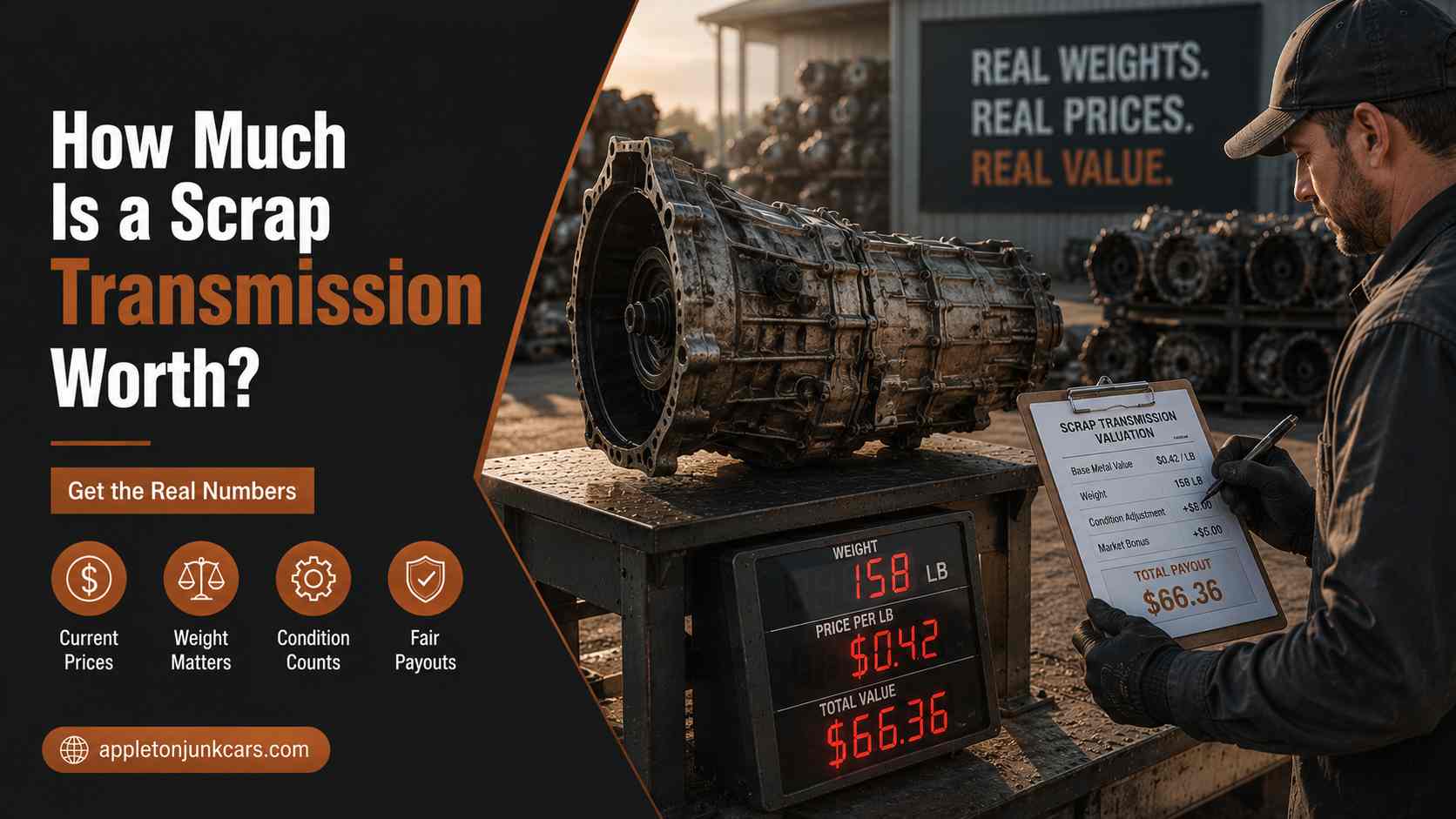
A scrap transmission is worth between $50 and $250 sold purely for its metal content, but a working or rebuildable unit sold as a used part can bring $200 to $800 or more depending on the vehicle it came from. The gap between those two numbers is significant, and most people selling a transmission leave money on the table by defaulting to scrap when a better option is sitting right in front of them. This guide covers what your transmission is actually worth, what drives the price up or down, and how to decide which selling path puts the most cash in your pocket.
The Most Important Number to Understand First
Before getting into specific price ranges, there is one thing worth understanding clearly: selling a transmission as scrap metal and selling it as a used auto part are two completely different transactions with completely different outcomes.
Scrap value is based purely on what the metal weighs and what type of metal it is. A scrap yard does not care whether the transmission worked or how many miles it had. They will weigh it, classify the metal, and pay you accordingly. This is the floor price for any transmission.
Used part value is based on whether the unit works, which vehicle it came from, how much demand exists for that specific model, and what a rebuilt or replacement unit would cost a buyer. A working automatic transmission from a popular vehicle can sell for four to eight times its scrap metal value when sold to a rebuilder, a salvage yard that resells parts, or a private buyer through an online marketplace.
The first question to ask is always: is this transmission in working or rebuildable condition? If yes, the used part market is almost always the better path. If the transmission is burned, cracked, completely seized, or stripped, scrap metal is your realistic option.
Scrap Value by Transmission Type
Transmission Type | Typical Scrap Value | Typical Used Part Value | Weight Range |
|---|---|---|---|
Manual (cast iron / steel) | $50 to $150 | $150 to $400 | 80 to 130 lbs |
Automatic (aluminum case) | $80 to $250 | $200 to $800 | 150 to 250 lbs |
CVT (continuously variable) | $80 to $200 | $250 to $700 | 130 to 200 lbs |
Heavy duty / truck automatic | $150 to $350 | $400 to $1,200 | 200 to 350 lbs |
Performance / sports manual | $100 to $200 | $300 to $900 | 90 to 140 lbs |
These ranges reflect current market conditions and typical scrap yard and private sale prices in the United States. Prices vary by region, current metal market rates, and local demand for specific models. The figures above are averages, not guarantees.
What the Metal Inside Is Actually Worth
When a scrap yard buys your transmission, they are buying the metal, not the part. Understanding what metal is in your unit helps you evaluate whether any quote you receive is fair.
Aluminum Transmissions
Most modern automatic transmissions use aluminum alloy cases, which is good news for sellers. Aluminum is significantly more valuable as scrap than steel or cast iron. At current market rates, aluminum brings roughly $0.40 to $0.70 per pound at scrap yards. A typical automatic transmission with an aluminum case weighs 150 to 250 pounds. At those rates, the metal alone is worth $60 to $175 before the yard takes their margin.
The practical payout you receive as a seller will typically be somewhat below the raw metal value because the yard factors in sorting, processing, and their own costs. Expect to receive 50 to 75 percent of the raw aluminum value in a typical transaction.
Steel and Cast Iron Transmissions
Older manual transmissions and some heavy-duty units use steel or cast iron cases. These metals are worth considerably less per pound than aluminum, typically in the range of $0.05 to $0.15 per pound for shredder-grade steel. A manual transmission weighing 100 pounds at $0.10 per pound generates ten dollars in raw metal value. That is why pure scrap payouts on older steel transmissions can be surprisingly low.
If you have an older steel-cased manual transmission and the scrap offer feels disappointing, that is the math explaining it. The used part market is the better route if the unit is from a popular model and works correctly.
Copper and Internal Components
Modern automatic transmissions contain small amounts of copper in their wiring harnesses and solenoids. Some specialty recyclers extract these components separately and pay a slight premium over basic aluminum scrap for that reason. General scrap yards typically do not separate these materials and simply pay a blended rate for the whole unit.
What Makes a Transmission Worth More or Less
Working condition is the biggest factor. A transmission that shifts smoothly and has no major leaks or internal damage is worth dramatically more than a non-working unit. The difference is not marginal. A working automatic from a popular vehicle can sell for four to six times its scrap value when sold to a rebuilder or a private buyer. A burned-out or seized unit sells only for its metal weight.
Make and model demand. Certain transmissions have strong demand from the used parts market because the vehicles they fit are popular, the units are known to be reliable when rebuilt, or because replacement transmissions are expensive. Toyota and Lexus automatic transmissions are consistently in demand because of their reputation for longevity. Popular truck transmissions like the GM 6L80E or Ford 6R80 are actively sought by rebuilders who specialize in them.
Vehicle popularity and parts market activity. A transmission from a vehicle with millions of registered examples on the road has a large pool of potential buyers. A transmission from an uncommon import or discontinued model has a much smaller pool. This directly affects how quickly you can sell and what price you can command.
Weight. For pure scrap purposes, a heavier transmission generates more metal value. Truck and SUV automatics are heavier than compact car units and therefore bring more at scrap even at the same per-pound rate. This is one area where a heavy-duty truck transmission holds a genuine advantage over a small car unit.
Metal composition. Aluminum cases are worth more per pound than steel or iron. If you have two transmissions of similar weight but one has an aluminum case and one has a cast iron case, the aluminum unit will scrap for noticeably more.
Completeness. A transmission that is intact and complete, including the torque converter on an automatic, is worth more than one that has been partially stripped. Buyers, whether scrap yards or used part purchasers, prefer complete units because they are easier to assess and process.
Fluids drained or not. Most scrap yards and recyclers require or prefer that transmission fluid is drained before accepting the unit. A transmission full of fluid is heavier but the extra weight is fluid, not metal. Some yards will accept units with fluid still inside but may reduce the offer or charge a disposal fee. Draining the fluid before delivery keeps the transaction cleaner and sometimes improves the offer.
Number of speeds on an automatic. Older four-speed automatic transmissions are generally worth less in the used market than modern six-speed, eight-speed, or ten-speed units. Vehicles still running older four-speeds are often aging vehicles where the owner may not justify the cost of a quality used replacement. Modern multi-speed units from popular platforms command higher prices because the vehicles that use them are newer and the owners are more likely to invest in a repair.
Should You Scrap It or Sell It as a Used Part?
This is the decision that has the most impact on your payout, and the answer depends on a few honest questions.
Does it work? If the transmission is in working condition with no known major faults, selling it as a used part almost always makes more financial sense. The additional effort of finding a buyer is repaid many times over in price difference.
Is it from a popular vehicle? Check what a comparable used unit for your specific year, make, and model sells for on eBay Motors or Craigslist. If you see listings for $400 or more, that market exists and you can access it. If listings are sparse or prices are low, the used market for your specific unit may be thin.
Do you have the time and means to move it? Transmissions are heavy. Moving a 200-pound automatic transmission without proper equipment is not a casual undertaking. If you cannot transport it easily or do not want to deal with individual buyers, scrap is a reasonable and legitimate choice even if the payout is lower.
Is it a rebuildable core even if not working? Transmission shops and rebuilders sometimes pay for non-working units as rebuild cores if the case is intact and the internal damage is repairable. Popular performance and truck transmissions in particular have active core markets. A non-working 6L80 automatic that a rebuilder wants as a core may bring $150 to $300, well above its pure scrap metal value.
If you go the used part route, Facebook Marketplace, Craigslist, and eBay Motors are the primary platforms. List the transmission with the vehicle it came from, the mileage at removal, whether it was working when removed, and clear photos. Be accurate about any known issues. Buyers in this market are mechanically knowledgeable and will ask the right questions.
Where to Sell Your Transmission
General scrap yards. The fastest and least-effort option. They weigh the unit and pay a metal rate. You will not get top dollar here, but you will get paid the same day with no negotiation. Call ahead to confirm they accept transmissions and whether they have a preference for drained fluid.
Auto recyclers and salvage yards. These are different from general scrap yards. Auto recyclers specialize in vehicle parts and typically pay more than a general scrap operation for working or rebuildable transmissions because they resell them. A working automatic transmission that a general yard buys for $80 in scrap might be worth $250 to $400 to an auto recycler who will clean it, test it, and resell it with a warranty.
Transmission rebuilders and shops. If you have a popular transmission model, calling local transmission shops directly can surface buyers willing to pay a core price or a used price for the right unit. Shops that rebuild specific models are always looking for good cores to work with.
Online marketplaces. eBay Motors and Facebook Marketplace reach the widest pool of buyers. eBay is particularly effective for specific transmission models with national demand. The trade-off is that transmissions are heavy and shipping them is costly. Local pickup listings on Facebook Marketplace avoid shipping concerns and reach buyers in your area who can collect in person.
Junk car buyers if the transmission is still in the vehicle. If you have not yet removed the transmission and you are junking the whole vehicle, it is often better to let the buyer take the car intact. Junk car buyers typically factor powertrain condition into their offers. Removing the transmission yourself before selling the car can actually reduce the car’s value by more than the transmission brings separately, unless you have a clear plan to sell it for significantly more on the used market.
How to Prepare a Transmission Before Calling for Quotes
A little preparation before you start calling buyers can improve your offer and make the process smoother.
- Drain the transmission fluid. Most yards and buyers prefer units that are dry. Use a drain pan and dispose of the fluid at a recycling center or auto parts store.
- Identify the transmission model number if possible. This is usually stamped on a tag or plate on the unit itself. Having the model number allows buyers to look it up and give you a more accurate quote rather than a conservative blanket offer.
- Know the vehicle it came from, including year, make, model, and engine size. This context helps buyers assess demand and value.
- Note the mileage at removal if you know it. A 60,000-mile transmission is worth significantly more in the used market than a 180,000-mile unit, all else being equal.
- Take clear photos if listing online. Show the case from multiple angles, any identifying tags or stamps, the fluid condition if still present, and any visible damage. Good photos reduce back-and-forth questions and attract serious buyers.
- Call at least three buyers before committing. Offers for the same transmission can vary by $100 or more between a general scrap yard, an auto recycler, and a private buyer. The extra calls are worth the time.
What People Who Have Done This Say
People who have sold transmissions both as scrap and as used parts share a few consistent lessons when they talk about the experience.
The most common observation is surprise at how little a general scrap yard offers. Someone who goes to a scrap yard expecting $200 for a transmission and receives $60 has not been lowballed in most cases. They simply encountered the math of selling aluminum or steel by weight at commodity rates. The disappointment usually leads them to try a different buyer next time.
A second consistent experience is discovering the used part market after the fact. Many people scrap a working transmission and later find listings on eBay Motors showing the same unit selling for three to five times what the scrap yard paid. The lesson is to check the used market before making the call to scrap, especially for transmissions from popular vehicles that were working when removed.
Third, people who have sold to transmission shops or rebuilders directly often report the best experiences in terms of price. These buyers know exactly what they are looking for and will pay a fair price for the right unit because it fits directly into their inventory and business model. Finding them takes a few more calls, but the payoff is consistent.
Frequently Asked Questions
How much will a scrap yard pay for a transmission?
Most scrap yards pay between $50 and $250 for a transmission, with the amount depending on the unit’s weight and whether the case is aluminum or steel or iron. Aluminum cases bring more per pound. General scrap yards typically pay less than auto recyclers for the same unit.
Is a broken transmission worth anything?
Yes. Even a non-working transmission has scrap metal value based on its weight and composition. If the case is intact and the unit is from a popular model, rebuilders may also pay a core price for a non-working unit, which can be more than straight scrap value.
What is the difference between scrap value and core value?
Scrap value is what a metal recycler pays based on the weight and type of metal. Core value is what a rebuilder pays for a non-working but rebuildable unit that they plan to disassemble and rebuild for resale. Core values are often higher than scrap values for popular transmission models because the rebuilder sees a usable product rather than raw metal.
Should I remove the transmission before junking the car?
Not automatically. Get quotes for the whole car first. Junk car buyers factor powertrain components into their whole-car offers, and removing the transmission can reduce the car’s value by more than the transmission brings separately. Only remove it if you have a specific buyer lined up or if your research shows you can clearly net more money by selling the parts separately.
Does a working transmission sell for more than a non-working one?
Significantly more. A working transmission can sell for three to six times its scrap metal value when sold to the right buyer. A non-working unit sells only for scrap metal value or core value. Condition is the single biggest factor in a transmission’s worth.
Are automatic transmissions worth more than manual transmissions?
For scrap metal purposes, the difference is primarily about weight and case material. Automatics are generally heavier and more commonly aluminum-cased, which means they tend to bring more in pure scrap. For the used part market, automatic transmissions are in higher demand for most common vehicles because more cars on the road are automatics. Performance manual transmissions from sports cars are an exception and can command strong used prices in the right market.
What is the best place to sell a transmission for the most money?
For a working unit from a popular vehicle, online marketplaces like eBay Motors or Facebook Marketplace typically produce the highest prices because they reach the widest pool of buyers. For a non-working unit or one from a less common vehicle, an auto recycler or transmission rebuilder is usually your best option ahead of a general scrap yard.
Do I need to drain the fluid before selling a transmission?
Most buyers prefer or require drained units. A transmission full of fluid may be accepted by some yards but can result in a lower offer or a disposal fee. Draining it before your appointment is a simple step that keeps the process cleaner and sometimes improves the offer.
The Bottom Line
A scrap transmission is worth $50 to $250 in pure metal value, but the same unit sold as a working or rebuildable part to the right buyer can bring $200 to $800 or more. The gap between those outcomes comes down to one question: is it in condition to be used again?
If the answer is yes, check the used market before you call a scrap yard. Spend fifteen minutes looking at what comparable units sell for on eBay Motors or Facebook Marketplace. Call an auto recycler alongside any general scrap yard to compare offers. For popular truck or SUV transmissions in good condition, those extra steps routinely produce two to four times the scrap payout.
If the transmission is truly beyond use, scrap is the right call. Get at least two or three quotes from different yards, know the weight and metal type going in, and choose the buyer who offers the best rate for the actual metal you are bringing them.
Either way, knowing what you have before making the first call puts the conversation on your terms rather than theirs.