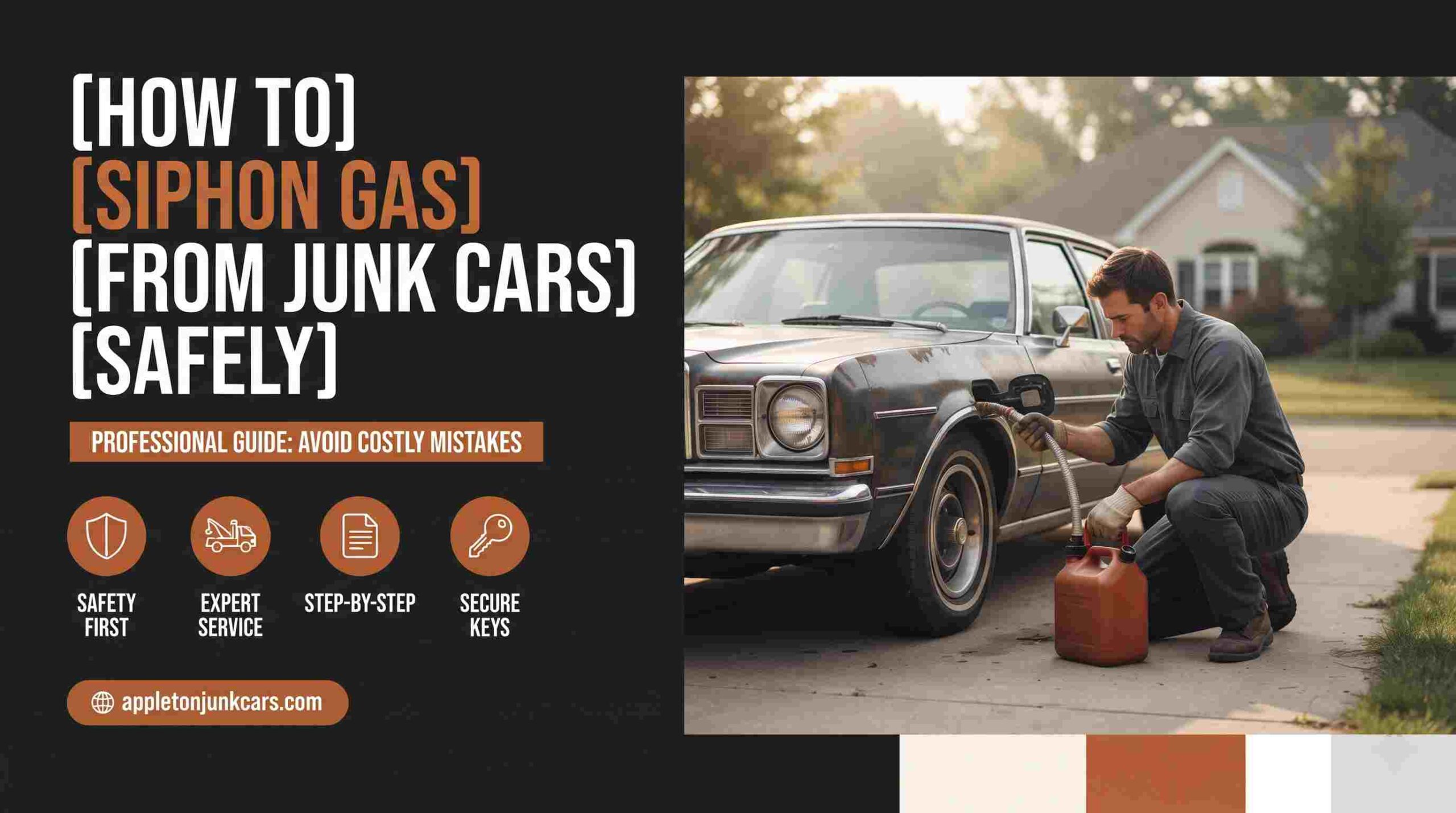
Yes, you can siphon gas from a junk car before it gets picked up, and it is worth doing.
Gas costs real money, and whatever is left in the tank goes with the vehicle the moment the tow truck arrives. Recovering it first is smart and takes less time than most people expect. That said, the method you use depends almost entirely on what year your car is. Modern vehicles have anti-siphon valves that block a standard hose entirely, while older cars let you do the job in minutes with basic equipment. This guide covers both situations, the safety rules that matter, and everything in between.
Why It Is Worth Doing Before the Junk Car Gets Picked Up
If your junk car has half a tank of gas, that could be five to ten gallons depending on the tank size. At current fuel prices, that is a real amount of money to hand over for free. The junkyard that takes your car has no obligation to compensate you for whatever fuel is inside. Once they have the vehicle, they drain and keep it.
Beyond the money, there is an environmental reason as well. When vehicles are crushed or shredded without being properly drained, residual fuel and fluids can leak into the ground at processing facilities. Removing the gas beforehand is the cleaner approach, and some responsible scrappers specifically recommend it.
The timing matters too. Do this before you call the junk car buyer or at least before pickup day. Once the vehicle is on their truck, any fuel inside belongs to them.
The Most Important Thing to Know Before You Start: Old Car or New Car?
This single question determines your entire approach, and skipping it is how people waste an hour trying to force a hose through a modern fuel system that is specifically designed to stop them.
Vehicles Made Before the Mid-1990s: Straightforward
Older vehicles typically have a direct, unobstructed path from the fuel filler neck down into the gas tank. There are no anti-siphon valves and no rollover protection screens in the filler neck. A standard hand pump or even a length of hose can reach the fuel and pull it out. The process takes ten to fifteen minutes and requires minimal equipment.
If your junk car is from the 1980s or early 1990s and has been sitting without needing to pass modern safety inspections, you are likely dealing with a straightforward filler neck. Try inserting your pump hose. If it slides down smoothly without resistance, you are in the clear.
Vehicles Made from the Mid-1990s Onward: Anti-Siphon Protected
Most vehicles made from roughly 1995 onward include one or both of the following:
- Anti-siphon mesh screen: A mesh barrier seated in the filler neck that prevents solid objects from entering the tank. It stops a standard hose from reaching the fuel.
- Rollover valve: A ball-and-seat valve at the base of the filler neck. It opens when fuel flows downward into the tank during filling but closes shut when anything pushes upward from inside. It was designed to prevent fuel spillage in accidents, but it also blocks a siphon hose completely.
You will know you have hit one of these when your hose stops moving about 12 to 18 inches down the filler neck and will not go further no matter how you angle it. Do not try to force it through. Pushing hard can break plastic components off into the tank, which can then get sucked into the fuel pump and cause a costly problem.
For newer cars, you need a different method. We cover those below.
Safety Rules That Are Not Optional
Gasoline is one of the most flammable substances you will handle in everyday life. It evaporates quickly and the vapors are heavier than air, which means they pool near the ground exactly where a spark from a tool or shoe can ignite them. The following rules apply regardless of which method you use.
Never siphon gas indoors or in an enclosed space. Vapor buildup in a garage or shed creates an explosion risk. Work outside only.
No smoking. Not nearby. Not at all during this task.
Keep away from any open flame. This includes pilot lights on outdoor grills or heaters nearby.
Never use your mouth to start a siphon. Ingesting even a small amount of gasoline is poisonous and can cause serious injury. It can also be inhaled into the lungs, which is a medical emergency.
Never use metal tubes or tools inside the filler neck. Metal on metal creates sparks near fuel vapors. Use plastic or rubber hoses only.
Beyond those hard rules, wear nitrile or rubber gloves to keep gasoline off your skin, and wear safety glasses in case of splashing. Have a rag ready to catch drips when you disconnect the hose. Keep a fire extinguisher nearby if you have one.
Work on a flat, dry surface. A vehicle parked on a slope can shift unexpectedly, and spilled fuel on a sloped surface travels further and faster than expected.
Discharge any static electricity by touching a bare metal part of the vehicle frame before handling the fuel cap or any equipment. This is a quick step that takes one second and eliminates a real risk.
What You Need Before You Start
A hand-operated fuel transfer pump. This is the correct tool for this job. A hand pump has a squeeze bulb or lever mechanism that creates suction without any electricity, sparks, or flames. The hose is fuel-resistant rubber or plastic. These pumps are available at auto parts stores and online for $10 to $30. They typically come with two lengths of hose: one for the tank and one for the output to your container.
An approved fuel container. Use a proper gas can rated for fuel storage. Standard red plastic gas cans are designed for this and have the right seals to prevent vapor escape. Do not use random bottles, buckets, or containers not designed for fuel. They can melt, leak, or allow dangerous vapor buildup.
Nitrile or rubber gloves. Gasoline absorbs through skin and is a skin irritant with repeated exposure. Gloves are a basic protection worth putting on.
Safety glasses. A precaution against splashing during disconnection.
A clean rag or shop towel. For wiping the filler neck area and catching drips when you disconnect.
Optional but useful: a flashlight to see down the filler neck, and a helper to hold the gas can steady while you operate the pump.
Method 1: Standard Siphon for Older Vehicles
Use this method if your vehicle is from before the mid-1990s and your pump hose slides down the filler neck without meeting resistance.
- Park the vehicle on level ground. Flat ground keeps fuel at the bottom of the tank rather than pooled to one side, making extraction more complete.
- Open the fuel filler cap. Set it somewhere clean where you will remember to retrieve it, even though the car is being junked.
- Ground yourself. Touch a bare metal part of the vehicle frame to discharge static electricity.
- Place your approved gas can on the ground next to the vehicle. Position it lower than the fuel tank if possible. On most passenger cars, the tank is beneath the rear seat or trunk floor, so placing the can near the rear wheel on the ground typically works well. Gravity assists the flow once the pump starts it.
- Insert the pump’s intake hose into the filler neck. Feed it down slowly until you feel it reach the fuel. On most vehicles this is 18 to 30 inches of hose. You should smell fuel and may see fuel on the hose when you have reached it.
- Run the output hose into your gas can. Submerge the end of the output hose below the lip of the can opening to prevent splashing.
- Begin pumping. Squeeze the bulb steadily, 8 to 10 times, until fuel starts flowing through the hose. Once the siphon is established, the fuel flows continuously without further pumping on most hand pump designs.
- Monitor the flow and the container. Watch the gas can level and stop before it overflows. If you have more fuel than one can holds, cap the first can fully before starting on a second.
- Stop and disconnect carefully. When flow slows to a trickle, the tank is close to empty. Pull the intake hose out slowly and immediately use your rag to catch any drips from the hose end. Keep the hose low and directed away from the vehicle and your body as you remove it.
- Cap everything immediately. Cap the gas can and set the pump aside. Wipe any spilled fuel off the vehicle body and the ground if possible using the rag, and dispose of the rag in a sealed bag away from the vehicle.
Method 2: Getting Fuel Out of a Newer Vehicle with Anti-Siphon Protection
If your hose stops about a foot or so down the filler neck and will not go further, you are dealing with anti-siphon protection. You have a few options.
Option A: Narrow Tube Method
Some hand pumps come with narrower accessory hoses specifically for this reason, or you can purchase a narrow-diameter fuel transfer hose separately. The goal is to use a hose thin enough to slide past the anti-siphon mesh and work around the rollover valve.
Cut the end of the narrow hose at a 45-degree angle to give it a pointed end. This makes it easier to navigate past the mesh and past the ball valve with a gentle twisting motion. Do not force it. Work the hose in slowly with small rotating movements. Once past the valve, you should feel the resistance drop and the hose will slide further into the tank.
From there, connect the narrow hose to the pump and proceed as you would with the standard method above. This approach takes more patience than a direct insertion on an older vehicle but works on many cars once you find the right angle past the valve.
Option B: Access Through the Fuel Line Under the Hood
On some vehicles, you can access fuel through the engine compartment rather than the filler neck. The fuel line runs from the tank to the fuel rail on the engine. Disconnecting the fuel line at the engine end and placing a hose there gives you access to the fuel in the line and, with the ignition briefly cycled, the fuel being pumped from the tank.
This method requires some mechanical confidence and varies significantly by vehicle. On some cars this is straightforward. On others the fuel line connections use proprietary fittings that require specialty disconnect tools. If you are comfortable with basic engine bay work and can identify the fuel line, this is a viable option. If you are not sure what you are looking at, this method is not the right one to attempt on your own.
Important: only cycle the ignition in short bursts if using the fuel pump to push fuel through a disconnected line. The fuel pump is not designed to run without fuel flowing through it for extended periods.
Option C: Drain From the Tank Directly
If the car is being junked and you are comfortable with some under-car work, many fuel tanks have a drain plug on the bottom. Placing a large drain pan underneath, removing the drain plug, and allowing the fuel to drain by gravity is the cleanest and most complete method available. This requires raising the vehicle safely on jack stands, which is additional setup but produces complete draining.
Not all tanks have accessible drain plugs. Check your vehicle’s service manual or look under the car before assuming this option is available.
When to Accept That the Fuel Cannot Be Easily Recovered
On some modern vehicles with particularly robust anti-siphon systems, none of the above methods will work without specialized equipment or significant disassembly. If you have tried the narrow tube approach without success and are not comfortable accessing the fuel line, it may not be worth the additional effort for a junk car that is leaving in a day or two. Evaluate the amount of fuel in the tank against the time investment and decide accordingly. A nearly empty tank is rarely worth significant effort. A nearly full tank is.
What to Do With the Gas You Recover
Fuel recovered from a junk car is usable as long as it has not significantly degraded. Gasoline begins to break down after about three to six months in a tank, and degraded fuel can cause problems in other vehicles. Before using recovered fuel in your daily driver, consider the age and condition of the junk car and how long it had been sitting.
Fresh fuel from a recently operational car can go straight into your own vehicle or into your fuel cans for storage. If the car had been sitting for a year or more, the fuel may have gone stale. Stale gasoline has a sour smell distinctly different from fresh fuel and may appear darker or cloudier. Stale fuel can still be used in small amounts mixed with fresh fuel, or it can be taken to a hazardous waste facility or a recycling center that accepts old fuel.
Do not pour old gasoline on the ground, into storm drains, or into regular trash. It is an environmental hazard and in most areas illegal to dispose of improperly. Auto parts stores, recycling centers, and some fire stations will accept small quantities of old fuel.
How Much Fuel Can You Realistically Recover?
It depends entirely on how much is in the tank when you start. If the car has been driven until recently, there may be five to fifteen gallons remaining. At current fuel prices that is a meaningful amount.
Even a nearly empty tank may have a gallon or two sitting at the lowest point that is worth capturing. The whole process from setup to cleanup typically takes 20 to 40 minutes for an older vehicle and up to an hour for a newer one with anti-siphon protection.
One practical reality: standard hand pumps cannot extract the last small amount of fuel that sits below the fuel pickup tube inside the tank. You will get close to empty but not completely empty. For a junk car, that is perfectly fine. The goal is recovering usable fuel, not achieving a laboratory-level drain.
What People Say After Going Through This
People who have done this before junking a car consistently report two things. First, the amount of fuel they recovered was worth more than they expected. A car they thought of as nearly empty turned out to have several gallons sitting in the tank. The extra few minutes to check paid off.
Second, the people who ran into trouble were almost always the ones who tried to force a hose into a newer vehicle without knowing about anti-siphon valves. They pushed harder thinking the hose was kinked, eventually gave up frustrated, and called the junkyard without getting anything out. Knowing the anti-siphon valve exists and having a plan for it before you start avoids that outcome entirely.
A third experience worth noting: people who used old mouth-siphon methods and accidentally ingested fuel. This is a medical event, not a minor inconvenience. Gasoline in the lungs or stomach requires immediate medical attention. The hand pump costs less than a fast food meal. Use it.
Frequently Asked Questions
Can I siphon gas from a car using just a hose?
On older vehicles from before the mid-1990s, yes. A length of fuel-resistant hose and a hand pump are all you need. On newer vehicles, a standard hose will be blocked by the anti-siphon valve inside the filler neck and will not reach the fuel.
Is it legal to siphon gas from your own junk car?
Yes. Recovering fuel from a vehicle you own is legal. Siphoning gas from someone else’s vehicle without permission is theft. Since you own the junk car until the title transfers to the buyer, you have every right to remove the fuel before that happens.
How do I know if my car has an anti-siphon valve?
Insert your pump hose into the filler neck and feed it down. If it stops moving after about 12 to 18 inches and will not go further regardless of how you angle it, an anti-siphon device is blocking it. Vehicles from before the mid-1990s typically do not have these. Most vehicles made after 1995 do.
What is the safest tool to use when siphoning gas?
A hand-operated fuel transfer pump with fuel-resistant rubber or plastic hoses. These are available at any auto parts store for around $15 to $30. They require no electricity, produce no sparks, and do not require you to use your mouth to start the siphon.
Can I use the fuel from my junk car in my other vehicle?
If the fuel is relatively fresh, meaning the car was running recently, yes. If the car has been sitting for a year or more, the fuel may have degraded and should be used carefully in small quantities mixed with fresh fuel, or disposed of at a hazardous waste facility.
What do I do if I accidentally get gasoline in my mouth?
Do not induce vomiting. Rinse your mouth immediately with water and spit. If you swallowed any amount, call Poison Control immediately at 1-800-222-1222 in the United States. If you inhaled fuel into your lungs, this is a medical emergency and you should call 911 or go to an emergency room immediately.
Should I drain the gas before calling the junk car buyer or after?
Before. Once you have called and scheduled a pickup, you have limited time. Do it at your own pace before the appointment. There is no reason to mention it to the buyer. The fuel in the tank has never been part of what they are paying for.
The Bottom Line
Siphoning gas from a junk car before it gets picked up is a sensible, legal, and straightforward task when you approach it with the right information. The core of it is this: know whether your car has anti-siphon protection before you start, use a proper hand pump instead of a hose and your mouth, and follow the basic safety rules around ventilation, static discharge, and open flames.
Older cars are the easiest. Newer cars take more patience or a different access point entirely, but the fuel is still recoverable in most cases. The effort is almost always worth it when there is a meaningful amount left in the tank.
Get the gas, store it properly in an approved container, and let the junkyard take an empty tank. That is money in your pocket that would otherwise drive away on a tow truck.