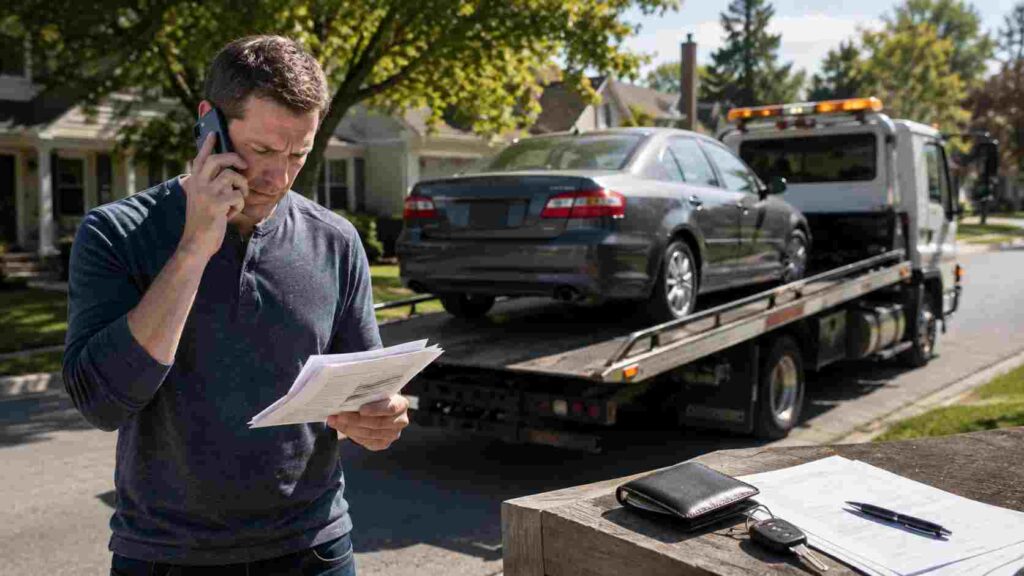
The car is sold, the title is signed, and the tow truck just left. The insurance policy is still active, the next payment is two days away, and you are not entirely sure when to cancel or how. This is one of the most consistently mishandled steps in a junk car sale. Getting the timing right means you collect a prorated refund for every unused day of coverage. Getting it wrong means you either pay for coverage on a car you no longer own, or you cancel too early and eliminate protection you still technically need.
The process itself is simple: a five-minute phone call to your carrier. Everything hinges on when you make that call relative to when the title changes hands and the car leaves your property. The sequence matters more than anything else in this transaction.
This guide covers the correct moment to cancel, how to handle the prorated refund, the specific scenarios where early cancellation creates real problems, and the state-level differences that affect whether plates need to be returned before or after the call.
Why the Cancellation Timing Is the Only Thing That Can Go Wrong
Auto insurance on a vehicle you no longer own is a wasted expense. But cancelling coverage on a vehicle you still legally own, even by a few hours, creates a gap that can result in real financial exposure if anything happens to the car before the title transfer is complete.
The correct cancellation moment is immediately after two things have happened: the title has been signed over to the buyer, and the car has physically left your property. Not when the buyer calls to say they are coming. Not the night before. Not a week later. The moment both of those conditions are met is the moment to call your carrier.
Cancellation Timing | What Happens | |
|---|---|---|
Before title is signed or car is picked up | You lose coverage on a car you still own. Any incident is uninsured. | |
Immediately after title signed and car gone | Clean break. Refund calculated from that day forward. Ideal. | |
Same day but a few hours after pickup | Minimally fine. Minor refund loss only. | |
One to three days after pickup | Acceptable. Small unnecessary premium cost. | |
A week or more after pickup | Avoidable expense. Multiple days of premiums paid on a car you no longer own. | |
Never cancelling | Policy auto-renews. Premium payments continue indefinitely. Not recoverable. |
The most common mistake: scheduling cancellation for the end of the billing period to avoid a “complicated” refund. There is no complication. Every major carrier processes prorated refunds automatically. Waiting for the billing period to end costs you money for every day you wait.
Canceling Insurance on a Junk Car: The Step-by-Step Process
Step 1: Have Your Documentation Ready Before You Call

Before calling your insurance carrier to cancel, gather three things. First, the date the title was signed and the car left your possession. This is the cancellation effective date you will request. Second, your policy number, which is on any insurance card or your carrier’s app. Third, any bill of sale or junk buyer receipt that confirms the transaction date, which some carriers may request as documentation.
If the car was titled in your name alone, you can cancel without any additional authorization. If the policy is a joint policy or the car was titled jointly, both parties may need to authorize the cancellation depending on your carrier’s requirements. Confirm this when you call.
Step 2: Call Your Carrier and Request the Cancellation Effective Date
Call the customer service or cancellation line of your insurance carrier. This is rarely a long call. You will tell the representative that you have sold or junked the vehicle, provide the date the car left your possession, and request that the cancellation be made effective as of that date.
Key phrases to use on the call: “I would like to cancel coverage on this vehicle effective [date the car was picked up].” “The vehicle has been sold and titled to a junk buyer.” If the representative asks for documentation, a bill of sale or junk buyer receipt with the date is sufficient for most carriers.
Request a cancellation confirmation number and ask that a written confirmation be sent to your email or mailing address. This confirmation is your proof that coverage was cancelled on the date you specified, which protects you if the carrier attempts to charge a late payment after the cancellation date.
Step 3: Understand How Your Prorated Refund Is Calculated and When It Arrives
A prorated refund means you receive back the unused portion of any premium you have already paid. If you paid six months of premium upfront and cancel at the three-month mark, you receive roughly three months of premium back. If you pay monthly and cancel mid-cycle, you receive a refund for the unused days in that billing period.
Most major carriers use one of two refund methods. Pro-rata refunds return the exact dollar amount for unused coverage days. Short-rate refunds apply a modest cancellation fee (typically 5 to 10 percent of the unused premium) before issuing the balance. Ask your carrier which method they use so you know what amount to expect.
Refund timelines vary by carrier and payment method. If you paid by credit card, the refund typically returns to that card in 7 to 14 business days. If you paid by check or bank draft, a check is typically mailed within 14 to 21 business days. If you have a balance due to the carrier, the refund is applied to that balance first.
What Happens If You Cancel Too Early or Too Late
Cancelling Before the Title Is Transferred
If you cancel insurance before the title is signed over and the car is gone, you own an uninsured vehicle. In most states, driving or allowing the operation of an uninsured vehicle creates personal liability. Even a parked vehicle on your property can be subject to liability claims if someone is injured near it. More practically: if the car is damaged by a weather event, a fire, or an accident while sitting in your driveway waiting for pickup, that loss is entirely uninsured after the cancellation date.
Cancelling After a Long Delay
Carriers will cancel the policy retroactively to the date you request in most cases, but only if you can provide documentation of the earlier sale date. Without documentation, the carrier may only process the cancellation from the day you call, meaning you pay premiums for every day between the actual sale and your call. On a $100 monthly premium, waiting two weeks costs approximately $50 in unnecessary coverage.
Forgetting to Cancel Entirely
Auto-renewal means the policy continues indefinitely. Monthly drafts continue. If you placed a junk car sale on a credit card and forgot to cancel the insurance, the carrier is not obligated to refund premiums for periods when the policy was technically active. The longer the delay, the less refund you can recover, and some carriers will only honor retroactive cancellations within 60 to 90 days of the sale date. Cancel immediately.
State-Level Differences That Affect the Process
Most of the cancellation process is governed by your insurance carrier’s policies rather than state law. However, a few state-specific rules affect the sequence and what you need to do with your license plates.
State Rule Type | States Where It Applies | What It Means for You |
|---|---|---|
Plate return required before insurance cancellation without penalty | Connecticut, New Jersey, New York, and several others | Return plates to DMV first; bring the receipt to your carrier. Otherwise an uninsured period may be flagged. |
Insurance cancellation triggers automatic registration suspension | Most states | If you cancel insurance and do not notify the DMV of the sale, the registration may be flagged as non-compliant. |
Proof of sale required for retroactive cancellation | Varies by carrier, enforced in some states | Bill of sale or junk buyer receipt with the date is sufficient in most cases. |
No special requirements beyond the call | Most states (TX, FL, CA, OH, and most others) | Call the carrier, provide the date, cancel. No plate return or DMV notification required before the call. |
If you are unsure of your state’s specific requirements, your carrier can advise you on the call. Every major carrier’s customer service representatives are familiar with state-by-state plate return and registration cancellation requirements and will walk you through any additional steps needed in your state.
What Junk Car Sellers Consistently Overlook in This Step
Sellers who have junked cars and managed the insurance cancellation process share a consistent set of oversights. The most common: forgetting to cancel the insurance entirely in the days following the sale and discovering the oversight when the next month’s premium is charged. At that point, a retroactive cancellation to the sale date requires documentation and a formal request that some carriers process slowly.
The second most common oversight is cancelling insurance before confirming that the title has actually transferred. Some junk car transactions involve a delay between the buyer picking up the car and the title actually being processed at the DMV. During that window, the car is physically gone but may still be legally in your name. Cancelling insurance during that window creates a brief uninsured period for a vehicle you technically still own on paper. The safest approach is to retain coverage until you have signed the title over in person at the time of pickup.
The third overlooked step is failing to notify the DMV of the sale in states that require a Notice of Transfer or Release of Liability. This form disconnects your name from the vehicle’s registration record and protects you from parking tickets, violations, or incidents involving the car after the sale. The insurance cancellation protects your financial exposure. The DMV notification protects your legal record.
Frequently Asked Questions
Do I need to cancel my car insurance before junking a car?
You do not need to cancel before, but you should cancel immediately after the sale is complete and the car is gone. The correct sequence is to sign the title, let the car leave your property, and then call your insurer to cancel effective as of that date. Cancelling before the car is gone eliminates coverage on a vehicle you still legally own.
Will I get a refund when I cancel my car insurance after selling my junk car?
Yes, if you have prepaid any premium for coverage beyond the cancellation date. Most carriers return the unused portion on a pro-rata basis, meaning you receive back exactly the dollar amount for unused coverage days. Some carriers apply a short-rate cancellation fee of 5 to 10 percent of the unused premium before issuing the refund. Ask your carrier which method they use when you call.
Can I cancel my car insurance over the phone?
Yes. Cancelling auto insurance over the phone is standard practice at every major carrier. You provide your policy number, the vehicle information, the effective cancellation date, and request a confirmation number. The entire call typically takes 5 to 10 minutes. Some carriers also allow cancellation through their website or mobile app if you prefer not to call.
How long does it take to get a refund after cancelling car insurance?
Refund timelines vary by carrier and payment method. Credit card refunds typically process in 7 to 14 business days. Check refunds are typically mailed within 14 to 21 business days. If you have an outstanding balance with the carrier, the refund is applied to that balance first. Ask for the expected refund timeline and amount when you make the cancellation call.
What happens if I cancel insurance before selling my car?
If you cancel insurance before the title is signed and the car has left your property, you own an uninsured vehicle. Any damage to the car, any incident involving the car, and in some states the act of parking it on a public street, creates uninsured liability. Beyond the coverage gap, many states treat uninsured vehicle ownership as a registration violation that can result in fines or registration suspension. Do not cancel before the sale is complete.
Do I need to return my license plates before cancelling insurance?
It depends on your state. States including Connecticut, New Jersey, and New York require plate return to the DMV before cancelling insurance without penalty or administrative complication. Most other states have no specific plate return requirement tied to insurance cancellation. Your carrier can advise you on your state’s specific requirement when you call.
Does cancelling car insurance affect my credit score?
Cancelling car insurance does not directly affect your credit score. Insurance companies do not report cancellation activity to credit bureaus. However, an unpaid insurance premium that is sent to collections can affect your credit. If you owe a balance at the time of cancellation, pay it before the account becomes delinquent.
How do I cancel insurance on a financed car that I am junking?
If the car still has an active loan, the lender is named as a loss payee on your insurance policy. You generally cannot cancel insurance on a financed vehicle without the lender’s knowledge, as doing so violates the loan terms. Contact the lender first to discuss the junk sale. The junk buyer’s payment typically goes toward paying off the loan balance, after which the lender releases the title and the insurance can be cancelled cleanly.
The Bottom Line
Cancelling insurance on a junk car is a five-minute phone call that pays you back in two ways: it stops premium payments immediately, and it triggers a refund for any coverage you already paid for but no longer need. The only complexity is timing.
Make the call the same day the car leaves your property. Provide the sale date as the effective cancellation date, confirm the refund method and timeline, and request a written cancellation confirmation. In states that require plate return before cancellation, handle that at the DMV first and bring the receipt to the call.
Do not cancel before the title is signed and the car is gone. Do not wait days or weeks after the sale. The car is no longer yours the moment the title is signed, and your insurance policy should reflect that fact as closely as possible.