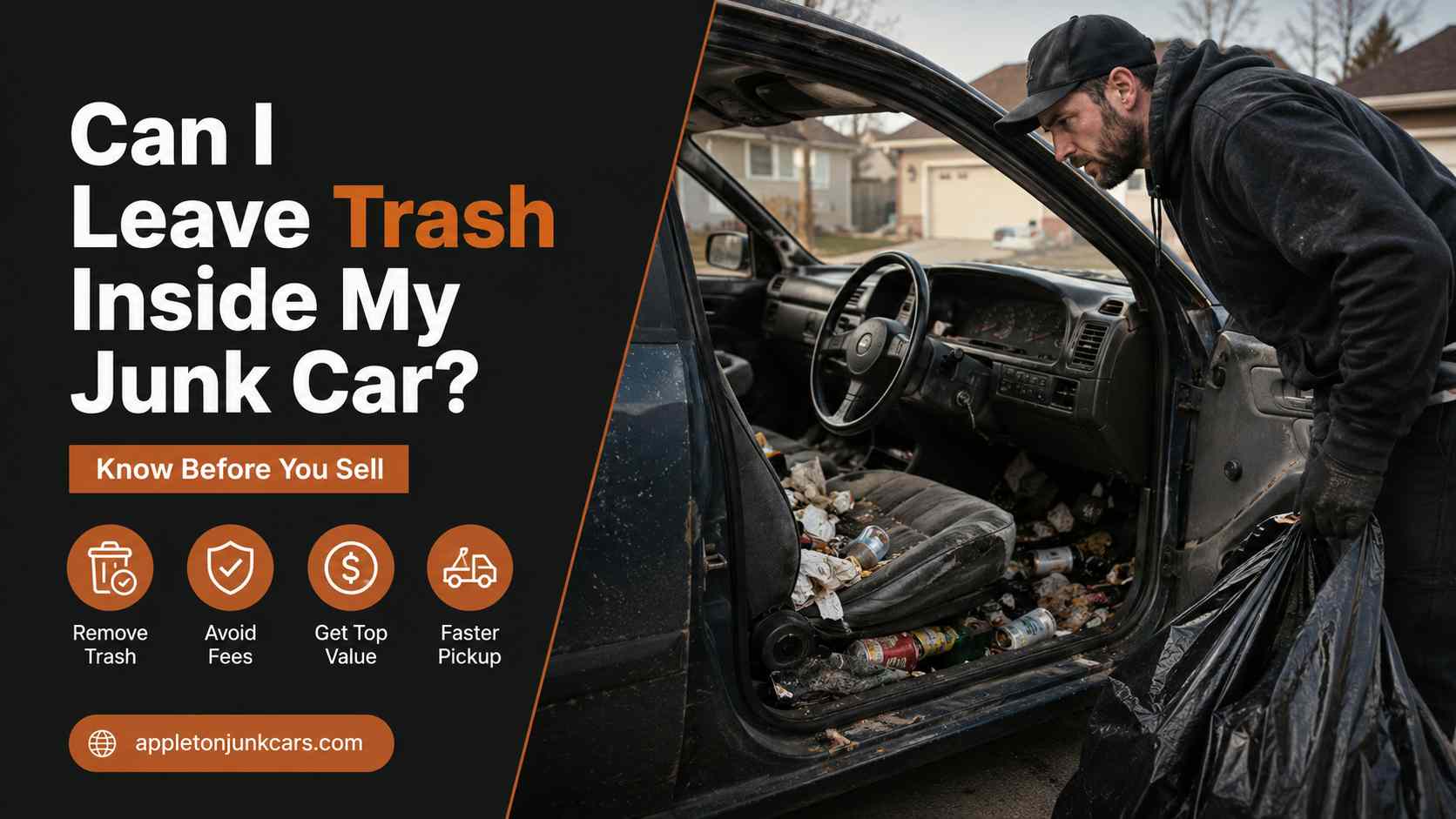
Some cars are loved. Washed on Sundays, vacuumed on Saturdays, smelling of air freshener and good intentions. And then there are the other kind. The ones that became rolling storage units somewhere around year three. The ones where you could carbon-date the receipts on the floor. The ones with a gym bag that has achieved sentience.
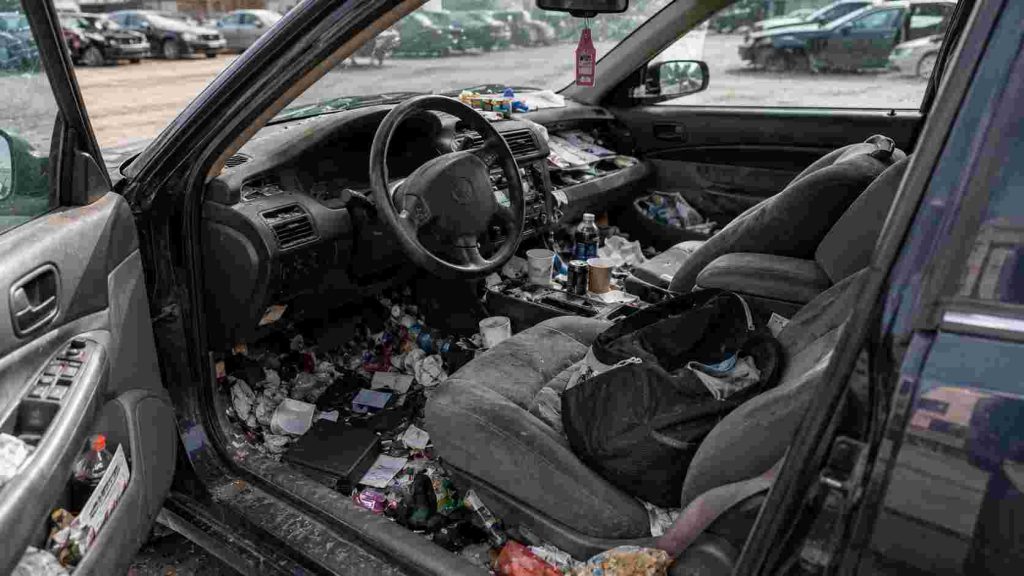
If that second car is the one you are junking, a reasonable question crosses your mind somewhere between accepting the offer and scheduling the pickup: does any of this actually need to come out?
The short answer is: ordinary trash can stay, personal items cannot, and anything genuinely hazardous is a separate conversation entirely. The longer answer involves a few nuances that are worth knowing before pickup day, mostly because the junk car sitting in your driveway is still holding things you will want back long after the tow truck is gone.
What Junk Car Buyers Actually Care About
Junk car buyers are not coming to your house to judge your housekeeping. They are coming for the metal, the parts, and the catalytic converter. The state of the floor mats is irrelevant to every number in their offer.
A junkyard processes hundreds of vehicles a week. Most of those cars have something left inside: parking passes, phone chargers, fast food bags, forgotten umbrellas. The staff at a salvage yard has seen everything and has a process for clearing vehicle interiors that does not involve them calling you to complain. The car gets drained, stripped, and processed. Whatever was inside ends up in a waste bin at the facility.
Ordinary everyday mess inside a car, meaning the kind of accumulation that happens to a vehicle over years of normal use, does not affect the junk car offer in any meaningful way. Junk buyers are not deducting for crumpled water bottles. They are pricing on weight, parts value, and current scrap metal rates.
So in the purely financial sense, no, you do not have to clean the car out. But you should still go through it.
The Real Reason to Go Through the Car Anyway
The argument for spending twenty minutes on the car before pickup has nothing to do with keeping it tidy. It has to do with the things you will miss if you do not.
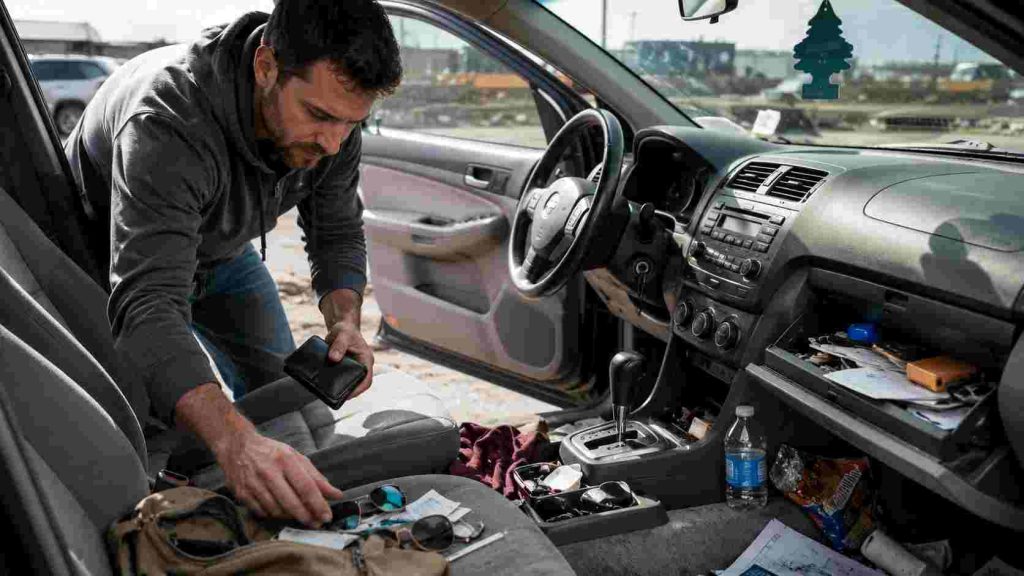
Cars are where life happens. Long commutes, road trips, school pickups, drive-through lunches. Over years of ownership, the average vehicle accumulates an astonishing amount of personal material in places its owner has completely stopped looking. A systematic walk-through before junking almost always surfaces something the owner is glad they found.
What People Consistently Find in Junk Cars
Based on what sellers report finding during pre-pickup cleanouts, the categories break down roughly like this.
Documents with personal information. Registration papers, old insurance cards, past-due notices, medical paperwork, bank statements. These belong in a shredder, not a junkyard’s waste pile. Even a document that looks routine can contain enough information for identity problems down the line. The glove box and door pockets are where these most commonly live and are almost always overlooked.
Prescription medication. Especially in cars that have been sitting unused for a while. A single bottle of prescription medication left in a junk car creates multiple problems: the medication goes to waste, and a bottle with your name and prescription information attached rides away to a salvage facility with no particular regard for what happens to it next.
Money. Loose coins in cup holders and center consoles add up. More significantly, people occasionally find folded bills in door pockets, under floor mats, or in the space between the seat and the console. Enough to matter. Not enough to think twice about before losing it.
Keys. House keys, storage unit keys, spare car keys for other vehicles. The physical key to your front door leaving in a junk car is a security issue with no obvious upside.
Toll transponders and parking passes. These are active accounts tied to your name. A toll transponder in a junked car does not mean whoever ends up near it can use it, but it means there is an active account sitting somewhere it should not be. Cancel the account and retrieve the device before pickup.
Electronics. Forgotten phone chargers, old smartphones slid under seats, dash cameras still mounted to the windshield, GPS units clipped to the dash. These range from mildly useful to genuinely valuable.
Sentimental items. The thing nobody thinks about until it is gone. A photograph tucked behind a sun visor. A piece of jewelry left in a cup holder. A note from someone who is no longer around. These are the items people genuinely grieve losing, and they are completely unrecoverable once the car is gone.
The Twenty-Minute Walkthrough
You do not need to empty the entire car. You need to check every place something could be hiding. Here is the sequence that covers everything.
- Glove box. Empty it entirely. Registration, insurance, manuals, receipts. Keep the official documents, shred anything with your personal details on it.
- Center console. Every compartment, including any USB ports or phone holders where small items get wedged.
- Cup holders. Coins live here. So do small valuables that got set down and forgotten.
- Door pockets, all four. These are where things slide in and stay for years. Check the front and rear door pockets.
- Under all seats. The front seat rails trap things that slid forward during braking. Use your phone’s flashlight.
- Sun visors. Garage door openers, cards, photos, and toll passes all live here.
- Trunk and cargo area. Check the main cargo space plus the spare tire well underneath. Tools, emergency kits, folding chairs, and sports equipment all get stored in trunks and forgotten.
- Seat backs. Back of the front seats sometimes have pockets. So do minivan and SUV second-row seats.
- Overhead storage. In SUVs and minivans especially, overhead consoles and reading light areas sometimes have small storage compartments.
The whole walkthrough takes about twenty minutes on a typical car. Less if you have not been storing much in there. It is twenty minutes that prevents the week-long mental replay of what you probably left behind.
What Counts as Regular Trash vs What Does Not
There is a meaningful difference between a cluttered, lived-in car and a car with contents that create real problems. Most cars fall firmly into the first category. A few edge cases are worth knowing about.
Regular Trash: Not a Problem
Food wrappers, paper bags, old coffee cups, receipts, newspapers, parking tickets, empty water bottles, fast food containers, clothing, sports gear, broken umbrellas, and the general accumulation of daily life all fall into this category. Junk car buyers handle this routinely. It does not affect your offer, it does not create any legal issues, and it is genuinely not something they care about. If clearing it out would require multiple trash bags and significant time, you are not obligated to do it.
The one reason to clear obvious trash even when you do not have to: it makes it easier to spot the things that actually matter. A car full of crumpled bags is a car where a document or a key can hide for thirty seconds longer than it should. Clearing the obvious clutter first makes the meaningful walkthrough faster and more thorough.
Excessive Accumulation: Occasionally Used as a Justification
An extreme amount of trash inside a vehicle, think full bags, years of accumulation at hoarder levels, can occasionally be cited by less reputable buyers as a reason to reduce the offer at pickup. This is not a standard legitimate deduction in the junk car industry. Reputable buyers do not reduce offers for interior mess. But it does happen as a tactic, and knowing it exists means you can push back on it if a driver tries it.
If a buyer ever tries to reduce the offer because of trash inside the car, ask them to specify what legitimate impact the interior contents have on the vehicle’s weight, parts value, or scrap value. The answer is none. The quote is for the car, not the car’s interior condition.
Hazardous Materials: An Entirely Different Situation
The word trash means different things in different contexts. Here is what actually constitutes a problem from a legal and safety standpoint.
Firearms and ammunition. Do not leave these in a junk car under any circumstances. Beyond the obvious safety concern, a firearm traveling through the salvage industry in an uncontrolled way creates legal exposure. Remove any firearms, ammunition, or weapons before the car leaves your possession.
Prescription medications in volume. A single forgotten pill bottle is a nuisance. A significant quantity of controlled substances in a vehicle creates a different kind of issue. Handle these through proper medication disposal programs, many pharmacies accept unused medications, before the car goes.
Biological contamination. This is the category that triggers actual concern. A car that has been involved in a serious accident with significant blood contamination, one where someone has died inside, or one exposed to other biological hazards is classified differently by buyers and in some cases legally. This is not about a spilled coffee. This is about genuine biohazard conditions that require professional remediation. If your vehicle falls into this category, be upfront with the buyer. It affects how they process the car and may affect the offer.
Severe mold from water damage. A car that sat with standing water inside for months can develop mold conditions that are considered a health hazard. This is typically handled at the salvage level, but buyers appreciate knowing about significant mold conditions before they send a driver.
Chemical containers or fuel cans. Empty them and dispose of them properly before pickup. A partially full container of motor oil, pesticide, or any chemical product that is not native to the vehicle’s systems is something to remove before the car goes.
What You Absolutely Must Remove Before Pickup
Regardless of how much or how little you choose to clean out, these items need to come out of the car before pickup day without exception.
- Your license plates. In most states, plates belong to you, not the vehicle. Remove both front and rear plates before the driver arrives and return them to your DMV or transfer them to your next vehicle.
- Any documents with personal identification. Registration, old insurance cards, anything with your name, address, or account numbers on it.
- Keys to your home or other vehicles. Physical security items have no business riding away in a junk car.
- Prescription medications. Personal health information and, in the case of controlled substances, potential legal issues.
- Toll transponders and registered devices. These are active accounts. Cancel or retrieve them.
- Firearms, ammunition, or weapons. No exceptions.
- Anything with sentimental value. Once the car leaves, there is no path back to these items. Take them with you now.
- Cash. Check everywhere. Coins in cup holders, bills in door pockets, anything visible.
Does Leaving Trash Inside Affect the Price?
For normal levels of interior clutter, no. Junk car buyers do not price the interior condition. They are buying metal and parts. A car that is messy inside weighs the same as a car that is clean inside, and at a junkyard, weight is money.
The only scenario where interior contents affect value is if something valuable was included and priced in, and then you removed it before pickup without telling the buyer. If a buyer quoted the car knowing it had a working subwoofer system in the trunk and that system is gone on pickup day, the offer adjusts. But a pile of water bottles and old mail affects nothing.
The reverse is also true: clearing out personal items before pickup does not improve the offer. You are not being graded. You are simply protecting yourself from losing things that matter.
What Happens to the Trash After Pickup
For those who are curious about where things end up, here is the general process at a salvage yard.
When a car arrives at the facility, technicians drain all fluids first, then strip usable parts for inventory. During this process, the vehicle’s interior is cleared. Small personal items and ordinary trash end up in facility waste bins. Nothing is sorted for return to the previous owner. Nothing is retained.
The vehicle is then crushed or shredded depending on what value remains. At the shredder, all remaining materials are separated by type: steel, aluminum, copper, rubber, glass, and residual waste. The residual waste, which includes anything that is not metal or recyclable, goes to an approved waste facility.
The practical implication: anything left in the car is definitively gone. There is no mechanism to recover it, no lost and found at the junkyard, and no reason the salvage yard would reach out about something found inside. This is why the twenty-minute walkthrough before pickup matters more than any other step in the process.
What Real Sellers Say After Going Through This
People who have junked cars and talk about the experience afterward share a remarkably consistent set of observations about what they wish they had done differently.
The most common version: they did not go through the car carefully enough and realized afterward that something specific was gone. A spare house key. A parking pass still linked to an active account. A birthday card from someone who passed away, tucked into the visor where it had been since the funeral. The car was gone before the realization arrived. None of these things could be retrieved.
A second common experience is finding things during the walkthrough that they had completely forgotten about. People report discovering usable gift cards, old cash, spare earbuds still in packaging, and in one case a grandparent’s watch that had been missing for over a year. The twenty-minute walkthrough paid out in unexpected ways.
Nobody has ever reported regretting that they took the trash out before junking. The regret only flows in the other direction.
Frequently Asked Questions
Will a junk car buyer refuse to take my car if there is trash inside?
No. Junk car buyers accept vehicles in any condition, and interior mess is not a factor in whether they will come or what they will pay. They have seen far worse and have a process for handling whatever is left inside.
Can a junk buyer reduce the offer because of trash inside my car?
Not legitimately. Interior clutter does not affect a car’s weight, parts value, or scrap metal value. If a driver tries to reduce the offer at pickup citing interior mess, ask them to explain how it impacts the vehicle’s value. The answer is that it does not. Push back or call another buyer.
What should I absolutely not leave inside a junk car?
License plates, personal documents with identifying information, prescription medications, firearms and ammunition, toll transponders, keys to your home or other vehicles, cash, and anything with sentimental value you would be upset to lose.
Do I need to empty the glove box before junking?
Yes. The glove box is where most people store their vehicle registration, insurance documents, and personal paperwork. These documents contain your personal information and should come with you. Empty the glove box as the very first step in your pre-pickup walkthrough.
What if I find something I want after the car has been picked up?
There is generally no way to recover it. Salvage yards do not maintain a lost and found for vehicle contents. Once the car is in their possession and processing begins, anything inside it is gone. This is why the walkthrough before pickup matters so much.
Is a very messy car different from a biohazard car?
Yes, significantly. Ordinary mess, even extensive accumulation of everyday trash, is not the same as biohazard contamination. A biohazard vehicle is one that has been exposed to biological hazards such as blood, bodily fluids, or other infectious materials. Regular trash is not a biohazard situation. If your car has genuine biological contamination, disclose it to the buyer before pickup.
Do I need to vacuum or clean the car before junking?
No. Cleaning the interior has zero effect on the junk car offer and is not expected by buyers. The only thing worth doing is a thorough personal belongings check, not a cleaning effort.
The Bottom Line
Ordinary trash can stay in your junk car. Junk buyers do not care about it, it does not change your offer, and you are not obligated to clean anything before they arrive.
What cannot stay: documents with your personal information, keys to your home, prescription medications, license plates, toll transponders, firearms, cash, and anything you would genuinely miss once the car is gone. That list is not about cleanliness. It is about protecting yourself.
Spend twenty minutes going through the car before pickup day. Check every compartment, every pocket, under every seat. Not because anyone is grading you. Because that twenty minutes is the only opportunity you will ever have to find what you did not know you were looking for.
After that, whatever is left in the car is the yard’s problem. Which is exactly the point.