A wrecked Tesla or electric vehicle sells for $3,000 to $40,000 or more depending on the model, the battery pack condition, the type and extent of damage, and which buyer you reach. The range is wider for EVs than for any other damaged vehicle category because the high-voltage battery pack, which is the single most valuable component, retains significant value independently of what happened to the vehicle structure. A Tesla Model S with a destroyed front end and a pristine battery module is worth $15,000 to $25,000 to a battery specialist. The same car at a generic salvage yard earns $4,000 to $7,000.
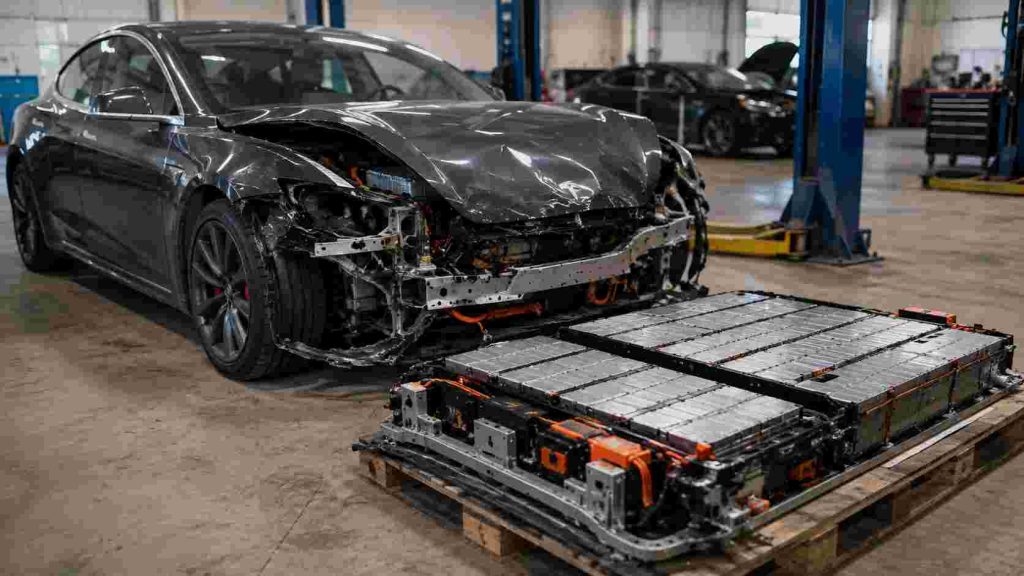
Wrecked electric vehicles have a more active and specialized buyer market than most owners expect. EV-specific salvage yards, battery refurbishers and resellers, EV repair shops that source used modules for battery pack replacements, Copart and IAA auction platforms with dedicated EV sections, and the growing rebuild-title community that specializes in EV reconstruction all actively purchase wrecked and totaled electric vehicles.
This guide covers what each major EV model is worth in damaged condition, why the battery pack is the primary value driver, which buyers pay the most for Tesla versus non-Tesla EVs, and how the sale process works for high-voltage vehicles that require specific handling.
What a Wrecked Tesla or Electric Vehicle Is Worth in Today’s Market
Wrecked EV values are determined by battery pack capacity and condition, damage type and location, whether the battery pack was compromised in the collision, and which buyer segment the vehicle reaches. The table below reflects realistic buyer offers for each major platform.
EV Model | Battery Pack Size | Wrecked / Total Loss (Battery Intact) | Wrecked (Battery Compromised or Unknown) |
|---|---|---|---|
Tesla Model 3 Standard or LR | 60 to 82 kWh | $8,000 to $22,000 | $3,000 to $8,000 |
Tesla Model Y LR or Performance | 75 to 82 kWh | $10,000 to $26,000 | $4,000 to $10,000 |
Tesla Model S (2016 to present) | 100 kWh | $12,000 to $35,000 | $5,000 to $14,000 |
Tesla Model X (2016 to present) | 100 kWh | $12,000 to $32,000 | $5,000 to $13,000 |
Rivian R1T or R1S | 135 to 180 kWh | $15,000 to $40,000+ | $6,000 to $18,000 |
Chevrolet Bolt EV or EUV | 60 to 65 kWh | $5,000 to $14,000 | $2,000 to $6,000 |
Nissan Leaf (2018 to present) | 40 to 62 kWh | $3,000 to $9,000 | $1,500 to $4,500 |
Ford Mustang Mach-E | 75 to 98 kWh | $7,000 to $18,000 | $3,000 to $8,000 |
Hyundai Ioniq 5 or Kia EV6 | 77.4 kWh | $7,000 to $19,000 | $3,000 to $9,000 |
Older Nissan Leaf (pre-2018) | 24 to 30 kWh | $1,500 to $5,000 | $500 to $2,000 |
The single most important distinction in any wrecked EV valuation is whether the battery pack was structurally compromised in the collision. A battery pack that was not in the damage zone, shows no thermal event indicators, passes a basic voltage test, and has no physical deformation is worth close to its full replacement market value regardless of what happened to the front or rear of the vehicle. A pack that was crushed, exposed to fire, or deeply discharged from sitting is worth cell recovery value only, which is a fraction of a functional pack’s price.
Why Wrecked EVs Have a Stronger Buyer Market Than Most Sellers Expect
The economics of EV ownership create a specific salvage market dynamic that does not exist for conventional vehicles. EV battery replacement from a manufacturer or authorized dealer is prohibitively expensive: a Tesla Model 3 battery replacement from Tesla is $13,000 to $20,000 out of warranty. A Chevy Bolt battery replacement from GM is $16,000 to $25,000. These prices create intense demand for used battery modules and packs from wrecked vehicles that can be refurbished and resold at a fraction of OEM cost.
Every month, EV owners whose battery pack has degraded beyond useful range, whose battery management system has failed, or who need a specific module replacement are willing to pay $3,000 to $10,000 for a tested used pack from a salvage source rather than $15,000 to $25,000 for a new one from the manufacturer. That demand sustains an active and growing EV salvage ecosystem that pays more for intact wrecked EVs than the generic salvage market.
The body and structural components of wrecked EVs also have value. Tesla uses aluminum-intensive unibody construction that requires specialized repair. Tesla-specific collision shops that perform structural aluminum welding and panel replacement source doors, fenders, hoods, and undamaged structural sections from salvage vehicles. Every wrecked Tesla is therefore a multi-buyer asset: body buyers, battery buyers, and electronics buyers all want different things.
The Battery Pack: The Primary Value Driver in Every Wrecked EV Transaction
The high-voltage battery pack in an EV is the single most valuable component, typically representing 40 to 70 percent of the vehicle’s total salvage value when intact. Understanding the battery’s condition before contacting any buyer is the most important preparation step in a wrecked EV sale.
Battery Pack / Model | Capacity | Functional Market Value | Damaged or Unknown Value |
|---|---|---|---|
Tesla Model 3 LR (2018 to present) | 75 to 82 kWh | $5,000 to $10,000 | $800 to $2,500 (cell recovery) |
Tesla Model Y LR (2020 to present) | 75 to 82 kWh | $6,000 to $11,000 | $800 to $2,500 (cell recovery) |
Tesla Model S 100D or P100D | 100 kWh | $10,000 to $20,000 | $2,000 to $5,000 (cell recovery) |
Tesla Model X 100D | 100 kWh | $10,000 to $18,000 | $2,000 to $4,500 (cell recovery) |
Chevy Bolt LG Chem 60 kWh | 60 kWh | $3,500 to $7,000 | $600 to $2,000 (cell recovery) |
Nissan Leaf 40 kWh (2018+) | 40 kWh | $2,000 to $5,000 | $400 to $1,500 (cell recovery) |
Rivian R1 Adventure | 135 kWh | $12,000 to $25,000 | $3,000 to $7,000 (cell recovery) |
EV battery packs should never be assumed damaged simply because the vehicle was in a serious collision. Battery packs are mounted low in the vehicle floor and are protected by reinforced structures designed specifically to absorb crash energy while keeping the pack intact. Many front-end and side collisions that total an EV leave the battery pack entirely undamaged. A basic state-of-health check, available from an EV service technician, confirms whether the pack is functional and what its usable capacity is. That data point changes the offer from every buyer.
Tesla-Specific Buyers: The Most Active Segment in the Wrecked EV Market
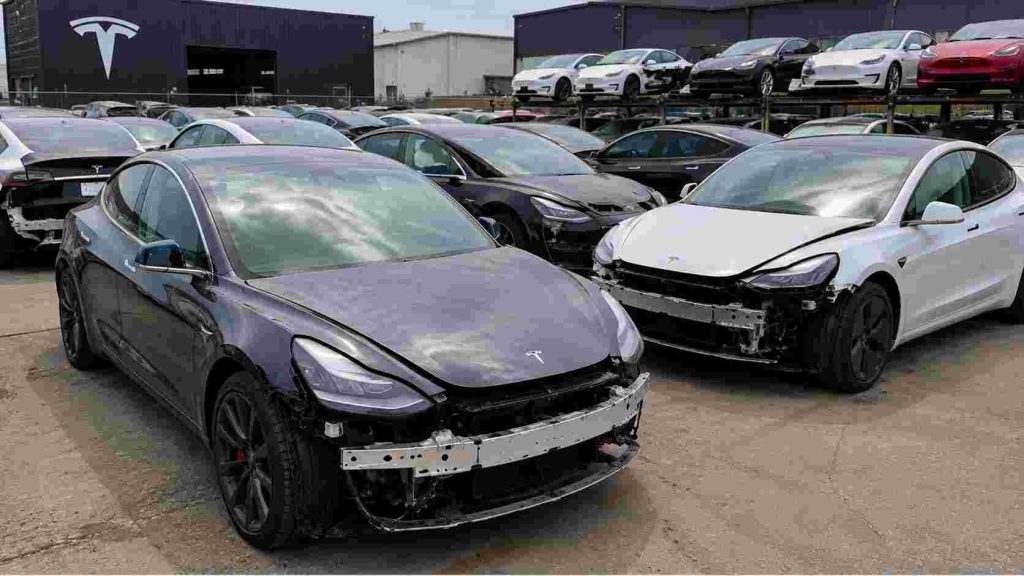
Tesla occupies a unique position in the wrecked EV market because of the brand’s sales volume, the high cost of OEM repairs, and the active third-party repair and rebuild ecosystem. More Teslas are totaled annually than any other EV brand, which has created a dedicated buyer infrastructure that does not yet exist at the same scale for other EV manufacturers.
Tesla Salvage Specialists
Salvage operations that specifically specialize in Tesla vehicles operate in most major metropolitan markets. These buyers purchase wrecked Teslas for battery resale, body parts, electronics modules, drive units, and structural components. They have the high-voltage training required to safely disassemble Tesla battery systems, the diagnostic equipment to assess battery health, and established buyer relationships for every component category. These specialists consistently pay more for wrecked Teslas than general salvage yards because they recover more value per vehicle.
Rebuild Title Specialists
A growing segment of the market purchases totaled Teslas specifically to restore them to driving condition with a rebuilt title. These buyers acquire a totaled Tesla, complete the structural repairs, replace the damaged components, pass the rebuilt title inspection, and resell the vehicle at a discount to buyers who want a Tesla at below-market pricing. This market is most active for Model 3 and Model Y vehicles where parts availability is highest and the structural repair complexity is manageable for experienced shops.
Copart and IAA EV Auctions
Both Copart and IAA maintain active EV sections on their auction platforms and regularly list wrecked Teslas and other EVs with detailed condition and battery health information. These auctions reach international buyers in addition to domestic ones, which increases competition and typically produces prices at or above what individual salvage buyers offer directly. If a direct buyer offer does not meet your expectations, consigning to Copart or IAA provides access to the broadest possible buyer pool for your specific vehicle.
Non-Tesla EVs: Which Models Have the Strongest Salvage Demand
Among non-Tesla EVs, buyer demand in the salvage market is primarily driven by how many units are on the road (creating parts demand from repair shops) and whether the battery chemistry and architecture allow third-party refurbishment. LG Chem and CATL battery cells, used in many non-Tesla EVs, have an active recycling and refurbishment market.
The Chevy Bolt has the strongest non-Tesla salvage market among affordable EVs because of its high sales volume and the active community of Bolt owners who have sought battery module replacements due to the well-documented degradation issues on early production units. Wrecked Bolts with intact battery packs consistently attract competition from Bolt-specific repair shops and individual owners.
Rivian vehicles command the highest salvage values among non-Tesla EVs because of their large-capacity battery packs, high new-vehicle prices, and limited availability of replacement parts from the manufacturer. A wrecked Rivian R1T or R1S with an intact 135 kWh battery pack is one of the highest-value wrecked EVs in the current market.
Older Nissan Leaf models (pre-2018 with 24 kWh packs) have limited salvage value because the battery packs have high degradation at age and the vehicles’ overall low new price means total salvage value is modest even in good condition. Newer Leaf models with 40 to 62 kWh packs attract more active buyer interest.
How the Sale Process Works for a Wrecked Electric Vehicle
High-Voltage Safety Requirements
Wrecked EVs with damaged battery systems may carry live high-voltage charge. A Tesla battery pack maintains 400 to 800 volts DC even in a non-running, totaled vehicle. Any buyer or tow operator handling a wrecked EV should be informed upfront that the vehicle is electric. Most established EV salvage buyers and professional tow companies that handle EVs have high-voltage trained technicians. Do not attempt to access the battery pack or any orange-cabled high-voltage components without proper training and equipment.
Towing a Wrecked EV
Wrecked EVs should be transported on a flatbed tow truck rather than towed with the wheels on the ground. Electric motors act as generators when the wheels spin, which can push current into a compromised battery system and create fire risk. Flatbed transport eliminates wheel rotation entirely. Inform the tow company that the vehicle is electric before scheduling pickup so they can bring appropriate equipment and trained personnel.
Title and Insurance Process
The title process for a wrecked EV follows the same rules as any totaled vehicle. The insurance company issues a total loss settlement, the title is branded as salvage, and the vehicle is either transferred to a salvage buyer through the insurer’s preferred channel or bought back by the owner through the salvage retention option. If buying back a wrecked EV, all of the same considerations about the rebuilt title process, insurance coverage for rebuilt titles, and resale value reduction apply as with any salvage vehicle.
What Sellers of Wrecked EVs Consistently Report
Sellers of wrecked Teslas and other EVs report consistent patterns. The most common: accepting an insurance total loss settlement and simply letting the insurer send the car to their preferred salvage partner without investigating what the vehicle would fetch in the open EV salvage market. Insurance companies use contracted salvage buyers who pay wholesale prices. The open EV salvage market, particularly for Teslas with intact battery packs, frequently produces offers 30 to 60 percent higher than what a contracted salvage buyer pays.
The second consistent finding is the battery condition misunderstanding. Sellers who assumed the battery was damaged because the car was totaled often accepted offers that reflected a compromised pack. A battery health check performed before any buyer conversation confirmed that the pack was intact, and subsequent offers from EV-specific buyers were substantially higher. For any wrecked EV that was not involved in a fire or a severe underbody impact, the battery pack deserves independent assessment before any offer is accepted.
Those who consigned wrecked Teslas to Copart or IAA rather than accepting direct buyer offers reported the highest final prices in most cases, particularly for Model S and Model X vehicles where the competition between international buyers significantly elevated the final bid. The auction platform adds one to three weeks compared to a direct sale, but for high-value EVs the difference in final price typically justifies the wait.
Frequently Asked Questions
How much is a wrecked Tesla worth?
A wrecked Tesla is worth $8,000 to $35,000 or more depending on the model, the battery pack condition, and the type of damage. Model 3 and Model Y totals with intact battery packs typically sell for $8,000 to $26,000. Model S and Model X totals with intact 100 kWh packs sell for $12,000 to $35,000. Battery pack condition is the primary value driver: a pack confirmed as functional and at high state of health adds $5,000 to $15,000 to the offer compared to an unknown or compromised pack.
Who buys wrecked electric vehicles?
Wrecked electric vehicles are purchased by EV-specific salvage yards with high-voltage trained technicians, battery refurbishers who buy packs for resale or cell recovery, rebuild title specialists who restore totaled EVs to driving condition, Copart and IAA through their online auction platforms, and EV-specific repair shops that source used components for out-of-warranty repairs. Tesla vehicles have the most active and specialized buyer market. Rivian and Chevy Bolt also attract dedicated buyer communities.
Is the battery pack damaged if the car is totaled?
Not necessarily. Many EV total losses result from body, structural, or electrical system damage that does not affect the high-voltage battery pack. Battery packs are mounted low in the floor structure and protected by reinforced barriers designed to withstand crash forces. Front-end collisions, roof damage, and many side impacts leave the battery pack intact. A state-of-health check from an EV technician or a buyer with diagnostic equipment confirms the pack’s condition independently of the visible damage.
Can I sell my wrecked Tesla directly instead of through insurance?
If you exercise the salvage retention option with your insurer, you receive the total loss settlement minus the vehicle’s salvage value and keep the vehicle to sell yourself. Selling a salvage-titled Tesla directly to an EV salvage specialist or through Copart or IAA frequently produces more than the salvage deduction the insurer applies. The trade-off is that you take on the responsibility for arranging the sale and transport after the insurance transaction closes.
How do I safely tow a wrecked Tesla or EV?
A wrecked EV should be transported on a flatbed truck only. Never allow a wrecked EV with a potentially compromised battery to be towed with any wheels on the ground, as the electric motors act as generators when the wheels spin and can introduce current into a damaged battery system. Inform the tow company the vehicle is electric before scheduling so they bring appropriate equipment. Most professional tow companies that handle EV salvage have flatbeds and trained operators for this purpose.
What is a Tesla battery pack worth as a salvage part?
A Tesla Model 3 or Model Y battery pack in confirmed functional condition is worth $5,000 to $11,000 to battery buyers and EV repair shops. A Tesla Model S or Model X 100 kWh pack in confirmed functional condition is worth $10,000 to $20,000. Packs with unknown or confirmed damage are worth $800 to $5,000 for cell recovery depending on the pack size. The difference in value between a confirmed-functional and unknown-condition pack makes a pre-sale battery assessment one of the highest-return preparation steps for any wrecked EV owner.
Do Copart and IAA sell wrecked Teslas?
Yes. Both Copart and IAA list wrecked Teslas and other EVs regularly and have dedicated EV sections that attract international buyers in addition to domestic ones. These platforms typically produce higher final prices than direct buyer offers for high-value vehicles because of buyer competition. Sellers can consign a vehicle to Copart or IAA directly or through their insurance company. Auction fees apply, typically 5 to 10 percent of the final sale price.
How long does it take to sell a wrecked Tesla?
Selling directly to an EV salvage specialist or rebuild buyer typically completes in three to seven days from initial contact to pickup. Consigning to Copart or IAA adds two to four weeks for the auction process but typically produces higher final prices for Model S, Model X, and Rivian vehicles. National junk vehicle buying platforms that accept EVs complete transactions within 24 to 48 hours but offer at the lower end of the market range.
The Bottom Line
A wrecked Tesla or electric vehicle is one of the highest-value salvage assets in the current market when the battery pack is intact. The economics of EV battery replacement have created a buyer ecosystem that pays premiums for functioning packs from totaled vehicles, and those premiums flow through to sellers who reach the right buyer rather than accepting the first offer that comes back.
The battery pack condition is the most important single data point in any wrecked EV sale. Getting it assessed before any buyer conversation costs one service appointment and produces offers that accurately reflect what the vehicle is actually worth. For Model S, Model X, and Rivian vehicles especially, that assessment is worth the effort many times over.
For most wrecked Teslas, the choice between a direct EV salvage specialist and consignment to Copart or IAA is the primary decision. Direct sale is faster. Auction produces higher prices for high-value vehicles with intact packs. Knowing which outcome matters more for your situation makes that choice straightforward.