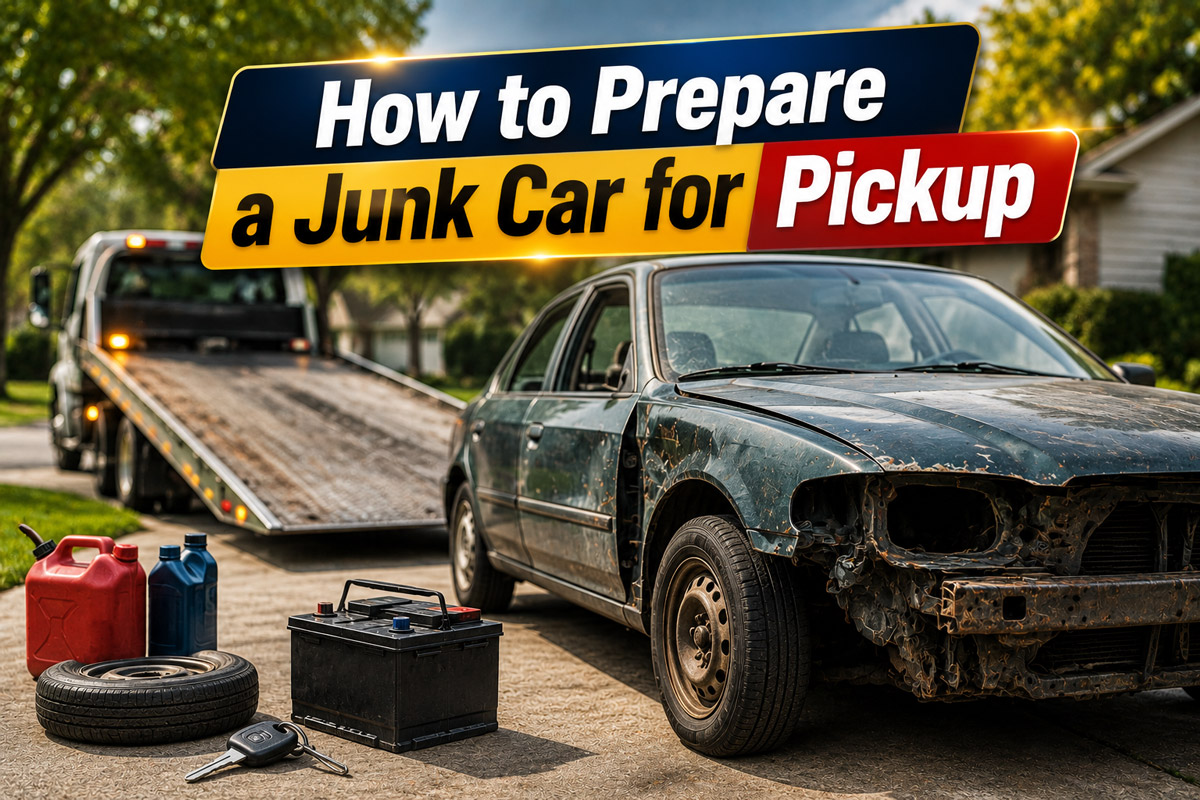
Saying goodbye to an old, non-running, or wrecked vehicle is a relief. Whether your car has been sitting in the driveway taking up space or finally bit the dust after years of reliable service, selling it for scrap cash is one of the fastest ways to clear out your property. However, handing over the keys to a tow operator requires a bit more effort than simply handing over the keys.
Properly preparing your vehicle before the tow truck arrives protects you from legal liability, prevents lost personal belongings, and guarantees you receive every dollar quoted by the buyer. If you leave your license plates attached or forget to sign over the title correctly, you could end up facing unwanted toll bills, registration fines, or unexpected cash deductions at the curb.
This complete guide walks you through every essential step to prepare a junk car for pickup, ensuring a smooth, profitable, and hassle-free transaction.
1. Clear Out All Personal Belongings
Once your car is loaded onto the flatbed and driven away to a scrap yard or auto recycler, retrieving forgotten items becomes nearly impossible. Junk yards process dozens of vehicles daily, and once a car enters the yard, it quickly gets stacked, stripped, or prepped for the crusher.
Set aside 15 to 20 minutes to perform a meticulous search of the cabin and trunk.
High-Priority Spots to Inspect
- Glove Box and Center Console: These are obvious, but make sure to reach all the way to the back corners for old receipts, vehicle registration documents, or personal records containing your home address and financial details.
- Under Seats and Floor Mats: Flash a light underneath every seat. Items like wallet cards, loose change, tools, and sunglasses frequently slide under the seats during normal driving.
- Overhead and Dash Accessories: Remove your garage door opener from the sun visor, unclip toll transponders (like EZ-Pass or SunPass) from the windshield, and pull any parking gate passes. Leaving a toll pass active on a junked car can lead to automated charges as the vehicle is towed through highway toll gantries.
- Digital Media and Tech: Check the CD player or multi-disc changer in the trunk for your favorite albums. Unplug any USB charging cords, phone mounts, or Bluetooth adapters left in auxiliary ports.
- Trunk and Spare Tire Well: Empty the trunk completely. Lift the floor board overlay and inspect the spare tire well, as small tools, jumper cables, and personal gear often hide around the jack assembly.
2. Decide What to Remove Before Junking a Car
When a junk car buyer or auto wrecker gives you an online or phone quote, that price is usually based on the vehicle’s total weight, metal content, and major intact core components (such as the engine and transmission). They generally do not pay extra for recent upgrades, high-end stereos, or custom additions.
If you have time and basic mechanical skill, stripping valuable aftermarket parts before the driver arrives can put extra cash in your pocket. However, you must strike a balance: the vehicle must remain accessible for the tow operator.
High-Value Components Worth Removing
Aftermarket Electronics
If you installed an expensive touchscreen head unit, custom speakers, subwoofers, or an amplifier, replace them with stock units or leave the cavity empty. Junk yards treat these items as bulk electronics, but you can sell them individually online.
Fresh Car Batteries
Did you buy a brand-new battery right before the car broke down? A fresh battery is worth $30 to $100 on the secondary market, or you can keep it as a backup for another household vehicle. Swap it with an old, dead battery so the vehicle still has a weight contribution for scrap, or inform the buyer beforehand if you plan to remove it entirely.
Custom Wheels and Quality Tires
If your car is sitting on expensive alloy rims or nearly new tires, consider swapping them for cheap steel wheels or bald spares. Just ensure the car can still roll on four inflated tires, as tow operators need to roll the vehicle onto the winch bed. If the car is sitting on bare rims or resting on the frame, alert the towing company in advance so they bring the appropriate equipment.
Unused Fuel
Gasoline is expensive. If the tank is more than half full and you have a safe siphon pump, extract the fuel for use in your lawnmower or secondary vehicle. Never puncture a gas tank to drain it, as fuel leaks create severe fire hazards and environmental risks during towing.
3. Remove License Plates Before Junking
Removing your license plates before the tow truck pulls out of your driveway is a legal requirement in nearly every state. Neglecting this step is one of the most common mistakes vehicle owners make when selling to a salvage yard.
Stops toll charges, parking tickets, or crime misuse if plates are lost or stolen.
Allows you to officially cancel registration and avoid insurance penalties.
Why Removing Your Plates Is Essential
- Liability Protection: As long as your license plates remain attached to the vehicle, state databases link that car to your name. If the plates are stolen off the vehicle at a storage yard or misused, you could be held liable for traffic violations, abandoned vehicle fines, or toll fees.
- DMV Registration Cancellation: Most state Department of Motor Vehicles (DMV) agencies require you to physically turn in your license plates or submit an online surrender form before they officially cancel your registration.
- Insurance Cancellation: Your auto insurance carrier will usually require proof of plate surrender or a signed bill of sale before they let you cancel your policy on the junk car.
Tip: Keep a screwdriver or socket wrench nearby on pickup day. License plate screws can rust over time, so spraying them with penetrating oil a few hours before the driver arrives will save you from last-minute frustration.
4. Gather Documents for Junk Car Pickup
Having your legal paperwork organized and ready is the fastest way to complete the transaction and get your cash payment on the spot. Tow drivers operate on tight schedules and cannot wait around while you search for missing titles or identification.
Here is the essential paperwork you need to prepare:
The Vehicle Title (Certificate of Title)
The title is the primary legal document proving you own the vehicle and have the legal right to transfer ownership to a salvage company.
- Where to Sign: Locate the seller signature section on the back or front of the title (depending on your state).
- Sign Accurately: Sign your name exactly as it appears on the front of the title. If there are two owners joined by “AND,” both individuals must sign. If joined by “OR,” either owner can sign.
- Avoid Mistakes: Do not use white-out, cross out names, or scribble over errors. Any alteration on a title can void the document, requiring you to order a duplicate title from the DMV before the sale can proceed.
What if You Lost the Title?
If you cannot find your physical title, check local state laws. Many states allow licensed auto recyclers to purchase older vehicles without a title if you provide:
- A valid state-issued driver’s license or photo ID.
- An official DMV Bill of Sale.
- A state-specific Affidavit of Ownership or Lost Title form.
- Proof that the vehicle is free of active liens.
Always inform the junk car buyer in advance if you lack a title so they can bring the exact state-approved paperwork for a title-free transfer.
Valid Government-Issued Photo ID
The tow driver will need to verify your identity against the title or bill of sale to prevent fraud and illegal vehicle scrapping. Have your driver’s license, state ID, or passport ready.
5. Prepare the Workspace and Vehicle Access
Tow trucks require ample space to maneuver safely. Preparing the physical site around your vehicle ensures the driver can hook up the car quickly without risking damage to your property or surrounding vehicles.
Clearance Steps for a Smooth Tow
- Move Secondary Vehicles: Clear a direct path from the street to your junk car. If the car is parked in a garage or behind another working vehicle, park the working car down the street beforehand.
- Clear Surrounding Obstacles: Move trash cans, yard debris, overgrown branches, or lawn equipment away from the vehicle’s tires and towing path.
- Unlock the Steering Wheel and Transmission: If possible, locate the vehicle keys so the driver can unlock the steering wheel and shift the car into neutral. If the keys are lost or the transmission is locked, notify the towing service beforehand so they bring wheel dollies or a flatbed equipped with winches.
- Inflate Flat Tires: If the vehicle has been sitting for months and the tires are flat, use a portable air compressor to fill them up. Mobile tires make winching much smoother and prevent the rim from gouging your asphalt or gravel driveway.
Essential Junk Car Pickup Checklist
To keep your preparation organized, use this quick reference checklist on the day of pickup:
| Task Category | Action Item | Status |
|---|---|---|
| Belongings | Search glove box, console, overhead visors, and seat pockets | |
| Belongings | Check trunk, spare tire well, and under all floor mats | |
| Electronics | Remove toll transponders, garage openers, and aftermarket gear | |
| Plates | Unscrew front and rear license plates for DMV surrender | |
| Paperwork | Sign title correctly or complete lost-title affidavits | |
| Paperwork | Have valid driver’s license or state photo ID on hand | |
| Site Access | Clear driveway, move secondary cars, and inflation check tires | |
| Payment | Confirm agreed-upon price and method (cash, check, or digital) |
Post-Pickup: Final Steps to Protect Yourself
Your responsibility does not end when the tow truck drives away with your old car. To completely seal the transaction and shield yourself from future liability, complete these two quick follow-up tasks immediately after pickup:
1. Notify the DMV
Log onto your state’s DMV website and file a Notice of Sale, Release of Liability, or License Plate Surrender form. This official notice informs the state government that you no longer possess or own the vehicle, protecting you if any administrative errors occur later.
2. Cancel Insurance and Roadside Coverage
Contact your auto insurance agent and report the vehicle as sold for scrap. Provide them with a copy of the tow receipt or bill of sale to cancel the policy and collect any prorated refund on prepaid premiums. Additionally, cancel any active roadside assistance plans tied specifically to that vehicle’s VIN.
Ready to Cash In Your Vehicle?
Taking an hour to properly prepare your junk car pays off in peace of mind and maximum payout. By clearing your personal items, removing valuable parts, unscrewing your plates, and organizing your title paperwork, you ensure a fast, seamless transaction with zero unpleasant surprises.
If you are located in the Appleton area and want a straightforward, reliable quote for your junk vehicle, reach out to local auto recycling specialists who handle tow scheduling, legal paperwork, and instant cash payments directly at your door.