The motorcycle has been sitting for a year or two. The engine seized, a crash made repair impractical, or the registration lapsed so long ago that bringing it back to road-legal condition costs more than it is worth. Scrapping is the right call, and the process is faster and more straightforward than most riders expect. You can go from a non-running bike in your garage to a cash payment in 24 to 48 hours once you know which steps to take and in what order.
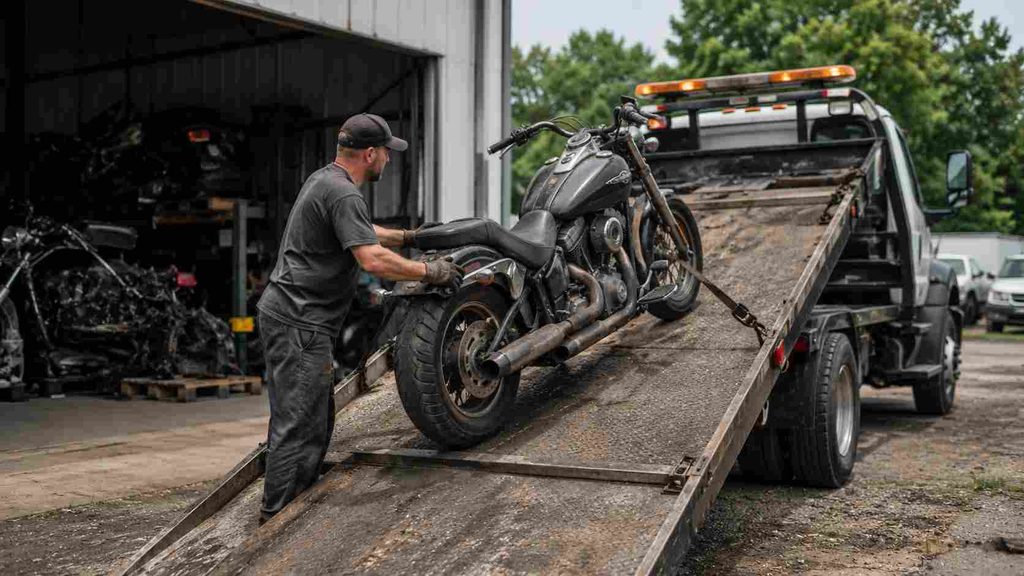
Scrapping a motorcycle means selling it for its end-of-life value through one of four channels: a motorcycle salvage yard, a scrap metal facility, a national junk vehicle buyer, or a private buyer seeking a project. The channel that pays the most depends entirely on which components on the bike are still intact and in demand. A complete non-running Harley-Davidson Softail and a stripped 150cc scooter are both motorcycles, but they reach entirely different buyers at prices that are hundreds of dollars apart.
This guide walks through every step of the process, from knowing what the bike is actually worth before your first call to completing the legal transfer that protects you from liability after the sale. The steps apply regardless of make, model, or condition.
What Your Motorcycle Is Worth Before You Call a Single Buyer
The scrap value of a motorcycle is primarily determined by two things: the weight and composition of the metal in the frame, engine cases, and wheels, and the secondary market demand for usable parts from that specific make and model. These two factors do not always point to the same buyer.
Motorcycle Type | Scrap Metal Value Only | Salvage or Parts Value (Intact) | Running, Mechanical Issue Only |
|---|---|---|---|
Harley-Davidson cruiser or touring | $150 to $400 | $800 to $3,500 | $1,500 to $8,000+ |
Sport bike (GSXR, CBR, R6, R1, ZX) | $100 to $250 | $400 to $1,500 | $600 to $4,000 |
Standard or naked bike (600cc to 1000cc) | $75 to $200 | $300 to $900 | $500 to $2,500 |
Touring or adventure bike (non-HD) | $150 to $350 | $500 to $1,800 | $800 to $4,500 |
Dirt bike or dual-sport (off-road capable) | $50 to $175 | $200 to $700 | $400 to $2,000 |
Moped or scooter (under 150cc) | $30 to $100 | $100 to $400 | $200 to $900 |
Harley-Davidson motorcycles command the largest premium at every condition level because of the active and mature used parts market. A non-running Sportster or Softail with all its original components intact earns two to four times more from a Harley salvage buyer than an equivalent Japanese bike of the same weight earns at any salvage yard. The brand matters more in motorcycle scrapping than in almost any other vehicle category.
Determine Your Motorcycle’s Worth Before You Call Buyers: Step by Step
Step 1: Check Whether Parts Are Worth More Than the Whole Bike
Before contacting any buyer, assess which components on your motorcycle have standalone sale value that exceeds what they contribute to a whole-bike offer. This step takes 20 minutes and frequently adds $200 to $800 to your total recovery.
Harley-Davidson: Parts With Strong Independent Markets
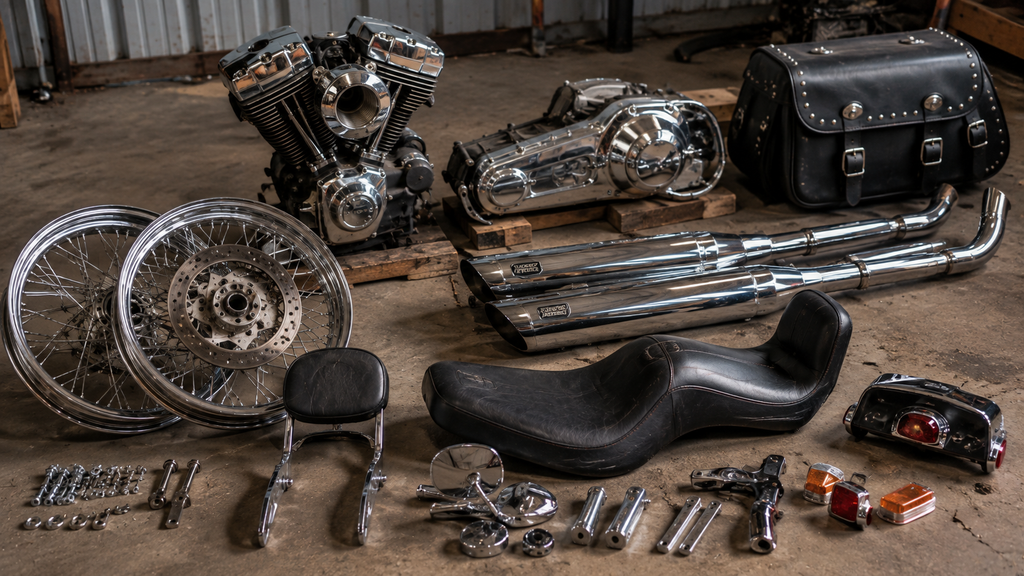
Complete engines and primary drives in rebuildable condition sell for $400 to $2,000 depending on displacement and year. Chrome exhaust systems from recognized brands such as Vance and Hines or stock HD pipes in good condition sell for $100 to $500. Wire spoke or cast chrome wheels in good condition sell for $200 to $600 per pair. Saddlebags in leather or genuine HD hard bag condition sell for $150 to $500. Any of these parts, sold privately through eBay Motors or Facebook Marketplace before the remaining bike is sold as a core, increases your total significantly.
Sport Bikes: Components With Active Online Demand
Complete fairing sets in undamaged condition are among the most searched parts on eBay for sport bikes. Depending on the model and year, an undamaged fairing set from a GSXR, CBR, R6, or Ninja sells for $200 to $900. Front fork assemblies in good condition sell for $100 to $350. Aftermarket exhaust systems (Yoshimura, Akrapovic, Two Brothers) sell for $150 to $700. OEM or aftermarket wheels in good shape sell for $100 to $450 per pair. If these components are intact on your bike, assess whether removing and selling them first is worth the effort relative to the time you have available.
When Parting Out Is Not Worth It
If the bike was in a collision that damaged body, wheels, or forks, if the engine seized and damaged cases, or if components were already missing before the bike became non-functional, this step is shorter. Damaged components have minimal private sale value. In this case, a whole-bike salvage or scrap sale is the most practical approach.
Step 2: Locate Your Title and Understand Your State’s Requirements
Most legitimate buyers of scrapped motorcycles require a clean title for the transaction. The title proves legal ownership, allows the buyer to legally transfer or process the vehicle, and protects both parties from liability if the motorcycle has an unreported lien or theft history.
If the Title Is Lost or Misplaced
Apply for a replacement motorcycle title at your state DMV before listing or calling buyers. The replacement title fee runs $15 to $30 in most states. Processing time is typically one to three weeks for mailed requests. Many states allow same-day title replacement at a DMV office if there is no lien on record. This step is worth completing before trying to sell because a titled motorcycle consistently receives offers 20 to 40 percent higher than an identical titleless one, and some buyers will not make an offer at all without a title confirmed.
If There Is an Active Lien on the Motorcycle
An active lien means a lender holds a legal interest in the motorcycle. You cannot legally transfer the title without the lender’s cooperation. Contact the lender to request the outstanding payoff balance. If the sale price exceeds the payoff, the difference comes to you. If the payoff exceeds the sale price, you must cover the gap from other funds before the title releases. Some lenders will work directly with a junk buyer to facilitate the transaction; ask your lender about their process for lien release on a salvage sale.
States With Title-Alternative Options for Low-Value Motorcycles
Several states allow scrapping a motorcycle on a current vehicle registration rather than a title when the declared value falls below a specific threshold, typically $500 to $1,000. California, Texas, and Florida each have specific documentation pathways for low-value vehicle disposals. Contact your state DMV or check their website for the exact rule. A salvage or scrap yard in your state can also advise on what documentation they accept, as their practices reflect the actual requirements in that jurisdiction.
Step 3: Match Your Motorcycle to the Right Buyer Type
Four categories of buyers purchase non-running or end-of-life motorcycles. Each prices the bike differently and is the right fit for different makes and conditions.
Buyer Type | Best For | Offer Range vs Scrap Floor | Speed |
|---|---|---|---|
Motorcycle salvage yard | Complete, intact bikes; popular makes with parts demand | 2x to 5x scrap value | 2 to 5 days |
Harley-Davidson specialty buyer | Any Harley; especially touring, Softail, Sportster | 3x to 8x generic scrap value | 2 to 7 days |
National junk vehicle buyer (online quote) | Any make; fast transaction; no negotiation | 1.2x to 2.5x scrap value | 24 to 48 hours |
Private buyer (Craigslist, Facebook, eBay) | Running or project bikes from popular makes | Highest potential but variable | 1 to 4 weeks |
Scrap metal yard | Stripped, mopeds, very small bikes, unknown brands | Baseline floor only | Same day to 48 hrs |
For Harley-Davidson motorcycles in any condition, the specialty Harley salvage market is the correct first call. These buyers have specific buyers for HD parts and consistently outbid generic salvage yards. For Japanese sport bikes and standard bikes in intact condition, a motorcycle salvage yard that stocks those brands is the right starting point. For mopeds, scooters under 150cc, and badly stripped or fire-damaged bikes of any make, the scrap yard is the realistic destination.
Step 4: Get Competing Quotes and Know Your Negotiating Floor
The scrap metal value of your motorcycle is your absolute floor. No buyer should receive the bike for less than what the nearest scrap yard will pay. Establishing that number before any other conversation starts is the single most important preparation step.
Call a local scrap metal yard and give them the approximate weight of the motorcycle (a typical 600cc sport bike weighs 400 to 500 pounds; a Harley touring bike weighs 800 to 900 pounds; a moped is typically 200 to 300 pounds). Their quote, multiplied by the scrap steel rate, gives you your baseline.
Then call two or three motorcycle salvage yards or specialty buyers in your region. Provide the exact year, make, model, engine size, title status, and condition details including what works and what is damaged. Specific descriptions produce accurate quotes. Vague descriptions produce lowball quotes designed to leave room for the buyer.
Post simultaneously on Facebook Marketplace and Craigslist with clear photos, the title status noted upfront, and the specific mechanical issue stated plainly. “2009 Kawasaki Ninja 600, engine seized, runs on starter but won’t fire, clean title in hand, 38,000 miles, no damage” is a listing that generates real inquiry from buyers who can price the repair accurately. Ambiguous listings generate lowball guessers.
Step 5: Complete the Legal Transfer and Protect Yourself After the Sale
Once you have accepted an offer and agreed on terms, the legal transfer process is what separates a clean sale from a liability that follows you for years. Motorcycles are titled assets, and a title signed over incorrectly or a registration not cancelled in your name creates real exposure.
Signing the Title
Sign your name exactly as it appears on the front of the title. Fill in the sale date, the odometer reading, and the agreed sale price in the seller section. In most states, the buyer section does not need to be completed by you; the buyer completes their information when they transfer the title at their DMV. Keep a photocopy of the completed title, both front and back, for your records.
Cancelling the Registration and Insurance
Contact your state DMV within 5 to 10 days of the sale to cancel the motorcycle’s registration in your name. Most states allow this online. In states that require a physical plate return, return the plate at the time of the DMV visit. Contact your insurance carrier on the day of the sale to cancel the policy effective that date. Continuing to pay insurance on a vehicle you no longer own is a common and unnecessary expense.
Filing a Notice of Transfer or Release of Liability
Most states provide a Notice of Transfer or Release of Liability form that sellers file with the DMV to formally document that the vehicle changed hands on a specific date. This form is the most important protection against parking tickets, traffic violations, or accidents involving the motorcycle after the sale that could otherwise be traced back to your name through the registration record. File it on or immediately after the sale date.
What Sellers of Scrap Motorcycles Consistently Regret
Riders who have sold non-running or end-of-life motorcycles share consistent patterns. The most common mistake: accepting the first offer without establishing the scrap floor and without calling a specialty salvage yard. A seller who calls a generic junk car buyer without first contacting a Harley salvage yard or a motorcycle-specific buyer consistently leaves $200 to $1,000 on the table depending on the make.
The second most reported mistake is selling without a title in hand. Sellers who called buyers before securing a replacement title consistently received lower offers or were told to call back when the title was available. The two to three weeks spent waiting for a replacement title, if started before listing, costs nothing and results in a meaningfully better transaction.
Those who had the best outcomes followed the same sequence: they established the scrap floor first, called specialty buyers for their specific make second, and used the competing quotes in every subsequent conversation. The price discipline that approach creates is the single most reliable way to maximize recovery on any motorcycle regardless of condition.
Frequently Asked Questions
How much do you get for scrapping a motorcycle?
The amount you get for scrapping a motorcycle ranges from $50 to $400 at a scrap metal yard for pure metal weight value, and $200 to $3,500 or more at a motorcycle salvage yard if the bike has intact, in-demand parts. Harley-Davidson motorcycles earn the most at salvage yards because of the active used Harley parts market. Mopeds and scooters under 150cc earn the least because their parts have limited secondary market demand and their metal weight is small.
Do you need a title to scrap a motorcycle?
Most legitimate salvage yards and scrap facilities require a title to purchase a motorcycle. Without a title, your options narrow to buyers willing to work with a bonded title, and some scrap facilities in certain states that accept current registration as an alternative for low-value vehicles. The fastest solution if a title is lost is to apply for a replacement at your state DMV before listing. The process takes one to three weeks and costs $15 to $30 in most states.
Who buys non-running motorcycles?
Non-running motorcycles are purchased by four main types of buyers: motorcycle salvage yards that pull and resell usable parts, scrap metal yards that buy for metal weight only, national junk vehicle buying services that accept motorcycles through online quote platforms, and private buyers who want a project or know how to repair the specific issue. Salvage yards and specialty buyers such as Harley-Davidson parts dealers typically pay significantly more than scrap yards for any intact motorcycle.
How do I scrap a Harley-Davidson motorcycle?
Scrapping a Harley-Davidson follows the same general steps as any motorcycle but should prioritize Harley-specific salvage buyers over generic scrap facilities. Harley parts have one of the strongest secondary markets of any motorcycle brand, and specialty buyers will offer two to four times the scrap metal value for an intact bike. Search for Harley salvage yards specifically, post on HD-focused forums and Facebook groups, and get a quote from the scrap yard to establish your floor before accepting any offer.
What is the easiest way to get rid of an old motorcycle?
The fastest way to get rid of a non-running motorcycle is through a national junk vehicle buying service that accepts motorcycles. These services provide online quotes, arrange free pickup, and complete the transaction within 24 to 48 hours. The offer will typically be above scrap value but below what a specialty salvage yard would pay. If speed matters more than maximum recovery, this channel provides the lowest friction path. If maximizing the payout matters more, calling salvage yards and posting privately adds a few days but frequently adds $200 to $600.
Does a scrap yard take motorcycles?
Yes, scrap metal yards take motorcycles in any condition, running or not, with or without a title in many cases. They price the motorcycle by weight at the current scrap steel and aluminum rate. A typical 400 to 500-pound sport bike yields $75 to $200 in scrap value. A 700 to 900-pound Harley or touring bike yields $150 to $350. Scrap yards are the fastest guaranteed buyer but almost never the highest-paying buyer for any motorcycle that has functional components.
Can I scrap a motorcycle without the registration?
Scrapping without a current registration is possible in most situations if you have the title. The title is the primary legal document for ownership transfer, not the registration. The registration reflects the vehicle’s current license status, not ownership. If you have neither the title nor the registration, pursue a replacement title at your state DMV, which requires proof of identity and a title search fee. Some states will issue a title based on a VIN inspection and title history if the original documents are lost.
How long does it take to scrap a motorcycle?
From first contact to cash payment, scrapping a motorcycle takes 24 to 48 hours through a national junk buyer service, two to five days through a local salvage yard that needs to confirm the quote and schedule pickup, and one to three weeks through the private sale channel. The title transfer process at the DMV is separate and adds one to two weeks if a replacement title is needed beforehand. Starting with the title secured and the scrap floor established reduces the total timeline significantly.
The Bottom Line
Scrapping a motorcycle is a straightforward process when the steps are followed in the right order. Establish your scrap floor first. Then call specialty buyers for your specific make. The difference between those two numbers tells you how much the parts market is worth to you and which buyer to prioritize.
For Harley-Davidson motorcycles in any condition, a Harley salvage specialist should be the first call after the scrap floor is established. For Japanese sport bikes and standards, a motorcycle salvage yard that handles your brand is the right second call. For mopeds, very small bikes, and anything stripped or severely damaged, the scrap yard offer is often the realistic ceiling.
The title question should be resolved before any of those calls happen. A replacement title takes two to three weeks to arrive and costs less than $30 in most states. That wait, done at the beginning of the process, typically results in $200 to $600 more in your pocket than selling without one.