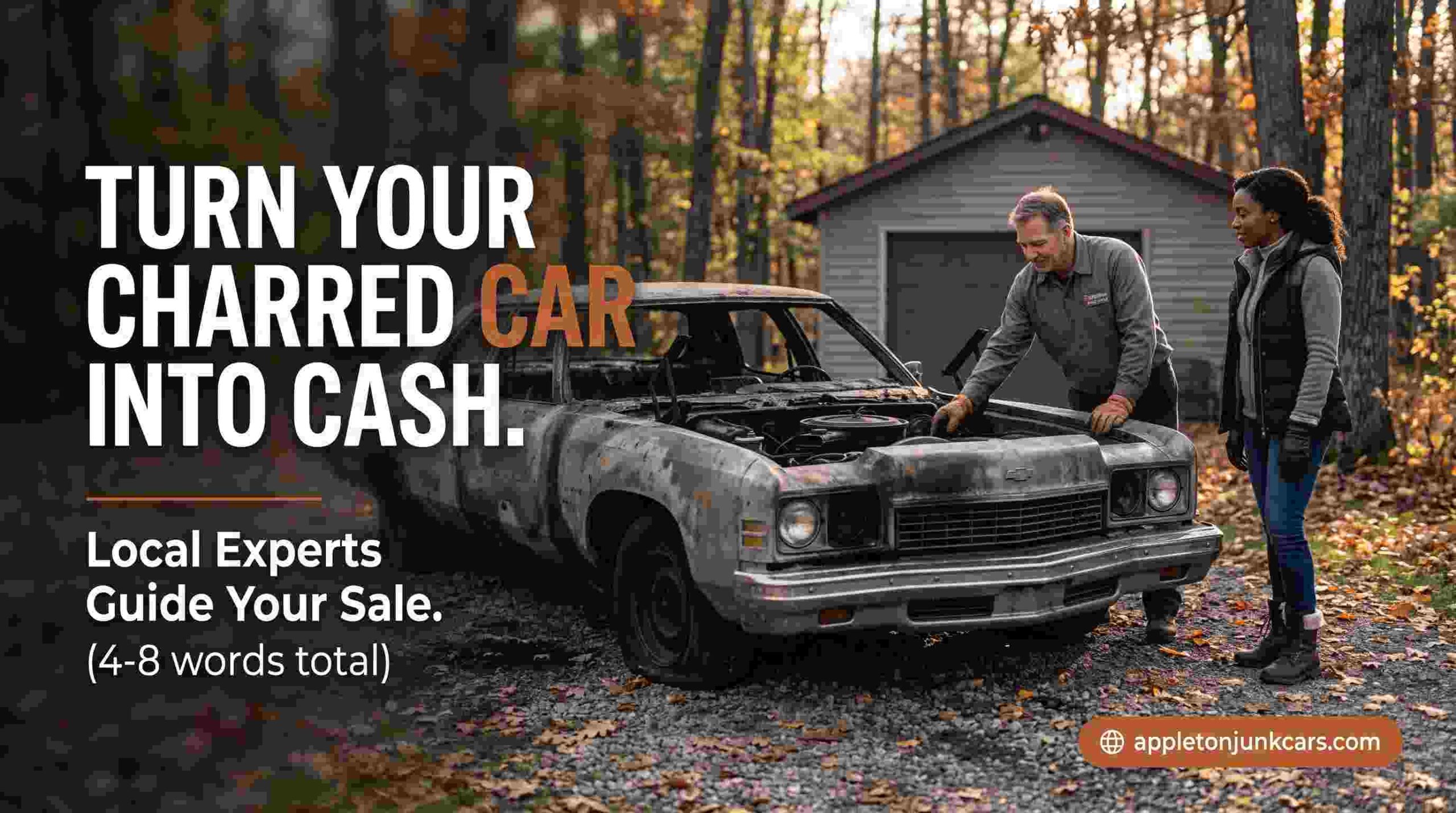
A car fire is one of those things you do not fully process until afterward. You dealt with getting out safely, called whoever needed to be called, and now you are standing in front of something that looks nothing like a car anymore. Or maybe it caught fire in the engine bay and the damage is less dramatic but still disqualifying. Either way, you are looking at a vehicle you cannot drive and do not know what to do with.
The good news is more practical than it might seem right now: a fire-damaged car is still a sellable car. Even a vehicle that is burned to the frame has scrap metal value. One with partial fire damage, an intact engine, or salvageable parts can bring meaningfully more. You have options, and this guide walks through each one so you can get the car off your hands for the most money possible with the least additional stress.
Selling a Car That Caught on Fire
Frist Step: Handle the Insurance Claim Before Anything Else
If your car was insured and caught fire through no deliberate act on your part, your first call should be to your insurance company, not to a junk buyer. This is not a minor point. Filing a claim is the highest-return step available to you if you have comprehensive coverage, and skipping it to go directly to a junk buyer means leaving the largest amount of money on the table.
Comprehensive coverage is the insurance type that covers fire damage, whether the cause is electrical failure, an external fire that spread to the vehicle, a wildfire, or another non-collision event. If you carry comprehensive coverage and your car caught fire, you are entitled to a claim for the vehicle’s actual cash value before the fire.
Collision coverage applies if the fire resulted from a collision. If your car caught fire because of an accident, your collision coverage handles the claim.
Once you file a claim, the insurer will send an adjuster to assess the damage. If the repair cost exceeds your state’s total loss threshold, which for most states falls between 70 and 80 percent of the car’s pre-fire value, the insurer will declare it a total loss and offer you a settlement based on the car’s actual cash value before the fire occurred.
At that point you have a choice that most people do not know they have. You can accept the settlement and let the insurer take the car, which they will sell at salvage auction. Or you can retain the car, accept a reduced settlement that accounts for the car’s salvage value, and sell the vehicle yourself. The option to retain makes sense if you believe you can sell the fire-damaged car for more than the salvage deduction the insurer would apply. Call two or three junk buyers for quotes before signing the settlement paperwork so you know which path puts more money in your pocket.
If you do not have comprehensive coverage or the fire was in some way excluded from your policy, you move directly to selling the car through the options below without any insurance step.
What Fire Actually Does to a Car’s Value
Not all fire damage is equal, and the extent of damage determines what your car is worth to buyers and which buyers are realistic options.
Damage Type | What Is Affected | Typical Buyer Range |
|---|---|---|
Minor engine bay fire, quickly extinguished | Wiring harness, hoses, nearby components | $500 to $2,500 depending on vehicle |
Interior fire, cabin damage only | Upholstery, wiring, electronics, HVAC | $300 to $1,500 for salvage buyers |
Engine compartment fully burned | Engine, wiring, cooling, intake systems | $200 to $800 scrap and parts |
Full vehicle fire, body and mechanical | Nearly everything, frame potentially intact | $150 to $500 scrap metal value |
Wildfire exterior damage, interior intact | Paint, trim, rubber seals, possibly wiring | $400 to $1,800 if mechanicals survived |
Fire’s hidden damage is part of why repair estimates on fire-damaged cars are so high. What looks like melted plastic on the outside often means wiring harnesses running through the vehicle have degraded, melted insulation has caused shorts, and heat has affected fluid lines, seals, and gaskets throughout. A car with apparent minor fire damage can have $8,000 in wiring repairs hiding behind a $1,000-looking exterior. This is why most insurance companies total fire-damaged vehicles even when the visible damage seems moderate.
For selling purposes, the key question is what survived. A working engine in a car with burned interior is more valuable than a burned engine in a car with an intact interior. The catalytic converter, if present and not destroyed, adds meaningful value regardless of damage elsewhere. Heavy frames, trucks, and larger vehicles bring more as scrap simply due to weight even when everything mechanical is compromised.
Your Selling Options, Ranked by Effort and Return
Option 1: Junk Car Buyers and Salvage Yards
This is the most practical path for most fire-damaged vehicles and the one that requires the least effort from you. Junk car buyers purchase vehicles in any condition, including fire-damaged and completely burned-out cars. They price based on what remains: the vehicle’s weight, intact mechanical components, usable parts, and current scrap metal rates.
The process is straightforward. You call or submit your car’s information online, describe the damage honestly and in detail, and receive a quote. If the quote is acceptable, they schedule a pickup at your location with free towing, arrive with the title transfer paperwork, and pay you at pickup.
Being accurate about the extent of fire damage when calling for quotes is essential. A buyer who arrives expecting a minor engine fire and finds a completely gutted vehicle will reduce the offer on the spot. That situation creates frustration for both parties and sometimes falls apart entirely. Describe the damage level accurately upfront, and the quote you receive is the quote you get.
Get at least three quotes. Junk car buyers and salvage yards price the same fire-damaged vehicle very differently based on their current inventory needs, their processing capacity, and whether they have specific demand for your make or model’s parts. The difference between the lowest and highest quotes on a fire-damaged car can easily be $200 to $500.
Option 2: Specialty Fire and Damage Buyers
A subset of the automotive buying market specifically handles damaged and fire-affected vehicles. Companies like DamageMAX and similar platforms focus on these transactions and sometimes offer more competitive prices than general junk car services because they have established buyer networks for damaged vehicles that go beyond standard scrap.
These buyers are most useful when the damage is partial and the car has significant resale or parts value that a general junk buyer might not fully price in. A fire-damaged but mechanically sound SUV from a popular model might get a stronger offer from a specialty damage buyer than from a general scrapyard.
Option 3: Private Sale
Selling a fire-damaged car privately is possible but comes with a narrower buyer pool and requires more effort. The realistic private buyers for a fire-damaged car are mechanics or rebuilders who want the project, parts hunters looking for a specific component the fire did not destroy, or people who need a donor car for a restoration.
To sell privately, take clear photos from every angle including under the hood and the interior, write an honest description that discloses the fire damage and everything you know about the cause and extent, and price it at what a junk buyer would pay or slightly above to leave room for negotiation.
Facebook Marketplace and Craigslist are the most effective platforms. Be specific in the title about the fire damage so buyers self-select before contacting you. You will attract fewer inquiries than with a running car, but the people who do reach out are already prepared for what they are looking at.
Option 4: Parts Parting
If the fire was localized and left significant portions of the car intact, selling individual parts before junking the shell can increase total recovery. Components that often survive engine compartment fires include the transmission, rear axle, suspension components, and interior electronics not near the fire origin. Components that survive interior fires often include the engine, exhaust system including catalytic converter, wheels, and body panels away from the fire area.
This option requires the most effort and is most worthwhile on popular makes and models where parts demand is strong. If you are not mechanically inclined or do not have the tools and space for a partial disassembly, the time investment rarely justifies itself for most fire-damaged vehicles.
The Title Situation After a Car Fire
How the car’s title is handled after a fire depends on whether an insurance claim was filed and how your state handles fire-related total losses.
If your insurer declared the car a total loss, the title will be branded as salvage. If you retained the car after the insurance settlement, the salvage title is issued in your name. Buyers of fire-damaged vehicles, whether junk buyers or private parties, are accustomed to salvage titles on fire-damaged cars. It does not prevent the sale.
If you are selling the car without an insurance claim involved, you may still have a clean title if the fire was not reported to your state DMV. You are legally required to disclose the fire damage to any buyer. Selling a fire-damaged car without disclosing that damage is fraud in most states and can create significant legal liability for you after the sale.
Some states require that fire-damaged vehicles be reported to the DMV for title branding even if no insurance claim was filed. Check your state’s DMV requirements if you are unsure. The rules vary, but transparency about fire damage is both legally required and practically necessary since any buyer who runs a vehicle history check will find evidence of the fire if it was reported anywhere along the chain.
What to Do Before the Buyer Arrives
Even for a fire-damaged car, a few preparation steps protect you and smooth the transaction.
- Remove all personal items you can safely access. If parts of the interior are accessible, check the glove box, center console, and trunk. Fire changes the way a car looks but people are still surprised to find valuables they forgot about in areas the fire did not reach.
- Remove the license plates. Even on a car headed to the scrapyard, plates belong to you and should be returned to the DMV or transferred to your next vehicle.
- Locate the title. If the fire reached areas where you stored the title and it was destroyed, apply for a duplicate through your state DMV before scheduling pickup. A sale cannot legally complete without a title in most states.
- Take your own photos before pickup. Document the car’s condition with timestamped photos before the buyer arrives. This protects you in the event of any dispute about the car’s condition at the time of sale.
- Cancel your insurance after the sale is complete. If you are selling rather than going through an insurance claim, cancel the policy once the car is picked up and the title transferred. Request a refund for unused premium.
- File a release of liability with your state DMV. This formally records that you no longer own the vehicle as of the sale date, protecting you from any future liability tied to the VIN.
How Much Can You Realistically Get for a Fire-Damaged Car?
The range is wide because the variables are wide. A car with a minor engine bay fire that was caught quickly and left the mechanicals intact can still command $1,000 to $3,000 from the right buyer. A car that burned from end to end and is now a shell is worth its metal weight, typically $150 to $500.
Make and model matter significantly. A fire-damaged Toyota Tundra or Ford F-150 weighs more and has higher parts demand than a small domestic sedan, which produces higher offers regardless of damage. Popular vehicles with active enthusiast or rebuild markets can attract buyers even in heavily damaged condition.
What almost always helps regardless of damage level: the catalytic converter being present and intact. If the fire did not destroy the cat, it adds $100 to $600 or more to most offers on its own. Leave it in place when selling the car whole.
What Real Sellers Say About This Experience
People who have sold fire-damaged cars share a few consistent reflections when they discuss it afterward.
The most positive outcomes come from people who filed the insurance claim first, understood that they could retain the car after the settlement, and then compared what junk buyers offered against the salvage deduction the insurer would apply. In several cases, sellers found that retaining the car and selling it independently produced a few hundred dollars more than accepting the full settlement and handing the car over. Not always a dramatic difference, but meaningful.
The most common frustration is from sellers who described vague fire damage to buyers and then received a lower offer at pickup when the driver saw the actual condition. The adjustment happens, the seller feels the offer was unfair, and the transaction becomes tense. Clear, honest damage descriptions upfront eliminate this entirely. If the engine bay is completely burned, say the engine bay is completely burned. Buyers who quote based on accurate information do not adjust at pickup.
A third consistent experience is from people who assumed a fire-damaged car was worthless and either abandoned it, let it sit for months, or gave it away. In most cases, a quick call to one or two junk buyers would have produced a few hundred dollars for a car the owner thought had no value. Fire-damaged cars are not worthless. They are just worth less than they were before the fire, and the distance between those two figures is real money.
Frequently Asked Questions
Can you sell a car that caught on fire?
Yes. Fire-damaged cars are sold every day to junk buyers, salvage yards, specialty damage buyers, and private mechanics. Even a completely burned vehicle retains scrap metal value. The amount you receive depends on the extent of the damage and what components survived.
Should I file an insurance claim or sell it directly?
If you have comprehensive coverage and the fire was not caused deliberately, file the insurance claim first. A comprehensive claim typically produces a settlement based on the car’s pre-fire actual cash value, which is almost always more than the scrap value from a junk buyer. You can decide after receiving the settlement offer whether to retain the car and sell it yourself.
What happens to the title after a car fire?
If the insurer declares the car a total loss, the title is branded as salvage. If you retain the car after the settlement, the salvage title is issued in your name. If you sell a fire-damaged car without an insurance claim, check your state’s DMV requirements for whether the fire damage must be reported and the title branded.
Do I have to disclose the fire damage to a buyer?
Yes, always. Failure to disclose known fire damage to a buyer is fraud in most states and creates real legal liability. Any buyer running a vehicle history report will likely find evidence of the fire. Junk car buyers who see the car in person will see the damage immediately. There is no practical or legal path to concealing fire damage in a sale.
Will a junkyard take a completely burned-out car?
Yes. Completely burned vehicles still have scrap metal value from the steel and aluminum in the frame, body, and remaining components. The offer will reflect what is left, which on a completely destroyed vehicle is primarily metal weight. Free towing is typically included in these transactions.
How do I get the best offer for a fire-damaged car?
Get at least three quotes from different buyers. Describe the damage accurately and completely when calling, including what parts are visibly intact versus destroyed. Take photos and be ready to share them. Make sure the catalytic converter is still in place before selling, as it adds significant value. And if you have insurance coverage, file the claim first before selling directly.
Can a fire-damaged car be repaired and driven again?
Technically yes for some fires, but the cost is almost always prohibitive. Even moderate fire damage typically involves wiring harness replacement throughout the vehicle, which alone can cost thousands. Insurance companies declare most fire-damaged vehicles total losses precisely because repair costs quickly exceed the car’s value. A rebuilt title is possible after fire damage repair and inspection, but the combination of repair costs, salvage title implications, and ongoing insurance complications makes this path practical for very few vehicles.
The Bottom Line
A car that caught fire is not the end of the road financially, even when it feels that way. File the insurance claim if coverage applies, get the settlement offer, then check what junk buyers would pay before deciding whether to retain the car or let the insurer take it. If there is no insurance in the picture, get three quotes from junk buyers, describe the damage honestly, and take whatever reasonable offer lets you move forward.
The car has value somewhere on a spectrum from several hundred to potentially a couple thousand dollars depending on what survived. That money exists, and it takes about thirty minutes of phone calls to find it.
The hardest part of this is usually not the logistics. It is being ready to deal with it. When you get there, the practical part is more manageable than it looks from a distance.