The tow truck is scheduled, the title is signed, and the car is being picked up tomorrow. One step most sellers skip until the last minute is removing the license plates. This is not a minor formality. In most states, license plates belong to the registered owner rather than the vehicle, and leaving them attached when the car goes to a junkyard creates a liability that can produce parking violations, traffic camera fines, registration renewal notices, and other administrative complications months after the car is gone.
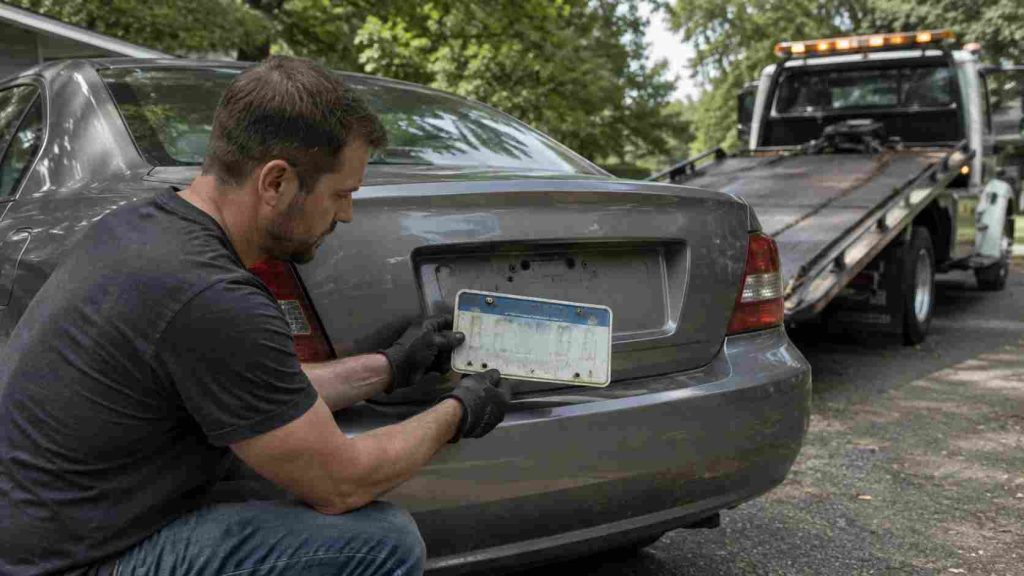
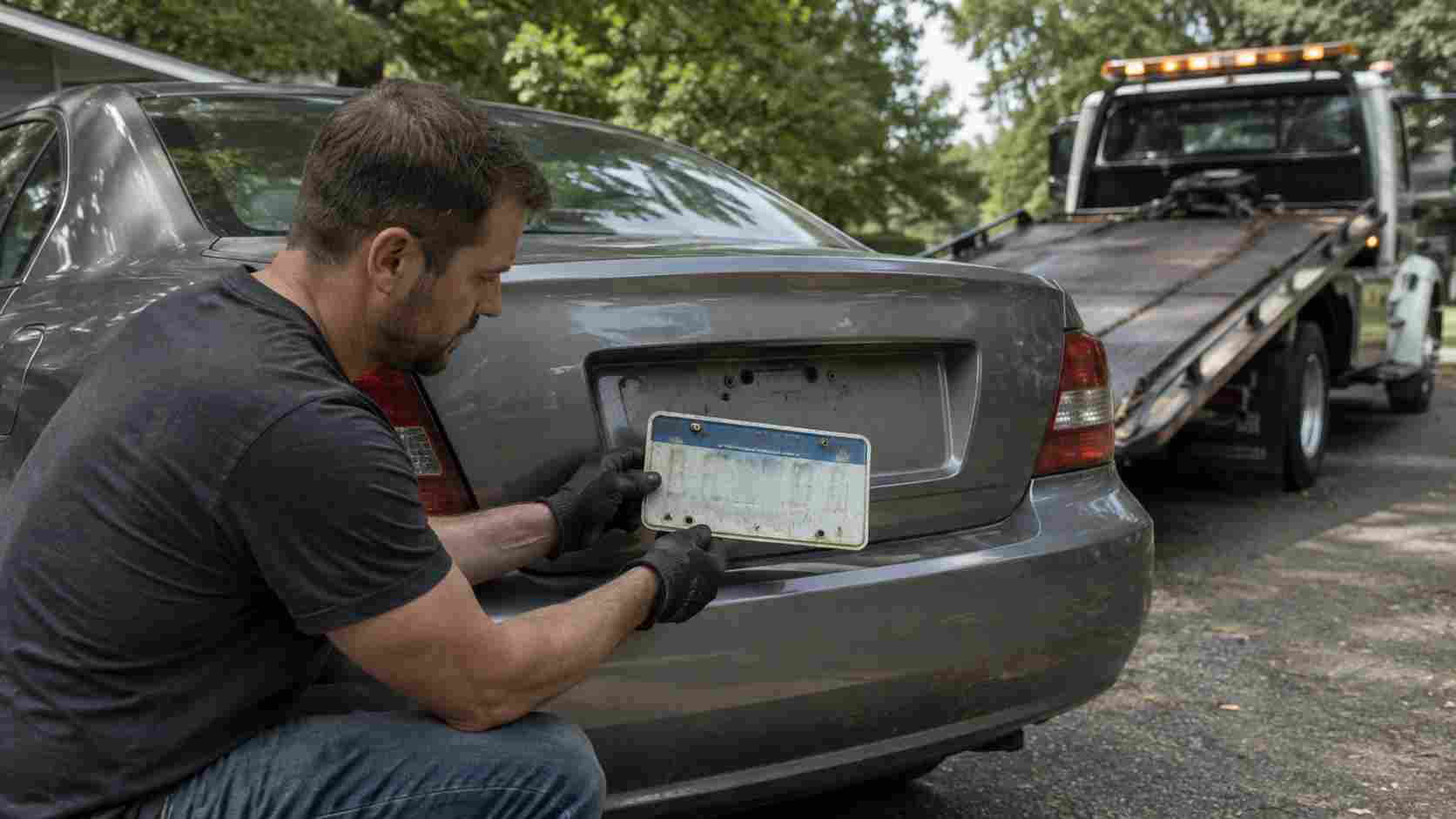
The plate rules vary meaningfully by state. Some states require plates to be returned to the DMV. Others allow transfer to a replacement vehicle. Some states do have the plates travel with the vehicle at the time of sale, and leaving them on is the correct procedure in those jurisdictions. Knowing which system your state uses determines exactly what you should do and when.
This guide covers the plate removal decision by state type, what to do with plates once removed, the notice-of-transfer and release-of-liability process that formally closes the registration record in your name, and what happens if you skip any of these steps.
Why Removing Plates Before Scrapping Matters More Than Most Sellers Think
License plates in states where they belong to the owner are tied to that owner’s registration record throughout their useful life. When a vehicle is sold or junked, the registration is supposed to be cancelled or transferred, but this only happens automatically in a few states. In most states, the seller must take affirmative action: remove the plates, surrender them or cancel the registration, and file a notice of transfer.
What happens if you skip this: the plates remain associated with your registration record. If the vehicle is towed after the sale with your plates still attached, the tow or storage fees may be billed to your registration address. If the vehicle passes a traffic camera with your plates, the violation is sent to your address. In states that auto-renew registration, renewal notices may be sent for a vehicle you no longer own. Several states assess fines for operating with expired registration, and if your plates are on a vehicle being moved by a tow operator or junk buyer after the sale date, those violations could theoretically land on your record.
The stakes are low when everything works correctly and high when something goes wrong. Removing the plates before the car leaves costs five minutes and eliminates all of this exposure.
States Where Plates Stay With the Owner vs States Where They Transfer
Plate System | How It Works | Examples (verify with your current state DMV) | What to Do at Sale |
|---|---|---|---|
Owner retains plates (most common) | Plates belong to the registered owner. They do not transfer with the vehicle at sale. | California, Texas, Florida, New York, Ohio, Georgia, Illinois, Michigan, North Carolina, Virginia, Colorado, Washington | Remove plates before pickup. Surrender to DMV, transfer to new vehicle, or cancel registration. |
Plates transfer with vehicle | Plates are registered to the vehicle and transfer to the buyer at sale. | Maryland, Minnesota, Kentucky, Alabama, Missouri, North Dakota, South Dakota | Leave plates on vehicle. Update registration notification with DMV after sale. |
Dealer transfer (limited cases) | Some states use a dealer-specific system for newer transactions. | Varies; confirm with state DMV | Follow DMV or dealer instructions |
This table provides examples only; specific state rules change and the list is not exhaustive. Always confirm the current rule with your state’s DMV website or by calling before the sale. The consequences of getting this wrong (leaving plates on a car in an owner-keeps-plates state) are real enough to make a five-minute confirmation call worthwhile.
What to Do With the Plates After Removing Them
Option 1: Return the Plates to the DMV
Surrendering plates to the DMV cancels the associated registration and confirms that you no longer operate the vehicle. Many states provide a partial registration fee refund for months remaining on the registration period when plates are surrendered. Bring the plates and a copy of the bill of sale or title transfer documentation. The DMV issues a surrender receipt that is your proof the plates were returned.
Option 2: Transfer the Plates to Another Vehicle You Own
In owner-retains-plates states, you can often transfer your plates from the junked vehicle to a new or existing vehicle you own, provided the plates are current and the vehicle classes are compatible (passenger plates to a passenger vehicle, for example). This option avoids the registration fee for new plates on the replacement vehicle. Contact your DMV to confirm the transfer is permitted and what the fee is.
Option 3: Cancel the Registration Online or by Mail
Many states allow registration cancellation online or by mail without requiring a physical plate return. You report the vehicle as sold, disposed of, or junked, and the registration is cancelled in the system. In states that allow this, destroying or retaining the plates at home after the registration is cancelled is permissible. Do not destroy plates that must be physically returned to the DMV, as surrender receipts may be required.
The Notice of Transfer and Release of Liability
A notice of transfer (also called a release of liability in some states) is a form filed with the DMV to formally document that the vehicle was sold or transferred and that the seller is no longer responsible for it from a specific date. This is separate from the plate surrender and is one of the most commonly missed steps in a junk car sale.
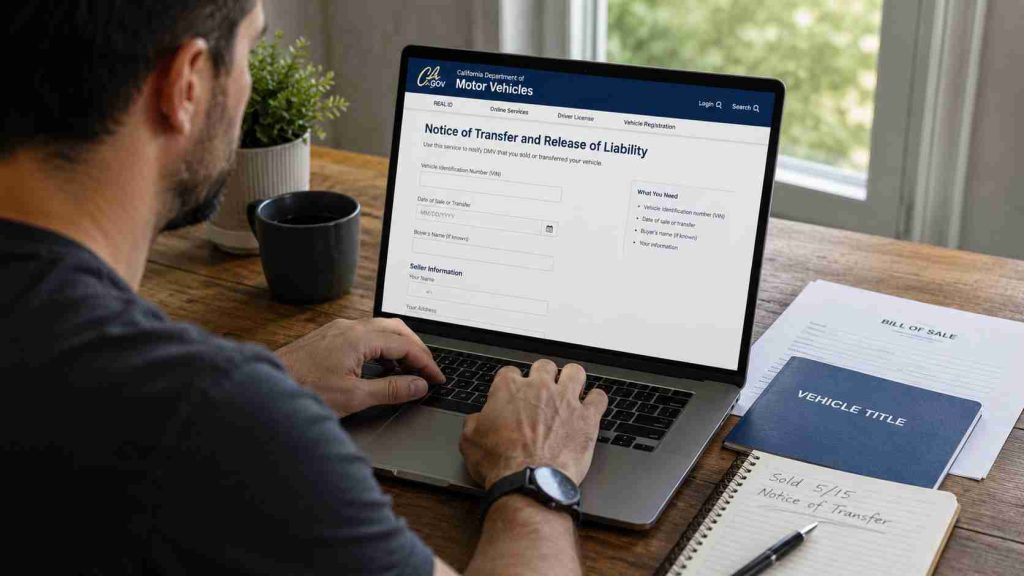
California requires sellers to file a Notice of Transfer and Release of Liability within five days of the sale. Many other states have similar forms with different names and filing windows. The form typically requires the vehicle’s VIN, the date of sale, the buyer’s name if known, and the seller’s information. In California, the form is filed online at the DMV website in minutes.
Filing this form protects you from parking violations, traffic camera fines, and registration-related notices that are generated by the vehicle after the sale date. It creates a formal record that ownership transferred on a specific date and that any vehicle operation or violations after that date are the buyer’s responsibility, not yours. Do not skip this step even if you have already removed the plates.
Personalized and Specialty Plates: Different Rules Apply
Standard-issue license plates are either surrendered, transferred, or left on the vehicle depending on your state’s system. Personalized (vanity) plates and specialty plates (veteran, university, organizational) are handled differently in most states because they have a continuing identity and often a continuing fee structure.
In most states, personalized plates can be retained by the owner even when the vehicle is sold or junked. You surrender the vehicle’s registration but retain the plate sequence, which can then be assigned to a new vehicle. Contact your DMV before the sale to confirm the retention process for personalized plates, as the procedure varies and may require specific paperwork before the vehicle transfer.
Specialty plates associated with specific organizations or designations (veteran plates, disability plates, honor guard plates) may have their own transfer rules tied to the eligibility of the holder. These plates are typically not transferable to a new vehicle without re-qualifying for the designation.
What Happens If You Leave the Plates on the Car
In owner-retains-plates states, leaving your plates on a junked car creates ongoing liability until the registration is formally cancelled. In most cases, the junk buyer or salvage yard removes the plates shortly after pickup as part of their standard intake process and disposes of them. If the plates are removed quickly and the registration is cancelled promptly, the exposure window is short.
The risk scenario: the plates are not removed quickly, the vehicle is moved on public roads, and a violation is generated. Or the vehicle sits in the salvage yard’s lot for days with your plates visible, which creates a theoretical liability in states that issue violations to registered plate owners rather than to vehicle owners.
The practical outcome in most cases is that no harm results from plates being briefly left on a car being picked up by a licensed salvage operation. But “most cases” is not every case, and the five minutes required to remove the plates before pickup is the obvious risk mitigation.
What Sellers Consistently Report About the Plates
Sellers who have junked cars and skipped the plate removal step share a consistent experience: most of the time nothing adverse happens because the salvage yard handles the plates as part of their intake. But a meaningful number report receiving registration renewal notices, parking citations, or administrative letters for vehicles they had sold months earlier because the registration was never formally cancelled in their name.
Those who removed the plates, surrendered them to the DMV, and filed a notice of transfer reported a clean outcome with no trailing paperwork. The process took 20 to 30 minutes including the DMV visit and produced a surrender receipt that gave them documented proof of the registration cancellation date.
The sellers who transferred their personalized plates to a new vehicle described the process as smoother than expected when they handled it in advance of the junk car pickup rather than trying to transfer afterward. Attempting to retain personalized plates after the vehicle has already been picked up and the title transferred adds bureaucratic steps that several sellers described as unnecessary complications that a five-minute phone call to the DMV before the sale would have prevented.
Frequently Asked Questions
Do I need to remove license plates before scrapping a car?
In states where plates belong to the owner rather than the vehicle (the majority of states), yes. You should remove the plates before the car is picked up to prevent ongoing association between your plates and a vehicle you no longer own. In states where plates transfer with the vehicle, leaving them on is the correct procedure. Confirm which system your state uses with your state DMV before the sale.
What should I do with license plates after scrapping a car?
After removing the plates, you have three main options: surrender them to the DMV to formally cancel the registration (recommended in most cases), transfer them to another vehicle you own if your state allows plate transfers, or cancel the registration online or by mail and retain or destroy the plates as permitted. Filing a notice of transfer or release of liability with the DMV, separate from the plate surrender, formally closes the registration record in your name.
What states have license plates that transfer with the vehicle?
States where plates traditionally transfer with the vehicle include Maryland, Minnesota, Kentucky, Alabama, and several others. The majority of US states use an owner-retains-plates system. Rules vary and change, so always verify the current practice with your specific state DMV before the sale to confirm whether plates should be removed or left on the vehicle.
What is a release of liability for a vehicle?
A release of liability (called a notice of transfer in some states) is a form filed with the DMV to formally document that a vehicle was sold or transferred and that the previous owner is no longer responsible for it from a specific date. It protects the seller from parking violations, traffic camera fines, and registration-related notices generated by the vehicle after the sale. California requires this form to be filed within five days of any vehicle sale; most other states have similar forms with varying timelines.
Can I keep my personalized license plates when junking a car?
Yes, in most states. Personalized (vanity) plates can typically be retained by the owner when a vehicle is sold or junked and reassigned to a new vehicle. Contact your DMV before the sale to understand the specific process, as the procedure for retaining personalized plates while transferring the vehicle varies by state and may require specific paperwork completed before or at the time of the vehicle transfer.
What happens if I forget to remove my plates before the junk car is picked up?
In most cases, the salvage yard removes and disposes of the plates as part of their standard intake process. However, leaving plates attached creates a brief period during which your registration is still associated with a vehicle you no longer own. To close that window cleanly, cancel your registration or file a notice of transfer with the DMV promptly after the sale even if you forgot to remove the plates beforehand.
Can I get a refund on my registration fee when scrapping a car?
Many states provide a prorated registration refund for months remaining on the registration period when plates are surrendered and registration is cancelled. The refund amount and process vary by state. Contact your state DMV with your registration expiration date and cancellation date to find out whether a refund is available and how to request it.
Does removing the plates affect the junk car offer?
No. Junk car buyers and salvage yards do not factor license plate presence or absence into their offers. The offer is based on the vehicle’s metal weight, parts value, and condition. Plates have no effect on any of these factors.
The Bottom Line
Removing license plates before scrapping a car is a five-minute task that eliminates a long tail of potential administrative problems. In owner-retains-plates states, it is the correct legal procedure. The plates belong to you, not the vehicle, and they should leave the vehicle before it leaves your property.
Following the plate removal with a notice of transfer or release of liability filed at your state DMV formally closes the book on the vehicle in your name. This step, which takes less than 10 minutes online in states that offer it, creates documented proof of the transfer date and protects you from any violations or fees associated with the vehicle after that date.
For personalized plates, the five-minute conversation with your DMV before the sale confirms the retention and transfer process so the plates you paid extra for do not get surrendered along with the vehicle registration. That advance planning consistently produces a smoother outcome than trying to sort it out after the vehicle is already gone.