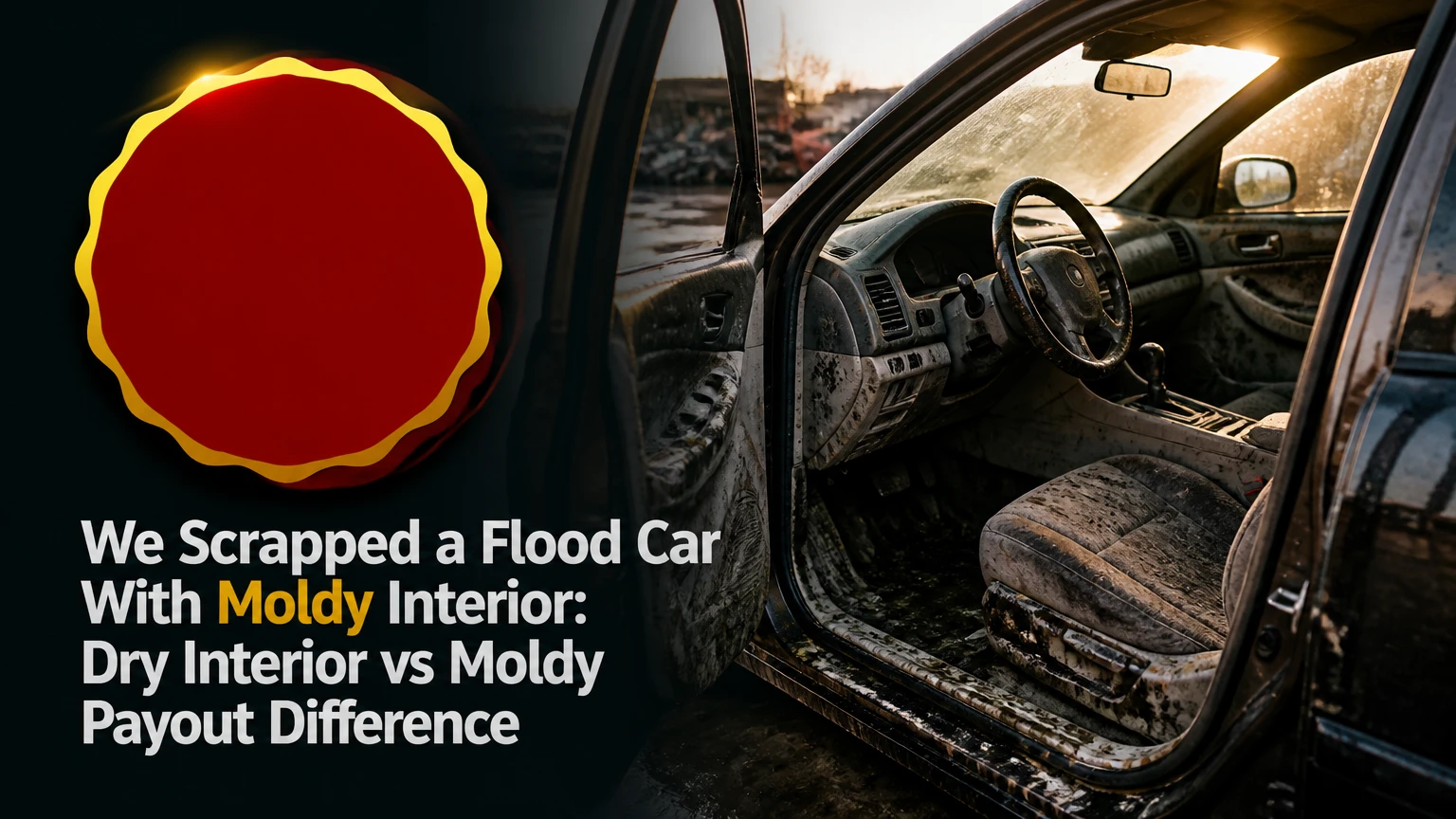
The moldy 2013 Toyota Camry paid $205 less than the identical dry Camry we scrapped 3 weeks earlier. Active mold wiped out all interior parts value ($185), and one yard applied a $95 hazmat handling deduction on top. A biohazard inspection at that yard added 2 business days to the timeline. The final gap between the two cars was 48%.
Here is a new section designed to seamlessly fit into your article. It directly addresses the critical “why” behind these price drops and gives readers actionable advice to protect their payout.
Why Mold Devastates Car Value and How to Protect Your Payout
When selling a junk car, most owners assume the vehicle’s weight in steel dictates the final price. While scrap metal sets the floor, the real profit margin for auto salvage yards lies in harvesting undamaged, reusable parts. Active mold turns those high-margin interior components into liabilities, fundamentally altering how a yard calculates its offer.
1. The Death of Interior Harvesting Profits
Auto recyclers routinely strip intact cabins for high-demand items like clean cloth or leather seats, door cards, center consoles, instrument clusters, and dashboard trims. On a popular model like a 2013 Toyota Camry, a dry, odor-free interior can quickly yield hundreds of dollars on the secondary market.
When toxic spores take root, every single textile and porous plastic component becomes unsellable. Mold spores penetrate deep into seat foam and carpet padding, making complete remediation cost-prohibitive for a recycler. Instead of generating revenue through resale, a moldy interior forces the yard to pay municipal disposal fees to strip, bag, and throw away hazardous materials.
2. Liability and Worker Safety Regulations
Biohazardous growth is not just a cosmetic issue, it is a workplace health hazard. Federal and state labor safety regulations require towing operators and yard staff to use specialized Personal Protective Equipment (PPE), such as N95 or P100 respirators and heavy-duty gloves, when handling contaminated vehicles.
Some scrap operations strictly enforce third-party biohazard inspections or require specialized transport flatbeds to prevent airborne spore cross-contamination with other inventory. Yards pass these added operational, administrative, and safety costs directly to you in the form of “hazmat handling deductions” or flattened base offers.
3. How to Protect Your Offer Before Calling Yards
If your vehicle has suffered water damage, sitting idle with sealed windows will turn minor moisture into a full-blown biohazard within days. Take these immediate steps to salvage as much cash value as possible:
- Dry the Cabin Immediately: If it is safe to do so, open the doors, remove standing water, and place moisture-absorbing buckets or commercial desiccant bags inside the cabin to slow down spore growth.
- Remove Loose Belongings: Clean out all personal items, floor mats, and loose fabric trunk liners before taking photos. A clear view of solid, non-molded surfaces helps prove the contamination is isolated.
- Take High-Lighting Photos: Take crisp, well-lit photos of the engine bay, tires, catalytic converter, and exterior panels. Show the yard where the real value remains so they don’t assume the entire vehicle is trash.
- Be Honest and Shop Around: Always declare moisture issues up front to avoid price renegotiations at the time of tow pickup. Get at least 4 to 5 photo-based quotes; some yards have dedicated biohazard processing workflows and can offer significantly higher payouts than small, traditional scrap operations.
1. The Two Cars We Compared
Both vehicles were 2013 Toyota Camry LE, 4-cylinder, automatic, with a salvage title and similar mechanical condition: running, non-repairable. The dry Camry had normal interior wear. The flood Camry sat underwater for approximately 4 months after a hurricane, developed black and green mold on seats, carpet, and door panels, and retained visible moisture in the trunk.
We called 5 yards for each vehicle. The highest offer on the dry Camry reached $425. The highest offer on the moldy Camry reached $220.
2. How Yards Evaluated the Mold
Four of 5 yards asked us to send photos before quoting the moldy Camry. The one yard that skipped the photo review lowballed at $160. The 4 that reviewed photos gave quotes between $195 and $220.
One yard required a biohazard inspection before the driver touched the vehicle. A third-party contractor handled that inspection over 2 business days. The yard held its $210 offer firm after the inspection cleared.
3. Payout Comparison: Dry vs Moldy Interior
Factor | Dry Interior (USD) | Moldy Interior (USD) |
|---|---|---|
Base scrap metal value | $325 | $325 |
Interior parts resale value | $185 | $0 |
Hazmat handling deduction | $0 | -$95 |
Pickup delay | None | 2 business days at 1 yard |
Highest offer received | $425 | $220 |
Net difference | -$205 (48% reduction) |
4. What Drove the $205 Gap
The $185 interior parts value disappeared entirely. Yards harvest seats, door panels, and carpet for resale. Mold makes every interior component unsellable and turns each piece into a disposal cost instead of a revenue item. That alone accounts for $185 of the $205 difference.
The remaining $20 reflects the hazmat handling estimate that 2 yards factor into their cost model before setting an offer. One yard confirmed they estimate $75 to $150 in internal handling cost for biohazard vehicles and adjust the quote accordingly.
Scrap metal value held identical between the two cars. Mold does not reduce steel weight, so weight-based pricing stayed unchanged.
Verdict: Expect a 40 to 50% payout reduction for any car with active mold versus the same vehicle with a dry interior. The loss comes from interior parts value, not scrap weight. Mold present for more than 6 weeks eliminates interior credit entirely. Send photos to at least 4 yards before accepting a quote. Any yard that skips the photo review will likely lowball by $40 to $80.