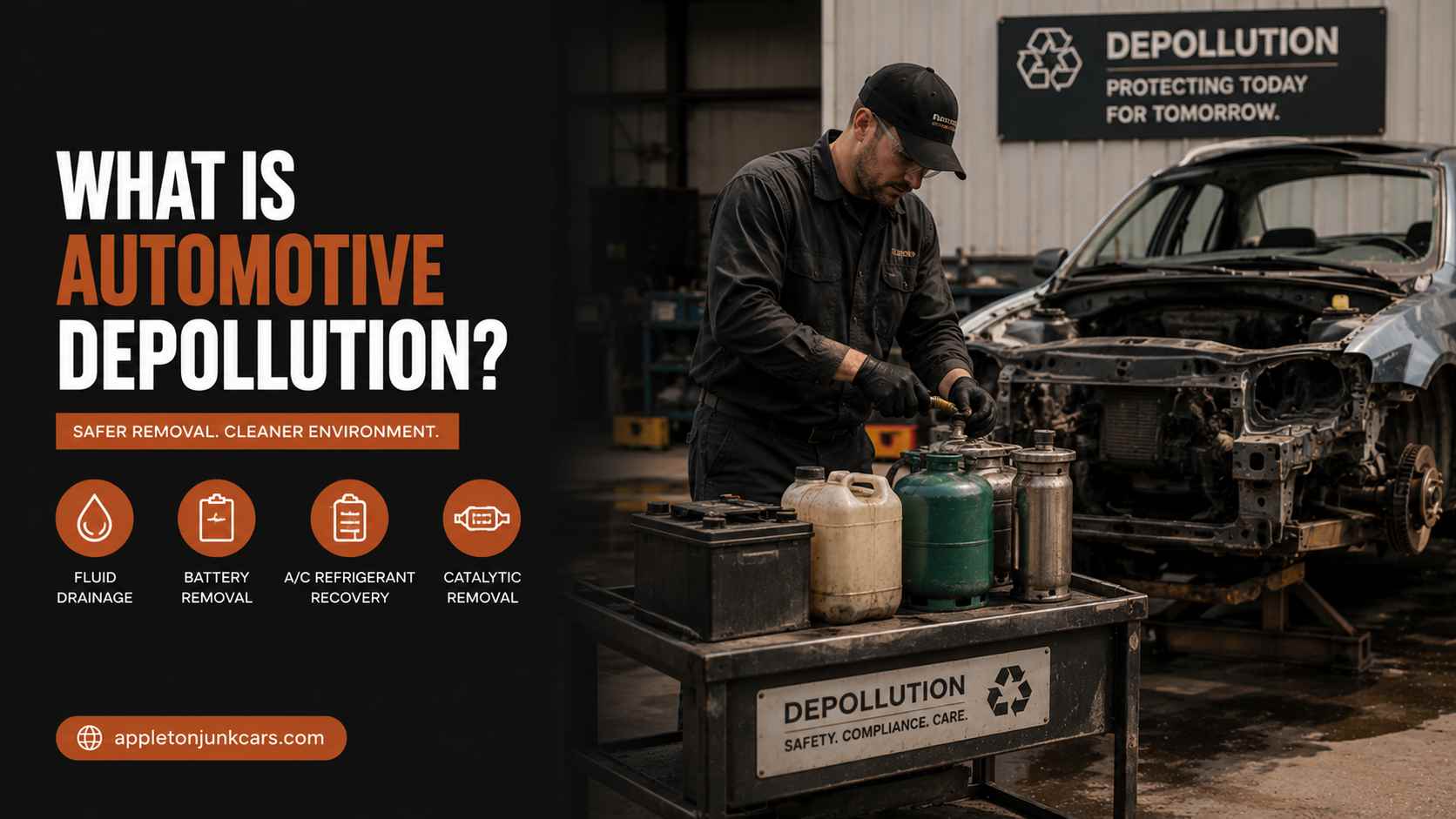
Automotive depollution is the mandatory first stage of end-of-life vehicle processing at licensed salvage facilities. It is defined as the systematic removal of all hazardous fluids, gases, and materials from a vehicle before any dismantling, part recovery, or crushing takes place. The purpose is to prevent the toxic substances present in every vehicle from contaminating soil, groundwater, and air during subsequent processing. Without depollution, the shredding and crushing processes that follow would release these substances into the environment.
The term originates in European automotive recycling regulation, where the EU End-of-Life Vehicles Directive explicitly mandates that all vehicles be depolluted before any further processing. In the United States, the same process is required by a combination of federal environmental laws, including the Clean Water Act, the Resource Conservation and Recovery Act, and the Clean Air Act, and by state licensing requirements for auto dismantling facilities. The word “depollution” is less commonly used in US regulation but the requirement it describes is no less mandatory.
This guide defines every step of the depollution process, explains the legal framework that requires it, describes what happens when it is not performed, and explains how a seller can verify that their junk car buyer complies with depollution requirements before the vehicle is processed.
The Definition: What Automotive Depollution Actually Means
Automotive depollution is the complete removal and proper management of all substances from an end-of-life vehicle that could cause environmental harm if released. The International Dismantling Information System (IDIS) and the European Automobile Manufacturers Association (ACEA) define depollution to include all fluids, the high-voltage battery in hybrid and electric vehicles, airbag modules, and components containing hazardous materials such as mercury.
A depolluted vehicle is one from which every regulated substance has been removed, contained, and directed toward an appropriate recovery or disposal pathway before the vehicle enters the shredder or disassembly floor. A vehicle that has not been depolluted still contains all of its original fluids, pressurized refrigerant, and hazardous material components. When such a vehicle is crushed or shredded without prior depollution, these substances are released into the surrounding environment and into the shredded metal output.
The practical significance: every vehicle on the road contains approximately 12 to 25 gallons of fluids across all systems, 0.75 to 2 pounds of pressurized refrigerant in the air conditioning system, a lead-acid battery with approximately 1 gallon of sulfuric acid, and in older vehicles, mercury-containing switches in several locations. None of these substances can be safely processed through industrial shredding without first being removed.
What Is Removed During the Depollution Process
Material Removed | Regulatory Basis for Removal | End Destination After Removal |
|---|---|---|
Motor oil (crankcase) | RCRA used oil regulations; Clean Water Act | Licensed used oil hauler; re-refinery or energy recovery |
Gasoline or diesel fuel | Clean Water Act; state hazmat regulations | Waste fuel blending; industrial energy recovery |
Engine coolant and antifreeze | State used coolant regulations; Clean Water Act | Antifreeze recycler; hazardous waste disposal |
Transmission fluid | RCRA used oil regulations | Used oil stream; re-refinery |
Brake fluid | State hazardous waste regulations | Hazardous waste disposal; glycol recycler |
Power steering fluid | RCRA used oil regulations | Used oil stream |
AC refrigerant (R-12, R-134a, HFO-1234yf) | Clean Air Act Section 609; mandatory recovery | EPA-certified reclaimer; reuse or destruction |
Lead-acid battery | State battery regulations; RCRA | Licensed battery recycler; secondary lead smelter |
Mercury switches (pre-2003 vehicles) | State regulations; TSCA; NVMSRP program | NVMSRP collection; licensed mercury disposal facility |
Airbag modules (undeployed) | State regulations; safety requirements | Deployment and recycling programs; manufacturer take-back |
Catalytic converter | Removed for precious metal recovery | Precious metal refinery; platinum group metal recovery |
The sequence of these steps matters. Refrigerant must be recovered before any AC system component is disturbed. The battery is typically removed early in the sequence to prevent electrical hazards during subsequent work. Fuel recovery requires the car to be in a position where a probe can access the tank without fuel spillage. Facilities that perform depollution correctly have dedicated equipment stations for each step and trained technicians certified for each specific material category.
The Legal Framework: What Requires Depollution and Who It Applies To
United States Federal Requirements
In the United States, automotive depollution is required by the intersection of several federal statutes rather than by a single explicit depollution mandate. The Clean Air Act Section 609 requires that refrigerant be recovered before any air conditioning system component is removed or the vehicle is crushed; intentional venting is prohibited and carries penalties up to $44,539 per violation per day. The Resource Conservation and Recovery Act requires that used oil be managed as a regulated material that cannot be disposed of by ground discharge or burning. The Clean Water Act prohibits discharge of petroleum products and other automotive fluids into navigable waters and their tributaries.
State Requirements
State environmental agencies implement these federal requirements through licensing programs for auto dismantlers. A licensed auto dismantling facility in California, Texas, New York, or any other state with a licensing program has been inspected for compliance with fluid management requirements that effectively mandate depollution. Facilities that fail to demonstrate appropriate fluid management face permit suspension, fines, and potential closure.
European ELV Directive
The EU End-of-Life Vehicles Directive is more explicit and comprehensive than US requirements. It specifically mandates depollution as a defined process with a specific list of materials that must be removed before treatment. It requires that treatment facilities obtain authorization as depollution facilities and maintain records of depolluted vehicle quantities. The European framework is the origin of the term “depollution” as a technical standard.
The Depollution Process Step by Step
Step 1: Vehicle intake and inspection. The vehicle is received, its VIN is recorded, and a technician assesses what fluid systems are present, whether any have already been damaged or breached, and whether any special hazardous materials (mercury switches, hybrid battery, airbag faults) require specific handling protocols.
Step 2: Refrigerant recovery. A Section 609-certified technician connects EPA-approved recovery equipment to the vehicle’s AC service ports and captures the refrigerant into a certified recovery cylinder. This step must occur before any AC component is touched or the vehicle is crushed.
Step 3: Battery removal. The 12-volt lead-acid battery (and in hybrid and EV vehicles, the high-voltage battery system) is removed and placed in battery storage for collection by a licensed battery recycler.
Step 4: Mercury switch removal (pre-2003 vehicles). Switches in hood lights, trunk lights, and antilock brake systems are located and removed manually, placed in NVMSRP-provided collection containers.
Step 5: Fuel recovery. Residual gasoline or diesel is pumped from the fuel tank using extraction equipment and collected in sealed drums for waste fuel processing.
Step 6: Fluid draining. Engine oil, transmission fluid, coolant, brake fluid, and power steering fluid are drained from their respective systems into collection sumps. Each fluid type goes to a separate collection vessel to prevent contamination of the used oil stream.
Step 7: Documentation. The volumes of each fluid recovered are recorded. This documentation supports regulatory compliance demonstrations during facility inspections.
What Happens When Depollution Is Not Performed
A vehicle crushed or shredded without depollution releases its fluid contents into the immediate environment. Gasoline and diesel fuel ignite at the elevated temperatures inside a shredder. Engine oil, transmission fluid, and coolant saturate the shredded metal output and are released onto the shredder facility grounds. Refrigerant is vented to the atmosphere. Battery acid contacts other metal fragments.
The cumulative environmental effect of inadequate depollution across thousands of vehicles per year at a single facility is significant. Soil contamination beneath and around the facility develops over time from fluid spills. Stormwater runoff carries petroleum hydrocarbons from the facility grounds into nearby drainage systems. Groundwater under the facility site is gradually contaminated.
This is the documented environmental history of unlicensed and inadequately regulated auto scrapping operations before modern environmental regulation tightened. The contamination left by those operations at brownfield sites across the United States represents cleanup costs measured in the billions of dollars. Modern licensed facilities with mandatory depollution requirements exist precisely to prevent that history from repeating.
How to Verify That Your Junk Car Buyer Performs Depollution
The simplest verification: confirm that the buyer holds a current state operating license as an auto dismantler or auto recycler. Licensed facilities have been inspected for environmental compliance, which includes verification of fluid management systems. An unlicensed buyer who operates without a facility license has no regulatory obligation to perform depollution.
Ask directly: “Do you perform depollution before processing vehicles?” A facility that does will answer yes without hesitation and may describe their process. A buyer who is evasive or unclear about this question may not be performing the required steps.
The Certified Automotive Recycler (CAR) program administered by the Automotive Recyclers Association provides third-party verification of environmental practices at facilities that have undergone the certification audit. CAR-certified facilities are documented to exceed the minimum licensing requirements. The ARA’s searchable directory at www.a-r-a.org allows verification of certification status by location.
Frequently Asked Questions
What is automotive depollution?
Automotive depollution is the systematic removal of all hazardous fluids, gases, and materials from a vehicle before it is dismantled, crushed, or shredded. The process includes recovering refrigerant from the air conditioning system, draining all automotive fluids (engine oil, fuel, coolant, brake fluid, transmission fluid), removing the battery, removing mercury switches from older vehicles, and managing airbag modules. Depollution is required by law at licensed auto dismantling facilities under federal and state environmental regulations.
Why is depollution required before crushing a car?
Depollution is required because every vehicle contains approximately 12 to 25 gallons of fluids, pressurized refrigerant, and hazardous material components that would be released into the environment if the vehicle were crushed without prior removal. Engine oil, gasoline, coolant, and brake fluid would contaminate soil and groundwater. Refrigerant would be released into the atmosphere in violation of the Clean Air Act. Battery acid would contact shredded metal fragments. Depollution prevents these release events at every step.
Who is required to perform automotive depollution?
Licensed auto dismantlers, salvage yards, and scrap facilities that receive and process end-of-life vehicles are required to perform depollution under federal environmental law and state licensing requirements. The requirement applies to any commercial facility that handles vehicles for dismantling or crushing. Individual vehicle owners are not required to depollute their own vehicles before selling them to a licensed facility.
What happens to the fluids removed during depollution?
Each fluid type follows a specific regulated pathway. Motor oil and transmission fluid go to licensed used oil haulers who transport them to re-refineries for processing into lubricant base oil. Gasoline is directed to waste fuel blending or industrial energy recovery. Coolant goes to antifreeze recyclers. Brake fluid goes to hazardous waste disposal or glycol processors. Refrigerant is recovered into certified cylinders and sent to EPA-certified reclaimers for purification and reuse.
Does my junk car get depolluted before it is crushed?
If you sell to a licensed auto dismantler or salvage yard, yes. Licensed facilities are required by state and federal environmental law to depollute all vehicles before processing. If you sell to an unlicensed buyer, there is no guarantee of depollution because unlicensed operators have no regulatory obligation to perform the process. Verifying that your buyer holds a current state operating license is the baseline assurance that depollution requirements apply to their operation.
Is depollution required by law in the United States?
Yes, though the requirement is expressed through multiple federal statutes rather than a single explicit depollution mandate. The Clean Air Act Section 609 requires refrigerant recovery. The Resource Conservation and Recovery Act requires proper management of used oil and hazardous fluids. The Clean Water Act prohibits discharge of automotive fluids into waterways. State licensing programs for auto dismantlers implement these requirements through facility inspections and permit conditions that effectively mandate depollution.
What is the difference between a depolluted vehicle and a whole vehicle at a scrap yard?
A depolluted vehicle has had all hazardous fluids removed, the refrigerant recovered, the battery extracted, and applicable special materials (mercury switches, airbag modules) removed before any other processing. It is safe to shred, crush, or disassemble without releasing toxic substances. A non-depolluted vehicle still contains all of its original fluids and pressurized refrigerant. Processing such a vehicle releases these substances into the facility environment and the shredded metal output.
What is the NVMSRP and what does it have to do with depollution?
The National Vehicle Mercury Switch Recovery Program (NVMSRP) is a cooperative initiative among auto manufacturers, state governments, and the EPA that specifically addresses the mercury switch removal component of depollution. Licensed dismantlers registered with NVMSRP receive collection kits for mercury switches and participate in a mail-back program to send recovered switches to a licensed mercury disposal facility. Mercury switch removal is a required element of complete depollution for pre-2003 vehicles.
The Bottom Line
Automotive depollution is the environmental foundation of responsible end-of-life vehicle processing. It is the step that transforms a hazardous object containing 12 to 25 gallons of toxic fluids, pressurized refrigerant, and heavy metal components into a material that can be safely shredded, crushed, and recycled without contaminating the surrounding environment.
The legal requirement for depollution exists because its absence produced significant environmental damage at older, unregulated facilities whose contamination is still being remediated decades later. Modern licensing requirements and certification programs have substantially improved compliance, but the licensed versus unlicensed distinction remains the most important variable for consumers who want to ensure their vehicle is handled responsibly.
Selling to a licensed, CAR-certified auto dismantler is the most reliable assurance that your vehicle will be depolluted before processing. The license confirms the regulatory obligation. The certification confirms that actual practices meet or exceed the minimum required standard. For anyone concerned about the environmental impact of how their vehicle is disposed of, that combination of license and certification is the most meaningful signal available.