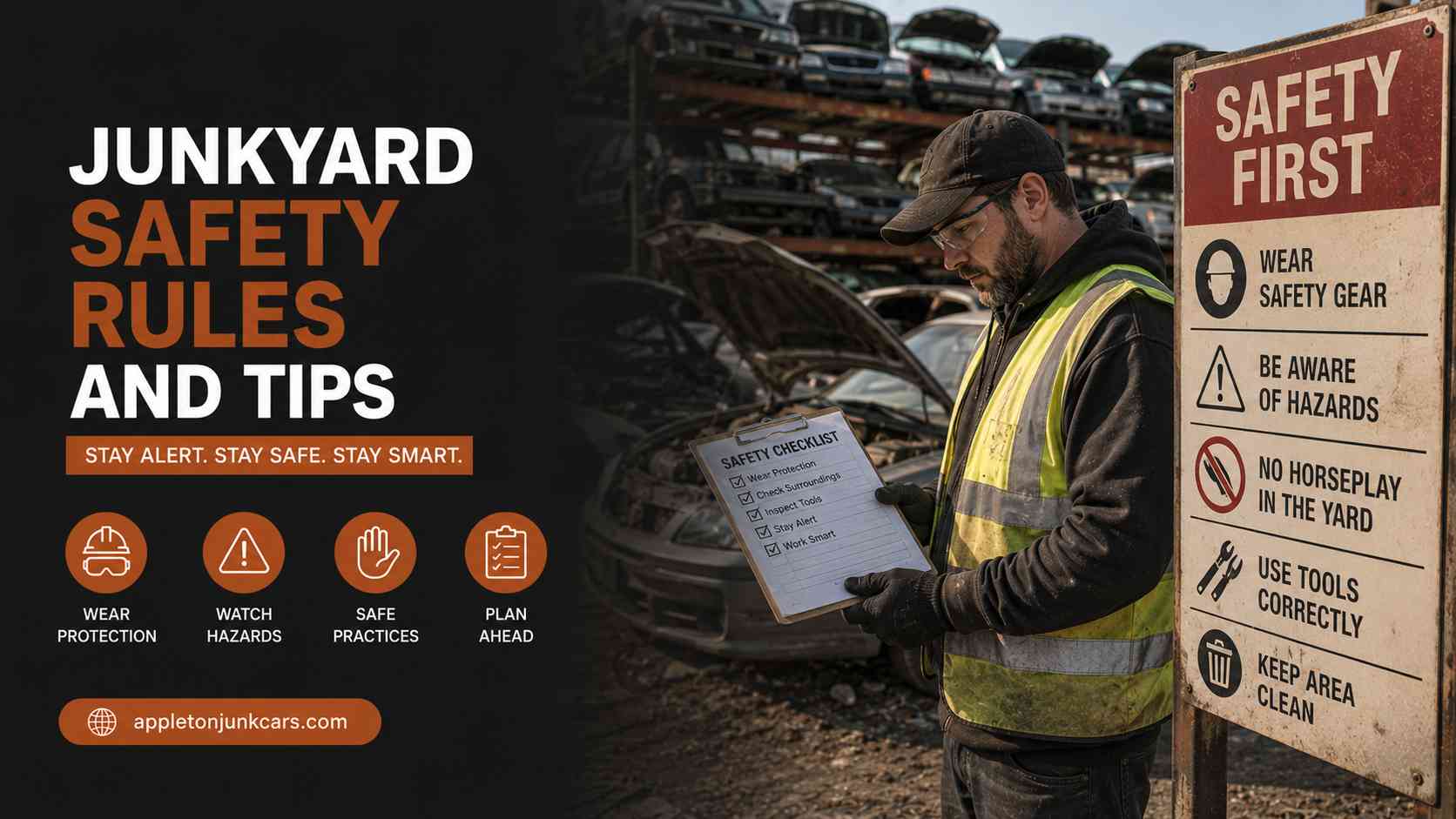
A self-service salvage yard is one of the more physically demanding environments you can voluntarily enter as a consumer. You are working around vehicles that are unstable, partially dismantled, corroded, sitting on uneven ground, and occasionally balanced against other vehicles. Sharp metal is present from ground level to above head height in every direction. Residual automotive fluids coat surfaces that look dry until you touch them. The vehicles themselves weigh between 2,000 and 8,000 pounds and can shift without warning on uneven or soft ground.
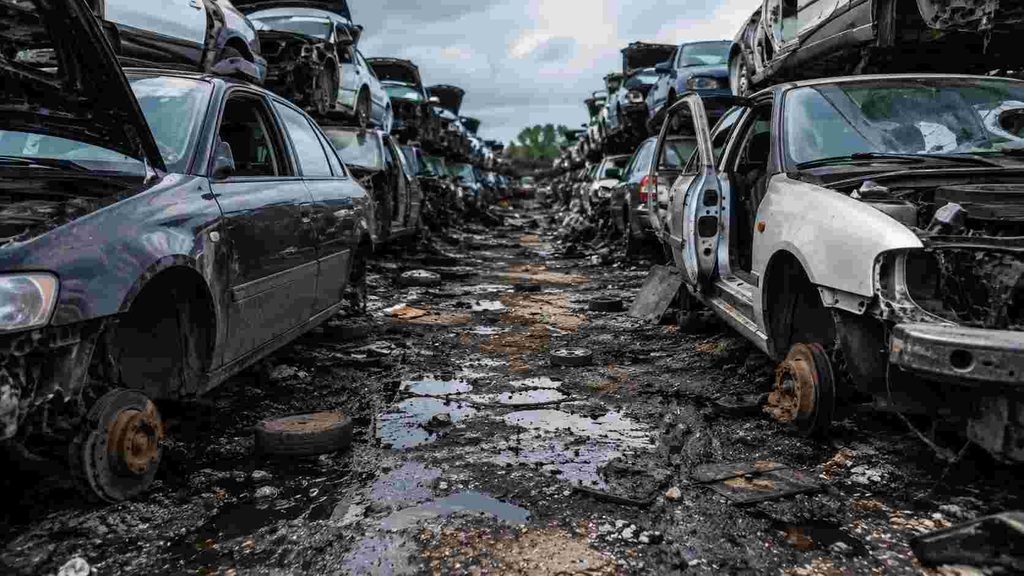
The safety rules that established salvage yards enforce are not bureaucratic requirements. They reflect the specific types of injuries and fatalities that have occurred in salvage yard environments. Every rule has a documented reason. The PPE requirements exist because the injuries that PPE prevents are well-documented. The prohibition on going under unsupported vehicles exists because vehicle collapses in salvage yards have killed people.
This guide covers every significant safety requirement and recommendation for self-service salvage yard visits: the PPE that makes a material difference, the specific hazards and why each matters, the technique for working safely in this environment, and what to do if something goes wrong. Read it before your first visit and review the hazards section before any visit to an unfamiliar yard.
The PPE That Every Junkyard Visit Requires
Most self-service salvage yards enforce minimum PPE requirements as a condition of entry. These are not suggestions. Yards have staff at the entry gate and will turn away visitors who are not appropriately protected. Beyond the yard’s minimum requirements, additional protection significantly reduces your injury risk during active parts removal.
PPE Item | Why Required | Minimum Standard | Recommended Standard |
|---|---|---|---|
Footwear | Falling parts, sharp metal on ground, oil-slicked surfaces | Closed-toe shoes required at virtually all yards; many require steel toes | Steel-toed boots with oil-resistant sole; ankle height or higher |
Eye protection | Flying metal fragments during removal, brake dust, rust debris when working overhead | Safety glasses with side shields | ANSI Z87.1 safety glasses or goggles; splash-rated for overhead work |
Hand protection | Sharp metal edges, battery acid residue, hot surfaces, pinch points | Work gloves of any type | Leather or cut-resistant gloves rated for puncture and cut resistance |
Long pants | Sharp metal at leg height, contact with contaminated surfaces | Required by most yards (no shorts) | Heavy denim or work pants; not synthetic fabrics that tear easily |
Long-sleeve shirt or jacket | Sharp edges at arm height when reaching into engine bays or wheel wells | Recommended but not always required | Heavy cotton or canvas; avoid loose fabrics that catch on protruding metal |
Headlamp or flashlight | Visibility inside dark cavities; hands-free operation when pulling parts | Strong recommendation; not always required | Headlamp that attaches to a hat or helmet for hands-free use |
Steel-toed boots are the single most important PPE investment for regular salvage yard visitors. Parts being removed fall unpredictably, and a transmission, axle assembly, or engine component falling from working height onto an unprotected foot produces injuries ranging from broken toes to crushing trauma. Yards that do not specifically require steel toes still see these injuries; yards that enforce the requirement see them far less often.
What Most Yards Prohibit and Why
Prohibited Item or Action | Reason | Consequence if Violated |
|---|---|---|
Open-toe shoes or sandals | Falling parts, sharp metal, chemical exposure to feet | Denied entry; most yards enforce strictly at the gate |
Children under a specific age (varies; typically 16 or 18) | Salvage yards are not appropriate environments for young children; limited supervision in the yard | Denied entry for the group if children are present |
Going under an unsupported vehicle | Vehicle collapse risk; vehicles in salvage yards are not properly supported | Asked to leave; potential ban from the yard |
Smoking anywhere in the yard | Fuel residue and vapors create fire risk | Removed from the yard; potential permanent ban |
Bringing in your own fluids or parts | Prevents parts swapping fraud | Items may be confiscated at exit check |
Using tools that generate sparks (grinders, cutting wheels) | Fire risk from fuel residue | Tools confiscated; removed from yard |
Removing parts from vehicles on the “do not pull” list | Some vehicles are reserved for staff dismantling or are awaiting processing | Removed from yard; may involve police contact for theft |
The prohibition on going under unsupported vehicles is the most critical rule in any salvage yard. Vehicles in a self-service yard are not on properly rated jack stands. They may be sitting on the ground with flat tires, tilted, or leaning against adjacent vehicles. Crawling under any vehicle in a salvage yard to access components from below is prohibited at every reputable yard and is the activity most likely to result in fatal injury.
Vehicle Stability Hazards: The Most Serious Risk
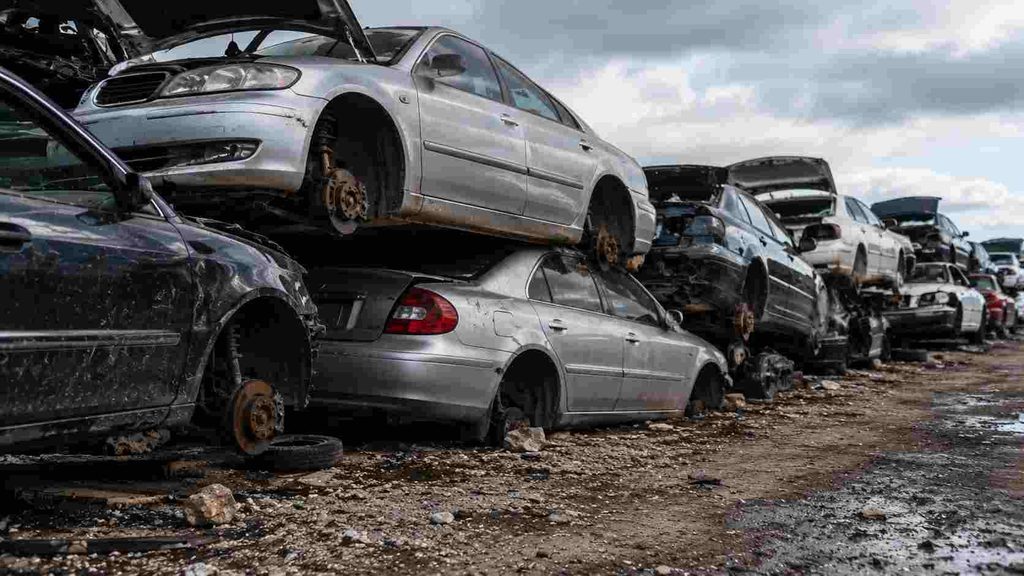
Vehicle stability is the primary safety concern in a self-service salvage yard and the hazard most visitors underestimate. The vehicles in a self-service yard have been towed in without functioning brakes, parking mechanisms, or suspension systems. They are parked on uneven ground, sometimes on slopes, and are adjacent to other vehicles that provide the only structural support in some cases.
Why Vehicles in Salvage Yards Are Unstable
A vehicle’s stability on level ground depends on its tires maintaining consistent pressure, its suspension maintaining design geometry, and its braking system holding it in place on any grade. In a salvage yard, tires are frequently flat or rotted, suspension components are absent or damaged, and braking systems are non-functional. A car that appears to be sitting solidly on flat ground can roll, tip, or shift with minor force applied during parts removal.
How to Assess and Manage Stability Before Working on a Vehicle
Before beginning any removal, assess the vehicle’s position relative to its surroundings. Is it on level ground or on a slope? Is it resting against another vehicle or is it free-standing? Are any tires completely flat or rotted? Is the suspension collapsed on one side? These assessments take 60 seconds and identify the vehicles where stability risk is elevated.
Never apply upward force to a vehicle body, engine, or component without first assessing whether that force could cause the vehicle to roll or shift. Removing a heavy component from inside the engine bay changes the weight distribution of the vehicle and can cause rolling or tipping on soft or sloped ground. Chock the wheels with rocks, wood, or a wheel chock you carry specifically for this purpose before beginning any significant removal work.
Sharp Metal, Broken Glass, and Puncture Hazards
Sharp metal is the most frequent cause of lacerations, punctures, and embedded-object injuries in salvage yards. Sheet metal edges, particularly on partially dismantled vehicles, are often work-hardened from vehicle use and then compromised by corrosion that creates brittle, jagged edges sharper than new sheet metal. These edges appear where body panels have been partially removed, where corrosion has created holes and flaps in floor pans and quarter panels, and where previous parts hunters have bent or cut metal to access components.
Broken glass is present around any vehicle that has experienced collision damage or that has had windows removed. Glass fragments on seat surfaces, in door cavities, and on floor panels are not always visible from a distance. Assume glass is present in any vehicle with broken windows and treat all seating surfaces in such vehicles accordingly.
Puncture hazards come primarily from protruding fasteners: bolts, studs, and screws that have broken off at the surface, protruding only a few millimeters but oriented upward or outward in areas where hands or knees make contact during routine work. These are most common on engine bay surfaces, wheel wells, and frame rails where previous attempts at removal left broken fasteners. Protective gloves that include puncture resistance are specifically valuable for this hazard.
Residual Chemical Exposure: Fluids, Battery Acid, and Asbestos
Automotive Fluids
Salvage yards are required to depollute vehicles before dismantling, but this requirement applies to licensed dismantlers processing end-of-life vehicles. In a self-service yard, vehicles arrive with their fluids intact. You are working on vehicles that contain engine oil, gasoline, coolant, brake fluid, and transmission fluid in their original locations. These fluids leak as you work, saturate the ground around the vehicle, and coat surfaces that look dry but are not. Assume every surface in a wheel well, under the hood, and on the underside of the car is potentially coated with automotive fluid. Avoid touching your face while working, wash your hands before eating or drinking, and change clothes after an extended visit.
Battery Acid
Corroded batteries may have sulfuric acid residue on their terminals, surrounding tray, and surrounding engine bay surfaces. Battery acid at full strength is a serious corrosive that causes skin burns and permanent eye damage on contact. Safety glasses with side shields are specifically effective against acid splash. When working near or around a vehicle battery, particularly in vehicles that have been sitting for extended periods, treat all surrounding surfaces as potentially acid-contaminated until visually confirmed otherwise.
Brake Dust and Asbestos Risk
Vehicles manufactured before approximately 1993 may contain asbestos in their brake linings, clutch facings, and gasket materials. When handling brake components from these older vehicles, brake dust that has accumulated in drums, behind backing plates, and around brake hardware may contain asbestos fibers. Do not blow brake dust away with compressed air or disturb it with dry brushing. Wet it with water before disturbing, or wear a properly fitted NIOSH-approved N95 or P100 respirator when working with brake components from vehicles of this era.
Environmental Hazards: Heat, Sun, and Ground Conditions
Salvage yards are almost entirely outdoors with minimal shade. Working in a yard during summer months in the southern and central United States means sustained heat exposure that can progress from heat exhaustion to heat stroke without clear warning. Bring water: a minimum of 16 ounces per hour of active outdoor work in warm conditions, and more in high heat. Wear a hat to reduce direct sun exposure on the head and neck. Take breaks in any available shade during peak afternoon heat hours.
Yard surfaces are uneven and frequently contaminated. Concrete aprons around vehicle storage areas are slicked with automotive fluids that make standard footwear extremely slippery. Gravel and dirt areas between vehicle rows are pocked with holes from previous fluid drainage, stake-down rods, and erosion. Walking while carrying parts requires particular attention to footing because the combination of a heavy object obscuring your view of the ground and an oil-slicked surface is one of the more consistent causes of falls in salvage yards.
Safe Technique When Pulling and Lifting Parts
The physical demands of salvage yard parts removal include overhead work, confined space work, heavy lifting, and extended awkward postures. Back injuries from improper lifting technique are among the most common non-laceration injuries that result from salvage yard visits.
For heavy components (transmissions, engines, axles, suspension assemblies): assess the weight before attempting removal. A standard automatic transmission weighs 100 to 250 pounds; a rear axle assembly weighs 80 to 200 pounds; an engine assembly weighs 300 to 600 pounds. These weights require either mechanical assistance (an engine hoist, transmission jack, or at minimum a second person) or a realistic assessment of whether manual removal is feasible. Parts hunters who attempt to remove heavy assemblies alone without mechanical assistance and without planning how to safely lower the part once disconnected are at high risk of injury.
For overhead work (removing interior components, working on the underside of a hood, reaching into upper engine bay areas): use the correct posture, with eyes and face directed away from the work surface to prevent debris from falling into your eyes. Safety glasses with side shields are specifically important for this work orientation. If removal requires sustained overhead force, consider whether the part is actually accessible from a more practical angle.
What to Do If Something Goes Wrong
Every self-service salvage yard has a check-in point where staff are located. In any medical emergency, immediately leave the vehicle you are working on and go to the check-in building or signal a yard staff member. Most yards have first aid kits at the check-in station. In a serious emergency, have someone call emergency services while another person proceeds to the check-in.
For lacerations: apply direct pressure with the cleanest available material. Do not remove embedded objects. For chemical exposure to eyes: flush immediately and continuously with clean water for at least 15 minutes and seek medical attention promptly. For crush injuries from falling parts: do not attempt to remove the crushing object yourself if the weight is significant; call emergency services and stabilize the injured person.
Document the incident before leaving the yard. Take photographs of the location, the vehicle, and any conditions that contributed to the injury. Report the incident to yard staff. This documentation protects you in any subsequent medical or legal situation and provides information the yard can use to prevent recurrence.
Frequently Asked Questions
What PPE do I need to wear at a self-service junkyard?
Most self-service salvage yards require at minimum closed-toe shoes (many specifically require steel-toed boots), safety glasses or eye protection, and pants that cover the full leg. Gloves are strongly recommended. Long sleeves are advisable for protection against sharp metal at arm height. Most yards will deny entry to visitors without proper footwear and eye protection.
Are junkyards safe?
Self-service salvage yards involve real hazards including unstable vehicles, sharp metal edges, residual automotive fluids, broken glass, and puncture risks. These hazards are manageable with appropriate PPE, awareness of the specific risks, and adherence to yard safety rules. The most serious injury risk is from vehicle instability; the most common injuries are lacerations from sharp metal. Visitors who wear appropriate PPE and follow yard rules work in these environments regularly without significant injury.
Can I go under a car at a junkyard?
No. Going under unsupported vehicles in a salvage yard is prohibited at all reputable yards and is the activity most likely to result in fatal injury. Vehicles in self-service yards are not properly supported on rated equipment. They can roll, tip, or shift from the weight redistribution caused by parts removal, from ground softening, or from vibration. If a component you need requires access from directly below the vehicle, it is either inaccessible safely in a self-service environment or requires the vehicle to be lifted by yard equipment.
What shoes should I wear to a junkyard?
Steel-toed boots with oil-resistant soles are the recommended footwear for salvage yard visits. Steel toes protect against falling parts at any weight that can be removed manually. Oil-resistant soles provide traction on the fluid-contaminated concrete and gravel surfaces common throughout salvage yards. Most yards require at minimum closed-toe shoes; many specifically require steel toes. Sandals, flip-flops, and open-toe footwear of any kind are grounds for denial of entry at essentially all yards.
Is there asbestos at the junkyard?
Vehicles manufactured before approximately 1993 may contain asbestos in brake linings, clutch facings, and certain gaskets. Brake dust that has accumulated in drums and around brake hardware on these older vehicles may contain asbestos fibers. When working with brake components from pre-1993 vehicles, wet the brake dust with water before disturbing it, or wear a properly fitted N95 or P100 respirator. Do not use compressed air to blow brake dust away.
Can children go to a self-service junkyard?
Most self-service salvage yards prohibit children under a specific age, typically 16 or 18, from entering the vehicle storage area. The environment involves physical hazards that are not appropriate for children, and the yard cannot provide adequate supervision. Call ahead to confirm the yard’s specific policy before bringing anyone near this age threshold.
What should I do if I get hurt at a junkyard?
Go immediately to the check-in building or signal a yard staff member. Most yards have first aid kits at the main building. For serious injuries, have someone call emergency services while another person goes to the yard staff. For lacerations, apply direct pressure. For chemical eye exposure, flush with clean water for 15 minutes minimum and seek medical attention. Document the injury with photographs of the location and conditions before leaving the yard.
How do I avoid getting cut at a junkyard?
Wear leather or cut-resistant gloves and long pants and sleeves to reduce the surface area of unprotected skin. Move slowly and deliberately in tight areas rather than reaching in quickly. Use a flashlight to see into dark cavities before inserting your hand. Be particularly cautious around sheet metal edges on partially dismantled vehicles, broken glass in and around damaged vehicles, and protruding fastener stubs from previous removal attempts.
The Bottom Line
Salvage yards are productive environments for automotive parts buyers who approach them with the right equipment and the right awareness of the specific hazards they contain. The risks are real and documented, but they are also manageable with straightforward preparation: appropriate footwear and eye protection as an absolute minimum, knowledge of the specific hazards, and adherence to the rules that experienced operators have learned matter.
The rule that most deserves internalization before any visit: never go under an unsupported vehicle. Everything else in this guide reduces injury probability. This rule eliminates the one risk category that can produce fatal outcomes. Every other safety measure is important; this one is non-negotiable.
The prepared visitor who wears steel-toed boots, safety glasses, and gloves; who assesses vehicle stability before working on each car; who carries water and a headlamp; and who moves deliberately in tight spaces can work in self-service salvage yards regularly and productively for years without significant injury. That is the profile of the experienced salvage yard shopper, and the difference between that profile and the unprepared visitor is entirely in the preparation.