A piece of heavy equipment sitting in a field or a back lot represents more value than most owners expect and more complexity in the sale process than most sellers are prepared for. Whether it is a failed excavator, a seized farm tractor, a worn-out skid steer, or a decommissioned bulldozer, the market for scrap heavy machinery is active and segmented. Each buyer type values what you have differently, and reaching the right one first determines whether you recover scrap metal value or two to five times that amount.
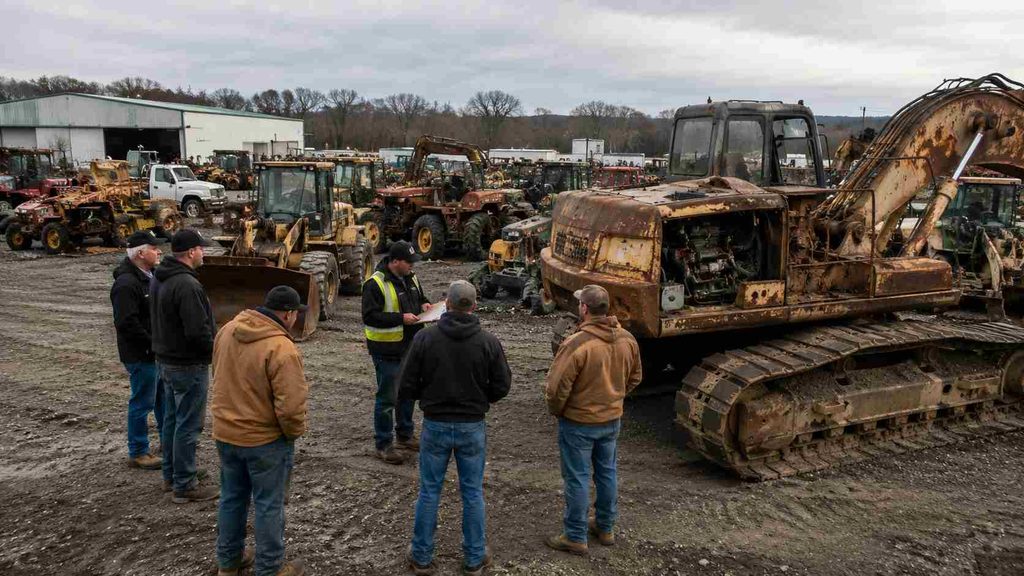
The buyers for scrap heavy machinery and tractors fall into five distinct categories: equipment dealers and auction platforms, iron and steel scrap yards, parts and rebuild specialists, export buyers, and local operators looking for work equipment they can restore. Each category has different requirements, different offer formulas, and different channels for reaching them.
This guide covers what each category of equipment is worth before your first call, how each type of buyer calculates their offer, how to reach export buyers that most domestic sellers overlook, and how to prepare machinery for sale without spending money on improvements that buyers will not pay for.
What Heavy Machinery and Farm Tractors Are Worth Before You Call Anyone
The value of scrap or non-running heavy machinery depends on three factors: the equipment type and brand, whether the machine is rebuildable or parts-viable, and current steel and iron scrap prices. The spread between scrap value and parts or rebuild value is larger for heavy equipment than for almost any other category.
Equipment Type | Scrap Iron / Steel Value | Parts or Rebuild Value (Non-Running) | Working or Repairable Range |
|---|---|---|---|
Agricultural tractor (40 to 100 hp, common brand) | $800 to $2,500 | $3,000 to $12,000 | $8,000 to $35,000 |
Agricultural tractor (100+ hp, major brand) | $2,000 to $6,000 | $6,000 to $25,000 | $15,000 to $80,000+ |
Skid steer loader (any brand) | $1,200 to $3,500 | $4,000 to $15,000 | $10,000 to $35,000 |
Mini excavator (up to 8 tons) | $1,500 to $4,000 | $5,000 to $18,000 | $12,000 to $45,000 |
Full-size excavator (10 to 30 tons) | $5,000 to $15,000 | $15,000 to $60,000 | $40,000 to $150,000+ |
Bulldozer (D4 to D8 class) | $4,000 to $12,000 | $12,000 to $50,000 | $35,000 to $120,000+ |
Wheel loader (small to mid-size) | $3,000 to $9,000 | $10,000 to $40,000 | $25,000 to $90,000 |
Backhoe loader (standard) | $2,000 to $6,000 | $7,000 to $25,000 | $18,000 to $55,000 |
Farm combine or harvester | $3,000 to $10,000 | $10,000 to $40,000 | $25,000 to $120,000+ |
Brand matters enormously in this market. John Deere, Caterpillar, Komatsu, Case, and New Holland equipment consistently commands the highest values at every condition level because the parts market for these brands is active and well-priced. No-name or off-brand equipment, particularly older Eastern European or Soviet-era machinery, often achieves only scrap value because no parts buyer or dealer can move the components.
Equipment Dealers and Auction Platforms: The Primary Commercial Channel
Commercial Heavy Equipment Auctions
IronPlanet, Ritchie Bros. Auctioneers, Machinery Pete, Purple Wave, and BigIron are the dominant auction platforms for heavy equipment and tractors in the United States. These platforms reach a national and international buyer pool that includes contractors, farmers, equipment dealers, and export buyers who specifically search for used and distressed equipment.
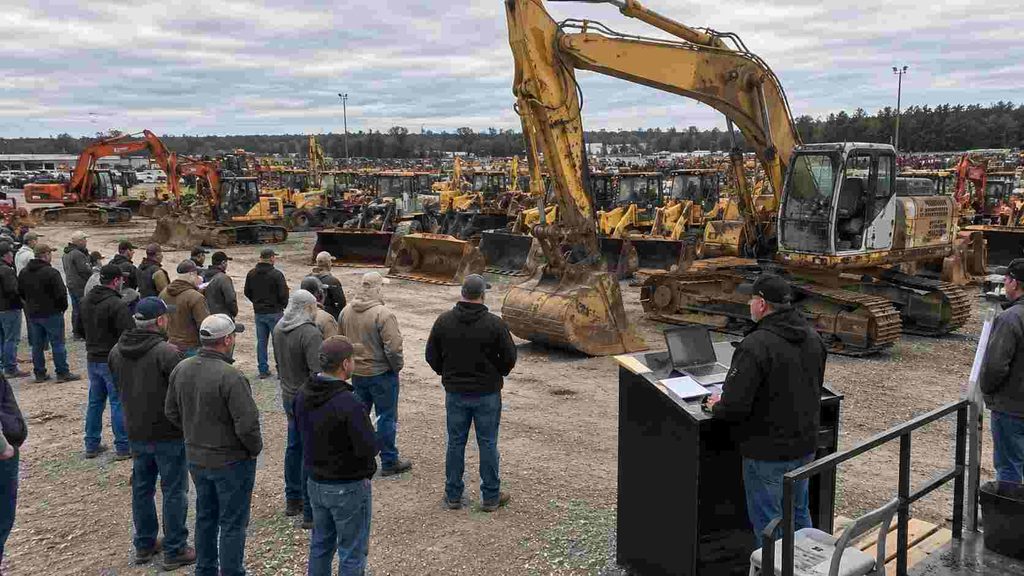
The auction channel consistently produces the best results for equipment that is running or repairable. An excavator that starts and swings but needs hydraulic work will bring meaningfully more at an IronPlanet auction than from any local buyer because the national buyer pool includes specialists who can value the machine accurately and repair it efficiently. Commission rates on equipment auctions typically run 5 to 12 percent of the final sale price.
For non-running or severely failed equipment, auction platforms still accept consignments and disclose the condition accurately in the listing. Non-running heavy equipment regularly sells at auction to buyers who are purchasing specifically for parts, export, or rebuild. The reserve can be set at or near scrap value to ensure a sale occurs regardless of bidding competition.
Local and Regional Equipment Dealers
Equipment dealers who specialize in used machinery often purchase failed or non-running equipment directly for their parts inventory or for rebuilding and resale. These transactions are faster than auction (typically one to two weeks from inspection to payment) but typically produce 15 to 25 percent lower recovery than an auction. For sellers with time pressure or for equipment in a condition range that does not benefit from auction competition, a direct dealer purchase is a clean and reliable option.
Iron and Steel Scrap Yards: The Guaranteed Floor for Any Equipment
A scrap iron and steel yard will buy any heavy equipment in any condition. The offer is calculated on weight at the current heavy steel or cast iron rate. Commercial steel and iron scrap rates fluctuate daily with the commodity market but typically run $80 to $200 per ton for heavy equipment steel. Cast iron components such as engine blocks price slightly differently.
A 15,000-pound skid steer at $120 per ton yields $900 in scrap value. A 60,000-pound bulldozer at the same rate yields $3,600. These are floor values, not typical sale prices, but they are guaranteed prices that require no condition of the equipment beyond the ability to get it to the yard or be accessible for pickup.
Scrap yards that accept heavy equipment typically have the lifting equipment to handle large machines, though the seller must arrange transport if the equipment cannot move under its own power. A non-running tractor or excavator requires a flatbed trailer or lowboy trailer rated for the machine’s weight, and transport costs of $200 to $800 for regional moves must be factored into the net recovery.
Parts Buyers and Rebuild Specialists: Where the Largest Premium Lives
Parts buyers and rebuild specialists are the buyer segment that most equipment sellers never reach, and the segment that pays the most for non-running machinery with specific valuable components.
High-Value Heavy Equipment Component | Typical Used Parts Market Value | Who Buys It |
|---|---|---|
Caterpillar or Cummins diesel engine (rebuildable) | $4,000 to $18,000 | Engine rebuilders, equipment dealers |
John Deere or Case hydraulic pump (tested) | $800 to $4,000 | Equipment repair shops, dealers |
Undercarriage components (track, rollers, sprockets) | $2,000 to $10,000 per set | Dozer and excavator repair specialists |
Transmission (planetary or powershift) | $2,500 to $12,000 | Equipment rebuilders |
Cab assembly with HVAC (late model, undamaged) | $3,000 to $8,000 | Rebuild shops, equipment dealers |
Loader bucket or attachment (undamaged) | $500 to $3,500 | Contractors, equipment dealers |
PTO gearbox (tractor, rebuildable) | $400 to $2,500 | Farm equipment dealers, rebuilders |
Reaching parts buyers requires more targeted outreach than calling a local dealer. Equipment-specific forums, machinery parts classified sites such as MachineryZone, TractorHouse, and IronSearch, and Facebook groups for specific equipment brands all have active parts buyer communities. A failed 35-ton excavator with a rebuildable Cummins QSB engine is worth $12,000 to $20,000 to the right engine rebuilder. The same machine at a scrap yard earns $4,000 to $8,000.
Export Buyers: The Market Most Domestic Sellers Never Consider
Export buyers purchase heavy machinery and tractors for resale in developing markets where the equipment certification, age, and condition requirements are less stringent than in the United States. Countries in Central America, South America, Africa, and Southeast Asia have active import markets for used American heavy equipment. A decommissioned bulldozer or an older agricultural tractor that cannot pass current EPA emissions requirements for domestic use may be fully operational and in demand in export markets.
Export buyers work through several channels. Some are domestic equipment dealers with established export relationships who purchase locally and arrange shipping. Others are import agents based overseas who purchase directly from American sellers through platforms like IronPlanet (which has significant international bidder activity) and Machinery Pete. Some are direct buyers who travel to inspect and purchase equipment.
The key criterion for export buyers is structural integrity and operational viability. Equipment that runs or is rebuildable with readily available parts is the target. Equipment that is structurally compromised from collision, corrosion, or catastrophic mechanical failure has less appeal in export markets because repair in the destination country may be difficult.
To reach export buyers: list on IronPlanet with no reserve and let international bidders participate, post on MachineryZone which has strong international traffic, and contact local equipment dealers who specialize in export sales. Identifying that export buyers are bidding in an auction context frequently pushes the final price above domestic-only bids.
How to Prepare Equipment for Sale Without Spending Money You Won’t Recover
Unlike passenger vehicles, cleaning heavy machinery or making cosmetic repairs before sale rarely recovers the cost of those improvements. Equipment buyers price on mechanical condition and parts viability, not appearance. The preparation that adds value is documentation and accessibility, not physical work on the machine.
Document the Failure and the Machine’s History
Identify and document the specific mechanical failure as precisely as possible. “Engine seized at 4,200 hours due to coolant intrusion from a cracked head” is more useful to a buyer than “not running.” The specific failure information allows parts buyers to determine whether the engine is rebuildable, allows dealers to estimate repair costs, and allows auction platforms to describe the machine accurately to bidders who cannot inspect in person. The more specific the failure documentation, the higher the quality of buyers who respond.
Locate All Available Documentation
Service records, maintenance logs, hour meter readings, original purchase documents, and any repair history increase buyer confidence and frequently increase offer amounts by 10 to 20 percent on equipment where documentation demonstrates how the machine was used and maintained. Farm tractors with complete service records from a dealer consistently bring more at auction than identical machines with no history.
Make the Equipment Accessible for Inspection and Pickup
Equipment buried in a field, surrounded by other machinery, or accessible only through a narrow gate significantly reduces buyer interest. Before listing, assess whether the equipment can be accessed by a standard flatbed or lowboy trailer, whether there is adequate overhead clearance if the machine needs to be lifted, and whether the ground is stable enough for a loaded transport trailer to maneuver. Addressing access before the first buyer visits eliminates the most common deal-killing logistical problem.
What Equipment Sellers Consistently Report After the Sale
Sellers of scrap heavy machinery and tractors share consistent findings across machine types and geographies. The most common: accepting a local dealer’s offer without first understanding the auction market for that specific machine. Local dealers price non-running equipment based on their local parts demand and their cost to repair. Auction platforms expose the same machine to national and international buyers who may have higher demand for that specific brand and configuration. The difference between a local dealer offer and an auction result for the same non-running machine is frequently 40 to 100 percent.
The second most consistent finding is the value of parts documentation on brand-name equipment. Sellers who identified the specific engine model, transmission type, and hydraulic system specifications in their listing attracted parts buyers who did not appear in response to generic listings. A Caterpillar 320 excavator with a confirmed rebuildable 3066 engine attracts a different and better-paying buyer than the same machine listed as “Cat excavator, won’t start.”
Those who engaged export buyers, either through international auction bidding or through direct outreach to export specialists, consistently reported the highest final prices for older equipment that the domestic market had limited interest in. Equipment that is too old or too emissions-non-compliant for modern American use often has a full working life ahead in export markets where those restrictions do not apply.
Frequently Asked Questions
Who buys scrap farm tractors?
Scrap farm tractors are purchased by farm equipment dealers who buy for parts resale, equipment auction platforms including BigIron, Purple Wave, and Machinery Pete, iron and steel scrap yards for metal weight value, and export buyers who purchase for resale in international markets. Brand-name tractors from John Deere, Case IH, New Holland, and Massey Ferguson command the highest offers at every condition level because their parts have active secondary markets. No-brand or obsolete equipment typically achieves scrap value only.
How much is a non-running excavator worth?
A non-running excavator is worth $1,500 to $15,000 in scrap and parts value and $5,000 to $60,000 or more to a rebuild specialist or export buyer depending on machine size, brand, and the specific nature of the failure. Mini excavators under 8 tons typically sell for $1,500 to $4,000 at scrap and $5,000 to $18,000 to parts or export buyers. Full-size excavators over 20 tons carry scrap values of $5,000 to $15,000 and parts or export values of $15,000 to $60,000 or more.
What is the best way to sell old farm equipment?
The best channel for selling old farm equipment depends on whether it is operational. Running or repairable equipment sells best through dedicated farm equipment auction platforms including BigIron, Purple Wave, and Machinery Pete, which reach national buyer pools of farmers and dealers who pay competitive prices. Non-running equipment is best sold through the same platforms with accurate condition disclosure, which attracts parts buyers and export buyers. Scrap iron yards are the correct destination only for equipment with no functional components remaining.
Do scrap yards buy tractors and heavy equipment?
Yes. Scrap iron and steel yards buy tractors and heavy equipment in any condition for their metal weight value. They price on weight at the current heavy steel rate, typically $80 to $200 per ton. A 10,000-pound farm tractor yields $400 to $1,000 in scrap value. A 40,000-pound bulldozer yields $1,600 to $4,000. Scrap yards are the fastest option and the guaranteed floor, but they almost never represent the best recovery for any machine with functional components or a brand-name drivetrain.
Can I sell heavy equipment without a title?
Heavy construction equipment is often sold without a traditional vehicle title because in many states, large equipment is not titled through the DMV the way a passenger vehicle is. Instead, ownership is documented through a bill of sale, serial number verification, and any available manufacturer documentation. Farm tractors and some smaller equipment may carry state titles or registration documents. Large construction equipment is frequently transferred purely by serial number and bill of sale. Check with the buyer and your state to determine what documentation is required for your specific machine.
How do I sell a broken tractor?
Selling a broken tractor starts with identifying the specific failure and documenting it clearly. Then determine the tractor’s brand, model, serial number, and approximate hour reading if the meter is functional. Post on farm equipment auction platforms with accurate condition disclosure and photos. Simultaneously, contact local farm equipment dealers who may buy for parts inventory. For brand-name tractors from major manufacturers, parts buyers often pay more than scrap through equipment-specific forums and Facebook groups. Use the scrap yard quote as your floor before accepting any offer.
What heavy equipment sells the most at auction?
Excavators, skid steers, and wheel loaders sell with the highest buyer participation at commercial equipment auctions because they have the broadest use cases across construction, landscaping, and infrastructure work. Among brand names, Caterpillar, John Deere, and Komatsu consistently attract the most bidders and the highest prices relative to comparable machines of other brands. Mini excavators have seen particularly strong auction demand in recent years driven by increased residential and landscaping use. Farm tractors from major brands perform well at farm-specific auctions, particularly BigIron and Purple Wave in agricultural states.
Who buys old bulldozers?
Old bulldozers are purchased by heavy equipment dealers who rebuild and resell, commercial auction platforms that reach national and international buyers, parts specialists who need undercarriage components and drivetrain parts, export buyers who purchase for use in markets with less restrictive age and emissions requirements, and local contractors looking for affordable machines for earthwork projects. Caterpillar, Komatsu, and John Deere dozers command the highest offers. A non-running D6 or D7 with a rebuildable engine attracts parts buyers willing to pay two to three times scrap value for the machine.
The Bottom Line
Heavy machinery and farm tractors are among the most undervalued assets at end of life when sellers default to the nearest scrap yard. The spread between scrap metal value and what a parts buyer, export buyer, or rebuild specialist will pay for the same machine is wider for heavy equipment than for almost any other vehicle category.
The sequence that produces the best outcomes: establish the scrap floor first by getting a weight-based quote from a local iron yard. Then identify the specific engine, transmission, and hydraulic components on the machine and post the detailed specs on equipment auction platforms and parts buyer forums. Export buyers and specialty rebuild shops respond to specific descriptions that most sellers never provide.
Brand-name equipment from Caterpillar, John Deere, Komatsu, Case, and New Holland generates competitive bidding from a national and international buyer pool that local buyers cannot match. Getting that machine in front of that audience through auction or targeted parts listings is the highest-leverage activity available to any seller of scrap heavy machinery or tractors.