Selling a Non-Running Cargo Van: Every Buyer Type, and How to Get the Most
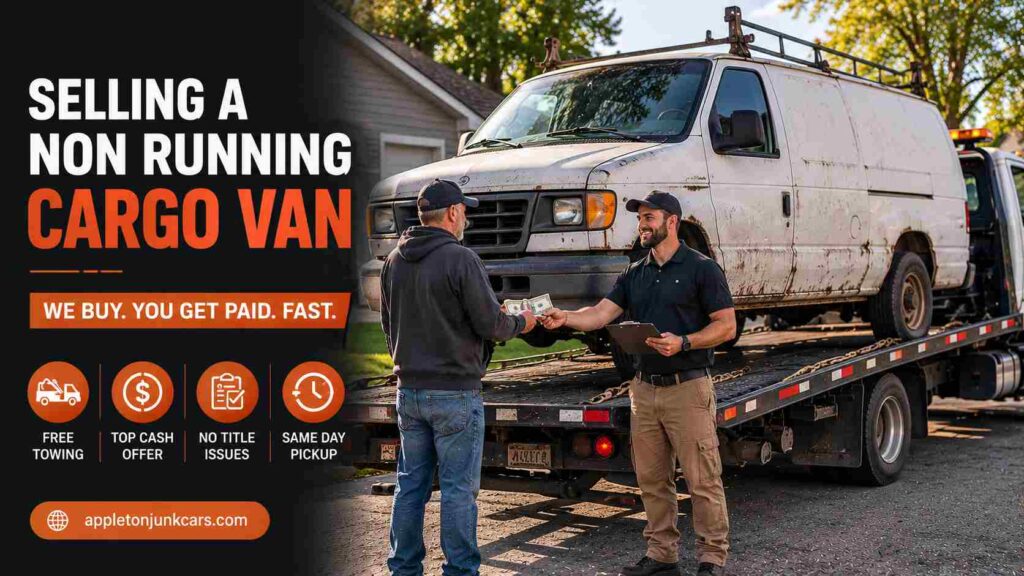
The cargo van is dead. The engine seized, the transmission failed, or the cost to repair it crossed the line where fixing it made no financial sense. What most owners do not realize is that a non-running cargo van sits in one of the stronger buyer markets among commercial vehicles. The combination of usable cargo […]
How Car Batteries Are Recycled: The Full Process, From Collection to Recovered Lead
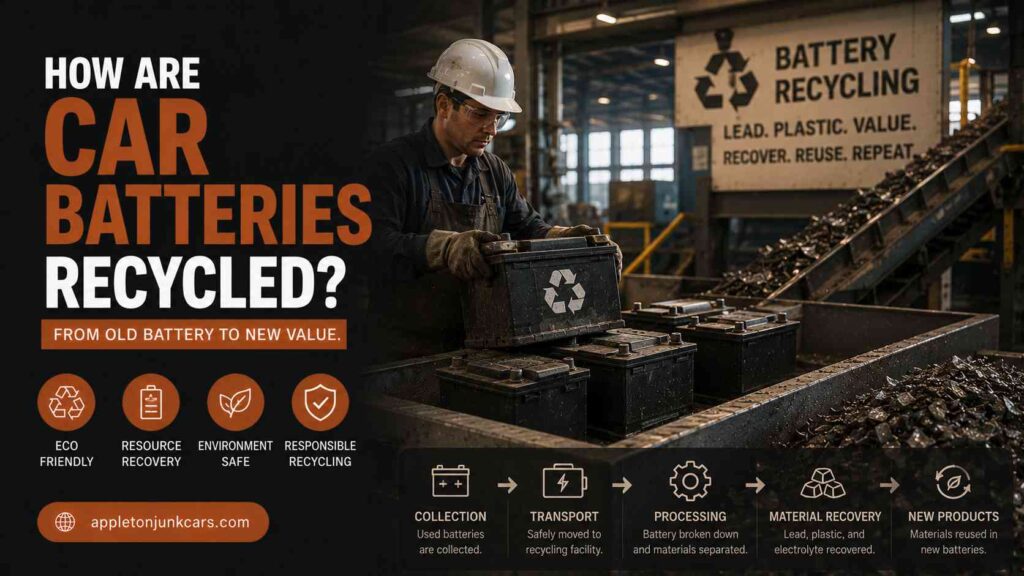
The 12-volt lead-acid battery in every conventional vehicle is the most successfully recycled consumer product in North America. More than 99 percent of lead-acid batteries are collected and recycled at the end of their service lives, a rate that no other manufactured product comes close to matching. A car battery that dies in your driveway […]
The Eco-Friendly Auto Dismantling Process: How Modern Salvage Yards Handle End-of-Life Vehicles
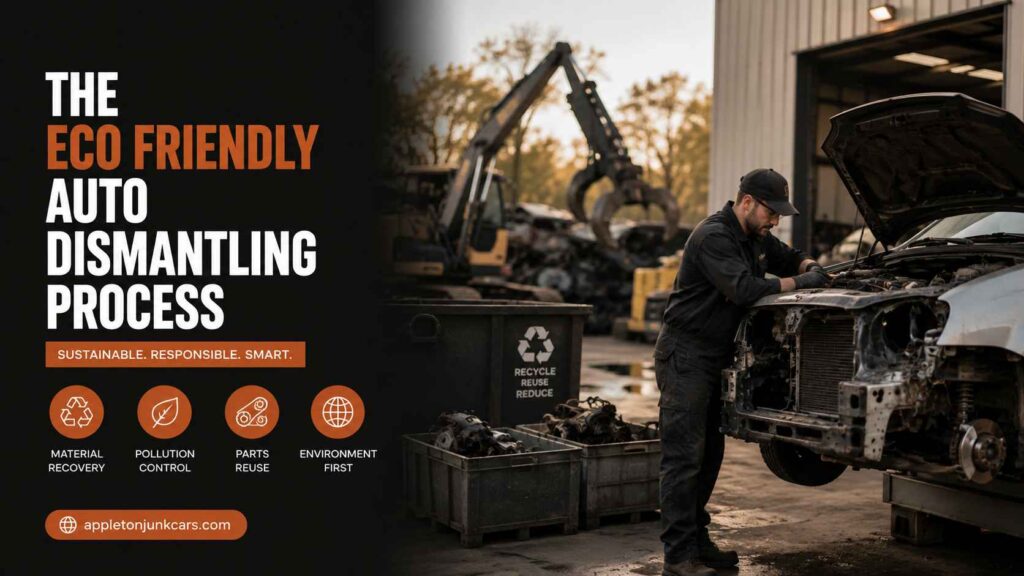
The image of a junkyard as an environmental problem, with leaking fluids, crushed cars, and contaminated soil, reflects the industry as it operated before the 1990s. Modern auto dismantling, when conducted at a licensed and certified facility, is a tightly regulated process that recovers more than 80 percent of every vehicle’s material by weight, manages […]
How Automotive Antifreeze Is Recycled: The Collection, Testing, and Re-Refining Process Explained
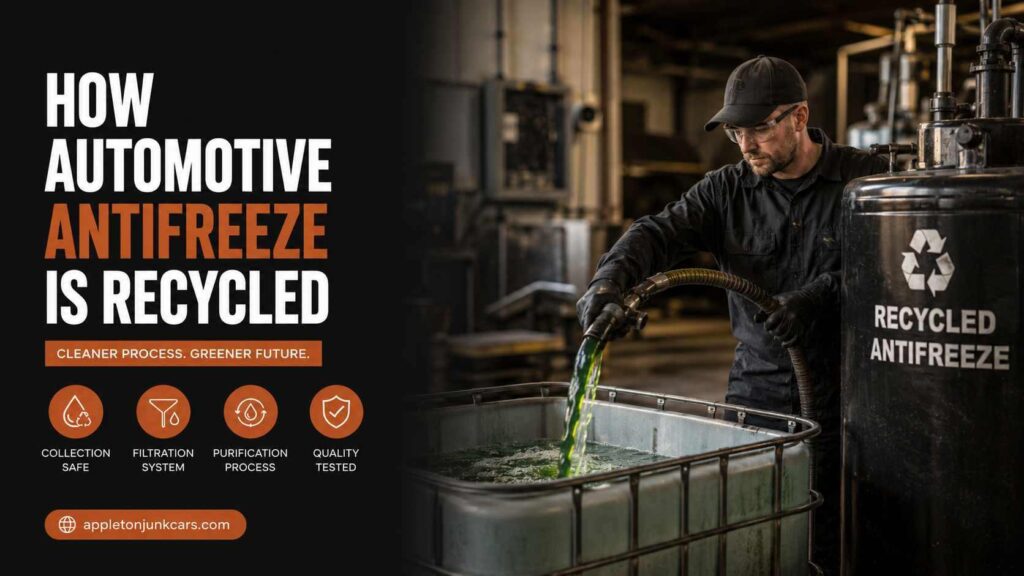
Automotive antifreeze does not wear out the way engine oil does. The ethylene glycol base compound that makes antifreeze work retains its freeze and boil protection properties through many service cycles. What actually degrades over time is the additive package: the corrosion inhibitors, pH buffers, and stabilizers that protect cooling system metals from rust and […]
The Ultimate Guide to Junk Car Paperwork in Wisconsin: Titles, No-Title Sales, & DMV Steps
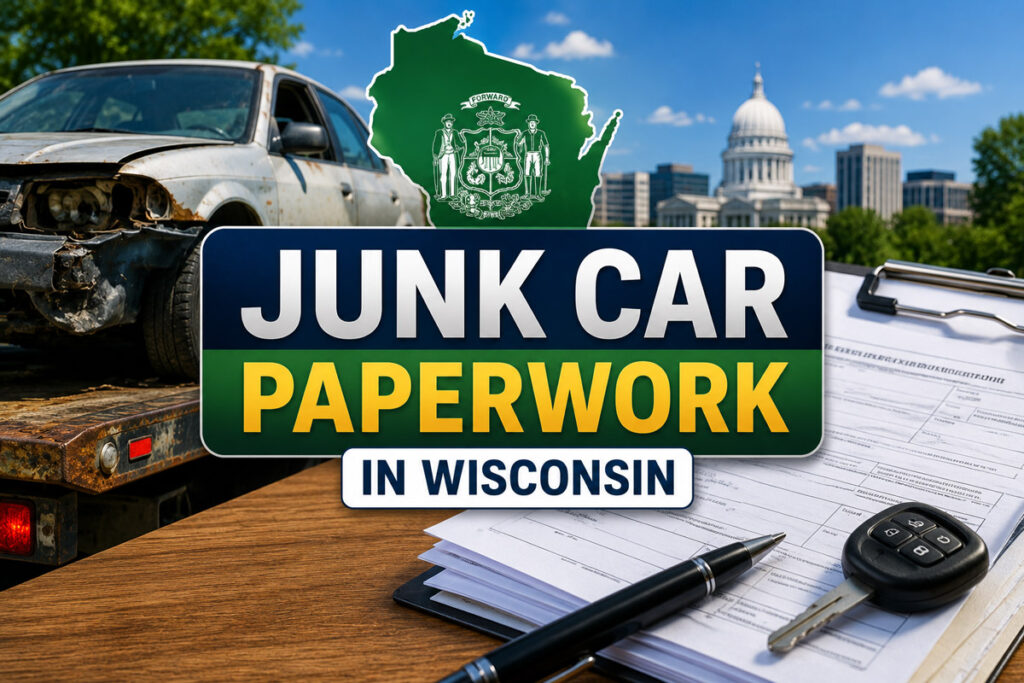
Selling an old, rusted, or inoperable vehicle in America’s Dairyland might seem like a simple transaction—hand over the keys, get your cash, and wave goodbye. However, if you skip proper state protocol, that old vehicle can haunt you with unexpected towing fees, parking violations, or even legal liabilities down the road. To permanently junk a […]
Recycling Car Tires and Rubber Tracks: Where They Go, What They Become, and How the Process Works
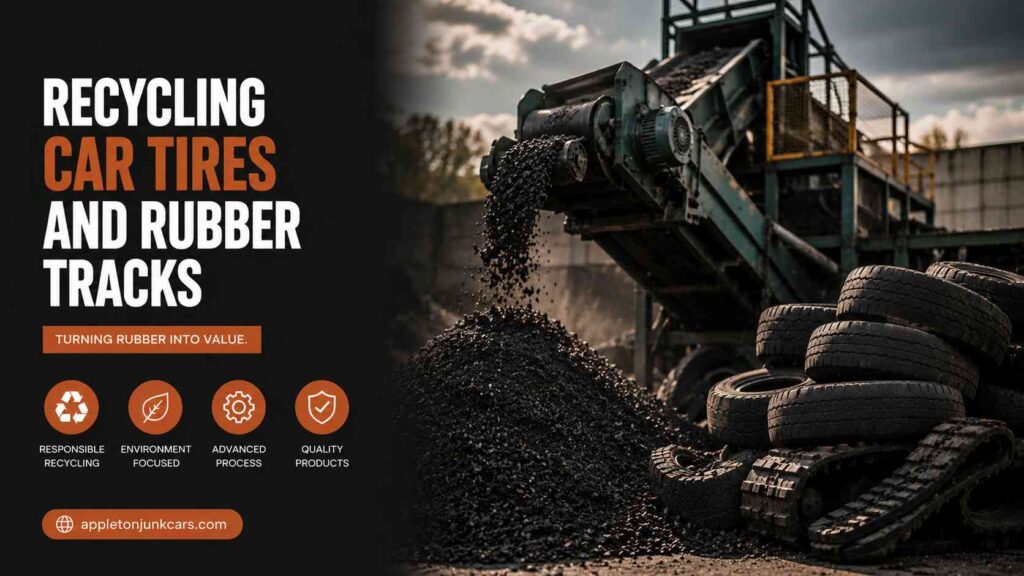
A car tire is one of the most difficult materials to recycle. Vulcanization, the process that gives tires their durability and resilience, creates chemical bonds between rubber molecules and sulfur that cannot be reversed by simple melting. Unlike steel, which can be melted down repeatedly without degrading, or glass, which can be remelted into new […]
What Is Automotive Depollution? The Process, the Legal Requirements, and Why It Matters for Every Junk Car
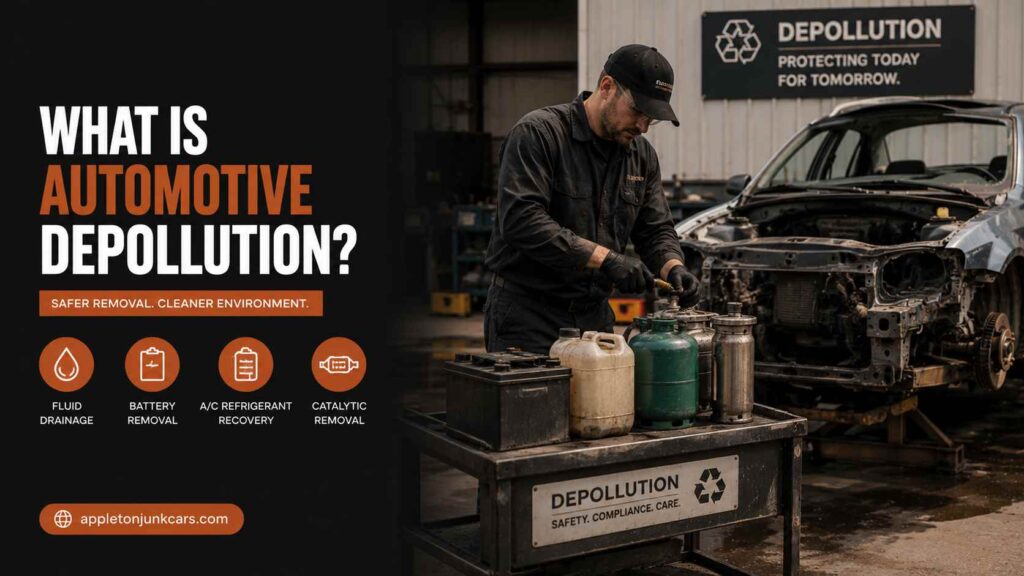
Automotive depollution is the mandatory first stage of end-of-life vehicle processing at licensed salvage facilities. It is defined as the systematic removal of all hazardous fluids, gases, and materials from a vehicle before any dismantling, part recovery, or crushing takes place. The purpose is to prevent the toxic substances present in every vehicle from contaminating […]
Freon Recovery From Junk Cars: What the Law Requires, How It Works, and Where the Refrigerant Goes
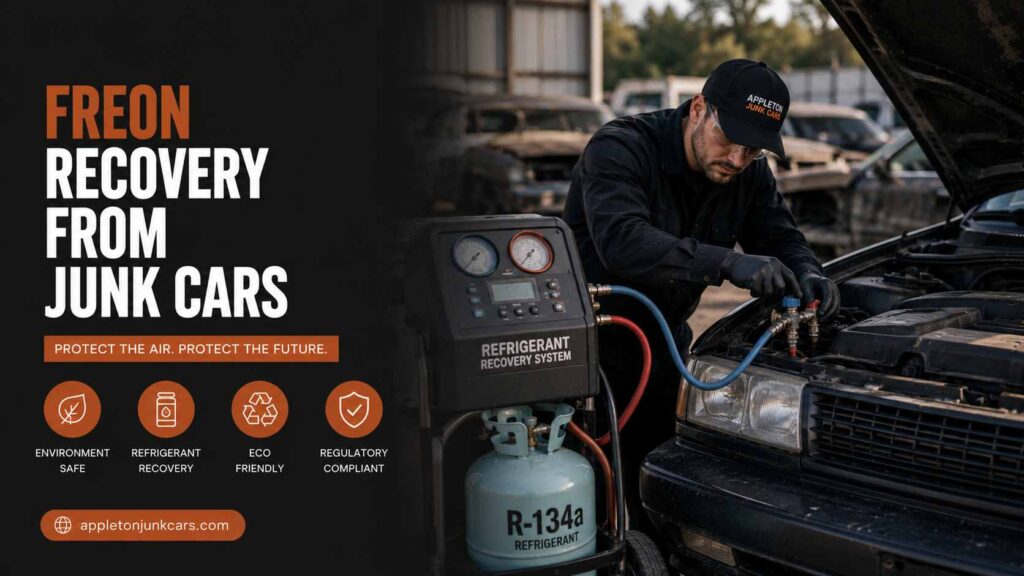
When a junk car arrives at a salvage yard, the air conditioning system contains pressurized refrigerant that cannot legally be released into the atmosphere. Under Section 609 of the Clean Air Act, as enforced by the Environmental Protection Agency, intentional venting of refrigerant from any motor vehicle air conditioning system is a federal violation carrying […]
The Environmental Impact of Abandoned Cars: What Happens to a Vehicle Left to Decay and Why It Matters
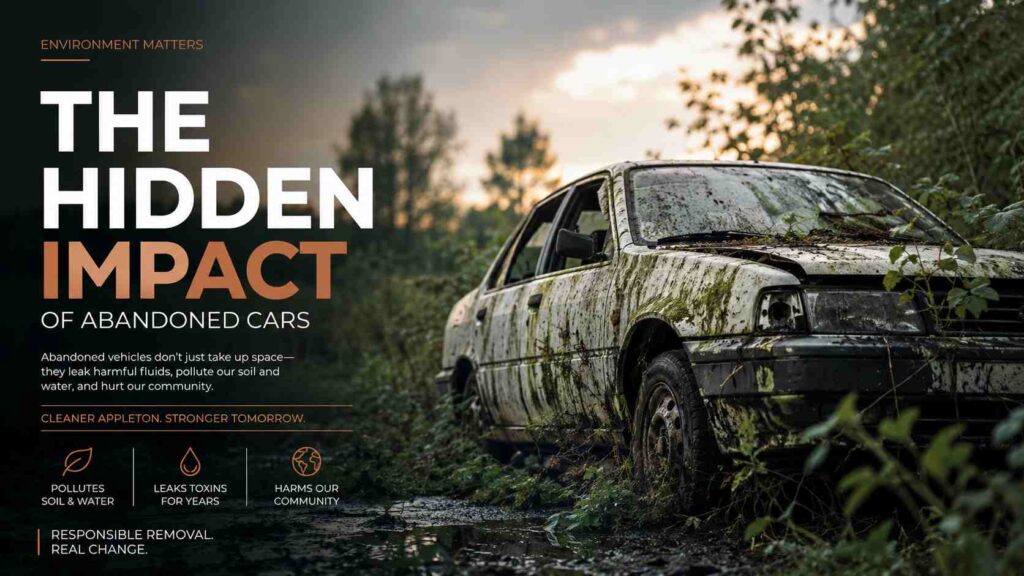
An abandoned car is not a passive presence in its environment. From the day it is left, it begins releasing the chemicals it contains into the surrounding soil, water, and air. It creates breeding habitat for disease-carrying insects, becomes a harbor for rodents and other pests, poses fire risk from deteriorating fuel systems, and gradually […]
Auto Shredder Residue (ASR) Explained: Everything You Need To Know
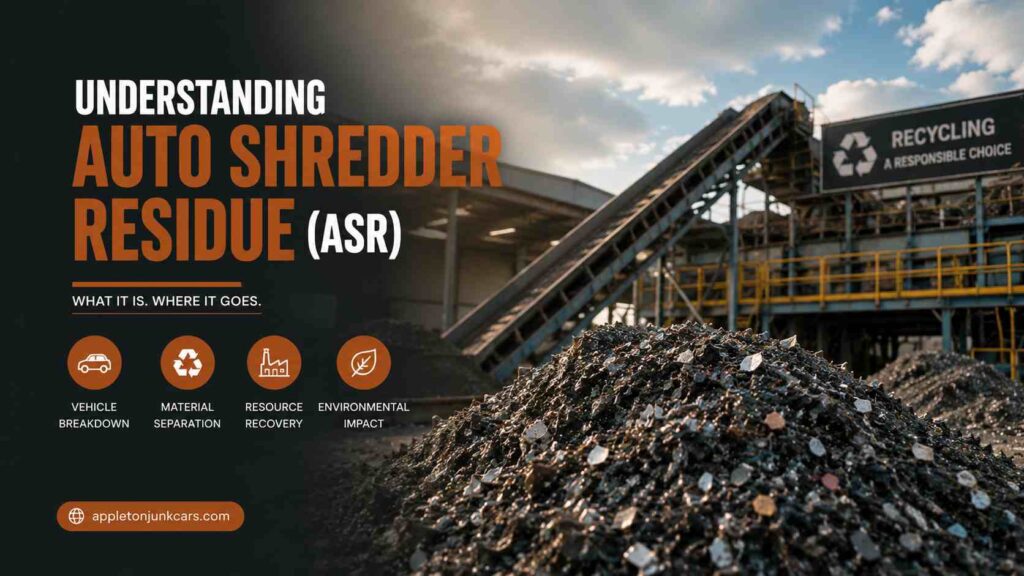
After a depolluted vehicle has been shredded and its ferrous and non-ferrous metals separated, approximately 20 to 25 percent of the original vehicle weight remains as a heterogeneous mixed material called auto shredder residue (ASR). Also referred to as automotive shredder fluff, shredder light fraction, or fluff, ASR is the primary unresolved environmental challenge in […]